
Filter
1632
Featured
24
580
Language
1327
145
139
26
16
13
7
5
4
4
3
1
1
1
1
1
Document type
808
722
32
20
14
12
11
7
3
1
1
Countries
90
86
80
69
67
66
64
62
61
60
53
51
51
50
49
43
43
42
41
38
36
34
34
33
33
32
31
30
30
28
27
24
23
23
21
19
19
19
18
17
17
16
16
16
14
14
14
13
12
12
11
9
8
8
7
7
7
7
6
6
6
6
6
6
6
5
5
5
5
5
4
4
4
4
4
3
3
3
3
3
3
3
3
3
3
3
3
2
2
2
2
2
2
2
2
2
2
2
2
2
1
1
1
1
1
1
1
1
1
1
1
1
1
1
1
1
1
1
1
1
1
1
1
1
1
1
1
1
1
1
Authors & Publishers
66
66
54
41
37
17
16
16
16
14
12
12
11
11
11
10
10
9
9
8
8
7
7
7
7
7
6
6
6
6
6
6
6
5
5
5
5
5
5
4
4
4
4
4
4
4
4
4
4
4
4
4
4
4
4
4
4
3
3
3
3
3
3
3
3
3
3
3
3
3
3
3
3
3
3
3
3
3
3
3
3
3
3
3
3
3
3
3
3
3
3
3
3
3
3
3
3
3
3
3
3
3
2
2
2
2
2
2
2
2
2
2
2
2
2
2
2
2
2
2
2
2
2
2
2
2
2
2
2
2
2
2
2
2
2
2
2
2
2
2
2
2
2
2
2
2
2
2
2
2
2
2
2
2
2
2
2
2
2
2
2
2
2
2
2
2
2
2
2
2
2
2
2
2
2
2
2
2
2
2
2
2
2
2
2
2
2
2
2
2
2
2
2
2
2
2
2
2
2
2
2
2
2
2
2
2
2
2
2
2
2
2
2
2
2
2
2
1
1
1
1
1
1
1
1
1
1
1
1
1
1
1
1
1
1
1
1
1
1
1
1
1
1
1
1
1
1
1
1
1
1
1
1
1
1
1
1
1
1
1
1
1
1
1
1
1
1
1
1
1
1
1
1
1
1
1
1
1
1
1
1
1
1
1
1
1
1
1
1
1
1
1
1
1
1
1
1
1
1
1
1
1
1
1
1
1
1
1
1
1
1
1
1
1
1
1
1
1
1
1
1
1
1
1
1
1
1
1
1
1
1
1
1
1
1
1
1
1
1
1
1
1
1
1
1
1
1
1
1
1
1
1
1
1
1
1
1
1
1
1
1
1
1
1
1
1
1
1
1
1
1
1
1
1
1
1
1
1
1
1
1
1
1
1
1
1
1
1
1
1
1
1
1
1
1
1
1
1
1
1
1
1
1
1
1
1
1
1
1
1
1
1
1
1
1
1
1
1
1
1
1
1
1
1
1
1
1
1
1
1
1
1
1
1
1
1
1
1
1
1
1
1
1
1
1
1
1
1
1
1
1
1
1
1
1
1
1
1
1
1
1
1
1
1
1
1
1
1
1
1
1
1
1
1
1
1
1
1
1
1
1
1
1
1
1
1
1
1
1
1
1
1
1
1
1
1
1
1
1
1
1
1
1
1
1
1
1
1
1
1
1
1
1
1
1
1
1
1
1
1
1
1
1
1
1
1
1
1
1
1
1
1
1
1
1
1
1
1
1
1
1
1
1
1
1
1
1
1
1
1
1
1
1
1
1
1
1
1
1
1
1
1
1
1
1
1
1
1
1
1
1
1
1
1
1
1
1
1
1
1
1
1
1
1
1
1
1
1
1
1
1
1
1
1
1
1
1
1
1
1
1
1
1
1
1
1
1
1
1
1
1
1
1
1
1
1
1
1
1
1
1
1
1
1
1
1
1
1
1
1
1
1
1
1
1
1
1
1
1
1
1
1
1
1
1
1
1
1
1
1
1
1
1
1
1
1
1
1
1
1
1
1
1
1
1
1
1
1
1
1
1
1
1
1
1
1
1
1
1
1
1
1
1
1
1
1
1
1
1
1
1
1
1
1
1
1
1
1
1
1
1
1
1
1
1
1
1
1
1
1
1
1
1
1
1
1
1
1
1
1
1
1
1
1
1
1
1
1
1
1
1
1
1
1
1
1
1
1
1
1
1
1
1
1
1
1
1
1
1
1
1
1
1
1
1
1
1
1
1
1
1
1
1
1
1
1
1
1
1
1
1
1
1
1
1
1
1
1
1
1
1
1
1
1
1
1
1
1
1
1
1
1
1
1
1
1
1
1
1
1
1
1
1
1
1
1
1
1
1
1
1
1
1
1
1
1
1
1
1
1
1
1
1
1
1
1
1
1
1
1
1
1
1
1
1
1
1
1
1
1
1
1
1
1
1
1
1
1
1
1
1
1
1
1
1
1
1
1
1
1
1
1
1
1
1
1
1
1
1
1
1
1
1
1
1
1
1
1
1
1
1
1
1
1
1
1
1
1
1
1
1
1
1
1
1
1
1
1
1
1
1
1
1
1
1
1
1
1
1
1
1
1
1
1
1
1
1
1
1
1
1
1
1
1
1
1
1
1
1
1
1
1
1
1
1
1
1
1
1
1
1
1
1
1
1
1
1
1
1
1
1
1
1
1
1
1
1
1
1
1
1
1
1
1
1
1
1
1
1
1
1
1
1
1
1
1
1
1
1
1
1
1
1
1
1
1
1
1
1
1
1
1
1
1
1
1
1
1
1
1
1
1
1
1
1
1
1
1
1
1
1
1
1
1
1
1
1
1
1
1
1
1
1
1
1
1
1
1
1
1
1
1
1
1
1
1
1
1
1
1
1
1
1
1
1
1
1
1
1
1
1
1
1
1
1
1
1
1
1
1
1
1
1
1
1
1
1
1
1
1
1
1
1
1
1
1
1
1
1
1
1
1
1
1
1
1
1
1
1
1
1
1
1
1
1
1
1
1
1
1
1
1
1
1
1
1
1
1
1
1
1
1
1
1
1
1
1
1
1
1
1
1
1
1
1
1
1
1
1
1
1
1
1
1
1
1
1
1
1
1
1
1
1
1
1
1
1
1
1
1
1
1
1
1
1
1
1
1
1
1
1
1
1
1
1
1
1
1
1
1
1
1
1
1
1
1
1
1
1
1
1
1
1
1
1
1
1
1
1
1
1
1
1
1
1
1
1
1
1
1
1
1
1
1
1
1
1
1
1
1
1
1
1
1
1
1
1
1
1
1
1
1
1
1
1
1
1
1
1
1
1
1
1
1
1
1
1
1
1
1
1
1
1
1
1
1
1
1
1
1
1
1
1
1
1
1
1
1
1
1
1
1
1
1
1
1
1
1
1
1
1
1
1
1
1
1
1
1
1
1
1
1
1
1
1
1
1
1
1
1
1
1
1
1
1
1
1
1
1
1
1
1
1
1
1
1
1
1
1
1
1
1
1
1
1
1
1
1
1
1
1
1
1
1
1
1
1
1
1
1
1
1
1
1
1
1
1
1
1
1
1
1
1
1
1
1
1
1
1
1
1
1
1
1
1
1
1
1
1
1
1
1
1
1
1
1
1
1
1
1
1
1
1
1
1
1
1
1
1
1
1
1
1
1
1
1
1
1
1
1
1
1
1
1
1
1
1
1
1
1
1
1
1
1
1
1
1
1
1
1
1
1
1
1
1
1
1
1
1
1
1
1
1
1
1
1
1
1
1
1
1
1
1
1
1
1
1
1
1
1
1
1
1
1
1
1
1
1
1
1
1
1
1
1
1
1
1
1
1
1
1
1
1
1
1
1
1
1
1
1
1
1
1
1
1
1
1
1
1
1
1
1
1
1
1
1
1
1
1
1
1
1
1
1
1
1
1
1
1
1
1
1
1
1
1
1
1
1
1
1
1
1
1
1
1
1
1
1
1
1
1
1
1
1
1
1
1
1
1
1
1
1
1
1
1
1
1
1
1
1
1
1
1
1
1
1
1
1
1
1
1
1
1
1
1
1
1
1
1
1
1
1
1
1
1
1
1
1
1
1
1
1
1
1
1
1
1
1
1
1
1
1
1
1
1
1
1
1
1
1
1
1
1
1
1
1
1
1
1
1
1
1
1
1
1
1
1
1
1
1
1
1
1
1
1
1
1
1
1
1
1
1
1
1
1
1
1
1
1
1
1
1
1
1
1
1
1
1
1
1
1
1
1
1
1
1
1
1
1
1
1
1
1
1
1
1
1
1
1
1
1
1
1
1
1
1
1
1
1
1
1
1
1
1
1
1
1
1
1
1
1
1
1
1
1
1
1
1
1
1
1
1
1
1
1
1
1
1
1
1
1
1
1
1
1
1
1
1
1
1
1
1
1
1
1
1
1
1
1
1
1
1
1
1
1
1
1
1
1
1
1
1
1
1
1
1
1
1
1
1
1
1
1
1
1
1
1
1
1
1
1
1
1
1
1
1
1
1
1
1
1
1
1
1
1
1
1
1
1
1
1
1
1
1
1
1
1
1
1
1
1
1
1
1
1
1
1
1
1
1
1
1
1
1
1
1
1
1
1
1
1
1
1
1
1
1
1
1
1
1
1
1
1
1
1
1
1
1
1
1
1
1
1
1
1
1
1
1
1
1
1
1
1
1
1
1
1
1
1
1
1
1
1
1
1
1
1
1
1
1
1
1
1
1
1
1
1
1
1
1
1
1
1
1
1
1
1
1
1
1
1
1
1
Publication Years
593
989
50
Toolboxes
121
58
57
49
44
42
39
34
27
23
18
17
17
16
14
13
10
9
5
4
4
2
1
La communication efficace sur les risques liés au virus Ebola nécessite à la fois du respect et
de la transparence et demeure plus vitale que jamais.
Effective Ebola risk communication requires respect and transparency and remains as vital
as ever. An assessment of changing communication needs and preferences in Beni, North Kivu.
In the second year of the current Ebola outbreak response in the Democratic Republic of Congo (DRC), people at ris
...
k still don’t have clear answers to their questions about the disease in a language they understand. Many local health communicators are themselves confused about the disease prevention and treatment measures they promote. The language, content, and form of communication about Ebola affect how far people understand, trust and act upon it.
more
This report documents scores of serious abuses committed against talibé children by Quranic teachers or their assistants in 2017 and 2018, including deaths, beatings, sexual abuse, chaining and imprisonment, and numerous forms of neglect and endangerment. The abuses took place in at least eight of
...
Senegal’s 14 administrative regions (Dakar, Diourbel, Fatick, Kaolack, Louga, Saint-Louis, Tambacounda, and Thiès); a Human Rights Watch researcher visited four of these regions: Dakar, Diourbel, Louga and Saint-Louis.
more
Recherche rapide de l’analyse-pays de l’OSAR

The study on health facility preparedness for cholera outbreak response in Cameroon evaluates the ability of healthcare facilities in four cholera-prone districts to manage cholera outbreaks. The findings highlight significant weaknesses, including limited surveillance systems, inadequate access to
...
water, poor sanitation, and lack of essential medical supplies such as Oral Rehydration Solution (ORS) and cholera case management guidelines. Many health facilities also lacked trained personnel and proper waste disposal systems, increasing the risk of disease spread within healthcare centers. The study underscores the urgent need for improved hygiene infrastructure, better training, and resource allocation to enhance outbreak response and reduce cholera-related mortality.
more
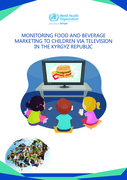
This report summarizes the results of a 2018 survey of food and beverage marketing to children via television in the Kyrgyz Republic. It explores the extent and nature of children’s exposure to marketing for food high in saturated fat, free sugars and/or salt via television in the country. The stu
...
dy results can be used by policy-makers to restrict and regulate marketing of food high in saturated fat, free sugars and/or salt both on television and in other media.
more
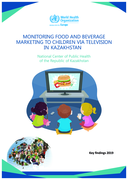
This report summarizes the results of a 2018 survey of food and beverage marketing to children via television in the Republic of Kazakhstan. It explores the extent and nature of children’s exposure to marketing for food high in saturated fat, free sugars and/or salt via television in the country.
...
The study results can be used by policy-makers to restrict and regulate marketing of food high in saturated fat, free sugars and/or salt both on television and in other media.
AddThis Sharing Buttons
Share to Twitter
Share to FacebookShare to Bit.lyShare to More
Decrease text size on the screen Increase text size on the screen Subscribe Print this page
more
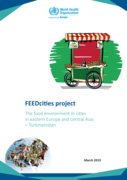
This technical report presents results from the FEEDcities Project – eastern Europe and central Asia. This cross-sectional survey was conducted in Ashgabat, Turkmenistan in October 2016 to evaluate the local urban food environment. It characterized the vending sites, the food offered and the nutri
...
tional composition of the industrial and homemade street foods available in these settings. It also described the nutritional composition of ready-to-eat foods sold in supermarkets and at vending sites in food courts. The policy implications of the findings are outlined.
more
This technical report presents the results of a cross-sectional survey conducted in Banja Luka, the Republika Srpska, Bosnia and Herzegovina, between July and August 2017, as part of the FEEDcities Project (Food Environment Description in cities – eastern Europe and central Asia). The aim of the r
...
eport is to describe the city’s local street food and takeaway food environment, exploring the characteristics of food vending sites, the industrially produced and homemade foods they typically offer, and the nutritional composition of these foods. Finally, the report provides guidance on how to address its findings through policy action.
more
This technical report presents the results of a cross-sectional survey conducted in Sarajevo, the Federation of Bosnia and Herzegovina, Bosnia and Herzegovina, between June and August 2017, as part of the FEEDcities Project (Food Environment Description in cities – eastern Europe and central Asia)
...
. The aim of the report is to describe the city’s local street food and takeaway food environment, exploring the characteristics of food vending sites, the industrially produced and homemade foods they typically offer, and the nutritional composition of these foods. Finally, the report provides guidance on how to address its findings through policy action.
The study was conducted through a bilateral partnership between the World Health Organization (WHO) and the Institute of Public Health of the University of Porto, in collaboration with the Faculty of Medicine, the Faculty of Nutrition and Food Sciences, the Faculty of Pharmacy of the University of Porto (WHO registration 2015/591370 and 2017/698514) and the Institute of Public Health of the Federation of Bosnia and Herzegovina. The study was funded through a voluntary contribution of the Ministry of Health of the Russian Federation, and through a contribution made by the Swiss Agency for Development and Cooperation (SDC)/Swiss Government to a joint WHO/SDC project, “Reducing Health Risk Factors in Bosnia and Herzegovina: Developing and Advancing Modern and Sustainable Public Health Strategies, Capacities and Services to Improve Population Health”, implemented in Bosnia and Herzegovina.
more
Tuberculosis cases, TB deaths
Closing the immunisation gap in Ethiopia: a formative evaluation of ‘The Fifth Child Project’
Shiferaw Dechasa Demissie, et al.
International Rescue Committee, London School of Hygiene & Tropical Medicine, Assosa Referral Hospital
(2019)
C1
Community health workers (CHWs) play a significant role in Primary health Care due to their proximity to households, communities and the health care system. Many studies focus on CHWs and the work they do. However, few have examined their experiences and identity and how that might influence how the
...
y view and perform their roles. The objectives of the study were to: Describe the role of CHWs in community-based health care in Northern Cape, Identify the perceived barriers and enablers to CHWs role performance, Explore CHWs views regarding the support from the communities and the formal healthcare system in Northern Cape. An exploratory qualitative design using focus groups was adopted. Forty-six (46) CHWs were purposively selected using the critical case sampling approach. Data were collected through three focus group interviews in three regions. Analysis followed the Graneheim & Lundman thematic analysis. Three themes emerged from data: perceived contribution to Primary Health Care, recognition of CHWs role, measures to improve working conditions. Findings showed that CHWs were engaged in various health and social care roles, they believed that they made a significant contribution to PHC, and that the health system persistently relied on their services. The enabler for finding meaning in their work was the positive community response and the good relations they had with the team leaders. The major barrier was the structure of the CHWs programme and the perceived lack of support by the government. The complex issues CHWs address in the community call for a review of their roles and workload as well as the support they receive from the formal healthcare system.
more
Défis et progrès. ce rapport présente l’information la plus à jour sur l’incidence de la grossesse non planifiée et de l’avortement à Kinshasa (République démocratique du Congo). La publication du Protocole de Maputo au Journal officiel de la nation en 2018 a formalisé l’obligation
...
du gouvernement d’élargir l’accès à l’avortement médicalisé dans les conditions énoncées au Protocole. Néanmoins, les obstacles à la mise en œuvre continuent de rendre les services d’avortement sécurisé largement inaccessibles. En conséquence, la majorité des femmes de Kinshasa qui choisissent d’interrompre leur grossesse le font-elles dans la clandestinité — souvent dans des conditions non médicalisées potentiellement dangereuses pour leur santé.
more
Objetivos.
Estimar la carga de tuberculosis (TB) en menores de 15 años y describir las características clínico, epidemiológicas y los resultados del tratamiento antituberculoso en Ecuador.
Métodos.
Se realizó un estudio retrospectivo utilizando los datos del programa nacional de TB de los
...
años 2015 y 2016. Se estimaron la tasa y el porcentaje de casos de TB infantil y se describieron las características de la enfermedad y el resultado del tratamiento según las categorías de edad: 0-4, 5-9 y 10-14 años.
Resultados.
De los 10 991 casos de TB diagnosticados, 223 (2,03%) fueron menores de 15 años; según la región del país esta carga varió entre 0 y 5,5%. De los 223 casos, en 213 se había registrado el resultado del tratamiento y fueron incluidos en el estudio; 78 (37%) eran menores de 5 años y en 147 (69%) no hubo registro de la investigación de contactos. Sesenta y cinco (68%) de los adolescentes y 40 (51%) de los menores de 5 años tenían diagnóstico de TB pulmonar. La prevalencia de VIH fue 11,5% en los menores 5 años y 6,3% en el grupo de 10-14 años. El tratamiento fue satisfactorio en el 93% de los casos, (curación, 36,6%, tratamiento terminado, 56,8%).
Conclusiones:
Ecuador presenta un alto porcentaje de subdiagnóstico de TB infantil y una carga menor a la esperada, principalmente en menores de 5 años. La alta prevalencia de VIH y la falta de sistematización adecuada de la investigación de contactos en los adolescentes revelan la necesidad de considerar estrategias centradas en la familia y que involucren la capacitación del personal de salud en el manejo del paciente pediátrico centrándose en las necesidades específicas de cada población.
more

The state of the Guinean health workforce is one of the country’s bottlenecks in advancing health outcomes. The impact of the 2014–2015 Ebola virus disease outbreak and resulting international attention has provided a policy window to invest in the workforce and reform the health system. This re
...
search constitutes a baseline study on the health workforce situation, professional education, and retention policies in Guinea. The study was conducted to inform capacity development as part of a scientific collaboration between Belgian and Guinean health institutes aiming to strengthen public health systems and health workforce development. It provides initial recommendations to the Guinean government and key actors.
more
An IPCC Special Report on climate change, desertification, land
degradation, sustainable land management, food security, and
greenhouse gas fluxes in terrestrial ecosystems
An IPCC Special Report on climate change, desertification, land
degradation, sustainable land management, food security, and
greenhouse gas fluxes in terrestrial ecosystems

Antimicrobial resistance (AMR) is a multifaceted, international public health problem, which poses a direct threat to the safety of the population of South Africa. A national response is required to complement the development of a global plan, as articulated in the WHO’s draft resolution EB134/37
...
“Combating antimicrobial resistance including antibiotic resistance”, adopted by theWorld Health Assembly in May 2014. The overuse of antimicrobials is driving resistance. A return to appropriate, targeted antimicrobial use in humans, animals and the environment is critical if we are to conserve the antimicrobial armamentarium. Various interventions have been put in place to address antimicrobial resistance in South Africa. However, these are insufficient to effectively tackle the threat faced by the country. The strengths of the current system are outweighed by its weaknesses.
more
