Filter
1067
Featured
58
494
Language
Document type
710
171
82
40
27
19
10
4
3
1
Countries
56
52
52
50
48
46
42
40
40
35
32
31
30
29
26
25
24
24
23
22
21
20
19
19
19
18
17
16
15
12
12
11
11
11
11
10
10
10
9
9
8
8
7
7
7
7
7
6
6
5
5
4
4
4
4
4
3
3
3
3
3
3
2
2
2
2
2
2
2
2
1
1
1
1
1
1
1
1
1
1
1
1
1
1
1
1
1
1
1
1
1
1
1
1
1
Authors & Publishers
Publication Years
Toolboxes
71
21
13
12
12
12
9
8
8
8
7
7
6
5
5
4
3
3
2
2
Zambia has about 1.2 physicians, nurses, and midwives per 1000 population while the minimum acceptable density threshold is 2.3 per 1000 population. The estimated shortage of doctors, nurses and midwives in Zambia is about 14,960. However, with the projected population growth the deficit more than d
...
Ethiopia Antimicrobial Resistance Surveillance Plan
L’OMS a ciblé 17 maladies comme des Maladies Tropicales Négligées. Ces maladies sont très différentes les unes des autres, mais elles ont comme point commun de toucher principalement les populations les plus pauvres. Elles maintiennent dans la pauvreté les populations ayant initialement un n
...
Forum sur la couverture Santé universelle (CSU) au Bénin, mars 2017 à Cotonou
l’issu des Etats Généraux de la santé, s’est tenu au Palais des congrès de Cotonou, en janvier 2007 un symposium de réflexion et d’échanges sur le dialogue entre chercheurs et décideurs pour la réduction de la mortalité maternelle et néonatale en République du Bénin. Organisé par
...
Le gouvernement du Sénégal a mis à jour son engagement au Sommet sur la planification familiale à Londres, RoyaumeUni, le 11 juillet 2017.
Le texte qui suit résume l’engagement pris par le Dr Awa Marie Coll-Seck au nom du gouvernement du Sénégal le 11 juillet 2012, lors du Sommet de Londre
...
Antimicrobial resistance (AMR) is a global threat that requires urgent collaborative action within and among countries. AMR makes standard treatments ineffective and facilitates the spread of antimicrobial resistant infections rendering communities vulnerable. The Ministry of Health (MOH) and Minist
...
L’enquête ENPS 2016 avait pour objectif de mesurer la situation des indicateurs d’accessibilité et d’utilisation des moyens préventifs et curatifs définis dans le cadre des directives du PNLP au Sénégal. Elle entre dans le cadre de l’évaluation périodique du niveau de réalisation de
...
Der Nationale Pandemieplan besteht aus zwei Teilen. Teil I beschreibt Strukturen und Massnahmen, Teil II stellt die wissenschaftlichen Grundlagen für die Inflünzapandemieplanung und -bewältigung dar. Der vorliegende Teil I wurde von der Arbeitsgruppe Infektionsschutz der Arbeitsgemeinschaft der O
...
Sixty-four mayors in nine regions across Senegal are now budgeting locally for family planning—a transformation in prioritizing access to contraceptives for women there. Mayors only recently obtained the authority to budget for family planning due to a change in national law in 2014. Advocates act
...
Le succès de la mise en œuvre du PNAPF 2017-2020 dépendra de l’engagement de chaque entité à tous les niveaux à travers des arrangements institutionnels clairs. Il s’agit d’un document dynamique qui requerra une forte coordination des différentes parties prenantes multisectorielles. La
...
AMR is one of the Key priority of the global health security agenda action package, as well as it is one of the commitments of Ministry of Public Health Afghanistan to combat AMR. In Afghanistan because of war and some other political issues the borders of the country are not well secured and well c
...

India is experiencing rapid demographic and epidemiological transitions with NCDs causing significant disability, morbidity and mortality both in urban and rural populations and across all socioeconomic strata. According to the ICMR State Level Disease Burden Initiative, in 2016, NCDs accounted to a
...
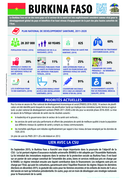
Le Burkina Faso est un des rares pays où le secteur de la santé est très explicitement considéré comme vital pour le développement global du pays et bénéficie d’un haut niveau d’engagement de la part des plus hautes autorités de
l’Etat.
Key considerations for the use of law to prevent noncommunicable diseases in the WHO European Region
Report of an intensive legal training and capacity-building workshop on law and noncommunicable diseases (Moscow, 30 May–3 June 2016)
The report summarizes important issues, themes and topics discussed during the meeting in Moscow, ranging from the design and implementation of legislation, reconc
...