
Filter
99
Featured
29
15
Language
Document type
72
14
5
4
3
1
Countries
11
5
5
5
4
3
3
3
3
2
2
2
2
2
2
2
1
1
1
1
1
1
1
1
1
1
1
1
1
1
1
Authors & Publishers
Publication Years
Toolboxes
26
9
6
6
6
5
4
4
3
3
3
3
2
2
2
1
1
1
1
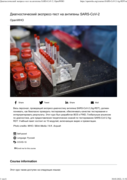
Весь персонал, проводящий экспресс-диагностику антигена SARS-CoV-2 (Ag-RDT), должен понимать, как безопасно проводить тестирование, обеспечивать качество тестирования и и
...
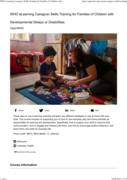
WHO eLearning Caregiver Skills Training for Families of Children with Developmental Delays or Disabilities
recommended
These easy to use e-learning modules will teach you different strategies to use at home with your child. This course focuses on supporting you on how to use everyday play and home activities as opportunities for learning and development. Specifically, how to support your child to improve their commu
...
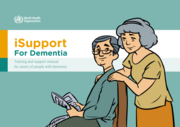
iSupport
recommended
iSupport is a self-help skills and training programme for carers of people with dementia. Worldwide, around 55 million people have dementia. Dementia causes significant psychological and emotional impact on families and carers. iSupport aims to prevent and/or decrease mental and physical health prob
...
Risk communications
recommended
For public health emergencies, risk communication includes the range of communication capacities required through the preparedness, response and recovery phases of a serious public health event to encourage informed decision making, positive behaviour change and the maintenance of trust.
Risk commu
...
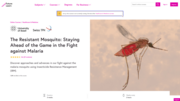
Discover approaches and advances in our fight against the malaria mosquito using Insecticide Resistance Management (IRM).
On this three-week course, you’ll examine the rise of insecticide resistant mosquitoes and the resultant need for a new approach in the world’s fight against malaria transmi
...
MAGIC authoring and publication platform (MAGICapp) - for guidelines and evidence summaries - is developed through our research and innovation program.
The platform allows authors to write and publish their guidelines and evidence summaries in a highly structured fashion, using the GRADE methodol
...
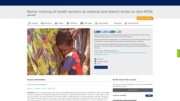
Noma (cancrum oris) is a serious gangrenous disease of the mouth and face, mainly affecting children aged 2 to 6 years in sub-Saharan Africa.
Despite substantial knowledge gaps, it is reported to be linked with malnutrition, poor oral hygiene, immunosuppression, and living in extreme poverty situ
...

Onchocerca volvulus transmitted by repeated bites of infected blackflies (Simulium spp.). These blackflies breed along fast-flowing rivers and streams, close to remote villages located near fertile land where people rely on agriculture.
There is a need to reinforce skills of national and district
...
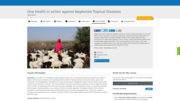
Neglected Tropical Diseases (NTDs) continue to cause hardship and harm to over one billion people worldwide, burdening individuals, families and communities who are already marginalized and disadvantaged. Taking a One Health approach that recognizes the relationship between human, animal, and enviro
...
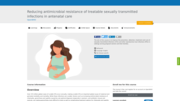
The aim of this course is to improve the prevention, detection, treatment and cure of sexually transmitted infections (STIs) and other reproductive tract infections (RTIs) in settings serving pregnant women and their families.
Neurodiversity is associated with people who experience dyslexia, autism, dyspraxia, ADHD, and other similar neurological conditions. They’re known as “spectrum” conditions that cover a wide range of characteristics but share similarities in how people with these conditions learn and process
...
These are the materials used for disseminating information, provide education and to establish proper communication within the community about hypertension management.
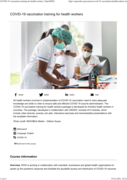
COVID-19 vaccination training for health workers
recommended
All health workers involved in implementation of COVID-19 vaccination need to have adequate knowledge and skills in order to ensure safe and efficient COVID-19 vaccine administration. The COVID-19 vaccination training for health workers package is developed for frontline health workers in countries.
...
Get the latest recommendations on COVID-19 diagnostics and testing, and how to improve testing capacity in low-income settings.
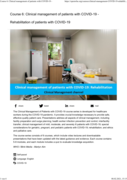
The sixth course of the Clinical Management of Patients with COVID-19 course series is devoted to the rehabilitation of patients with COVID-19. The seven course modules address the manifold and varied rehabilitation needs of patients recovering from COVID-19, including patients with cognitive impair
...
The WHO Global Learning Laboratory (GLL) for Quality UHC links the experiences, expertise, and wisdom of people across the world on important issues relating to quality in the context of UHC. The GLL is a safe space to share knowledge, experiences and ideas; to challenge ideas and approaches; and to
...
The Access to COVID-19 Tools (ACT) Accelerator’s Country Readiness and Delivery workstream has released guidance on developing a national deployment and vaccination plan (NDVP) for COVID-19 vaccines. This course is intended to help national and sub-national focal points in countries develop the ND
...
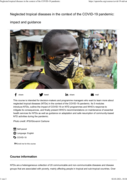
his course is intended for decision-makers and programme managers who want to learn more about neglected tropical diseases (NTDs) in the context of the COVID-19 pandemic. Its 5 modules introduce NTDs, outline the impact of COVID-19 on NTD programmes and WHO’s response to mitigate its consequences,
...
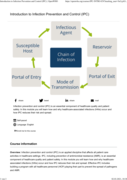
Online Course. Infection prevention and control (IPC) is an essential component of healthcare quality and patient safety. In this module you will learn how and why healthcare-associated infections (HAIs) occur and how IPC reduces their risk and spread.
A range of learning resources for primary health care of the newborn are available
