
Filter
90
Featured
6
17
Language
Document type
26
25
17
7
5
3
2
2
1
1
1
Countries
14
13
5
2
1
1
1
1
1
1
1
1
1
1
1
1
1
1
1
1
Authors & Publishers
Publication Years
Toolboxes
23
17
8
6
5
4
2
2
1
1
1
1
1
1
Guidance on the prioritization of insecticide-treated nets in situations where resources are limited
In the context of limited resources, national malaria programmes may need to decide on how to prioritize all WHO-recommended interventions . This guidance document has been developed to support national malaria programmes in prioritization decisions, specifically on the deployment scope and product
...

Due to high routine vaccination coverage, overall counts of diphtheria case have significantly declined in the Western Pacific Region recently. However, diphtheria is still prevalent in several countries and areas of the Region and remains a public health issue due to its high case fatality rate.
...

Pathogen genomic surveillance has become a priority for public health systems in recent years. Genomic sequencing is increasingly being used to characterize pathogens and monitor important public health priorities (e.g. poliovirus, influenza virus, Mycobacterium tuberculosis and Vibrio cholerae, ant
...
Diphtherie gibt es auf der ganzen Welt. Früher starben bei Ausbrüchen dieser Infektionskrankheit viele Tausende Menschen, besonders Kinder. Weil die meisten Kinder in Europa geimpft sind, ist die Diphtherie hier seit den 1960er Jahren stark zurückgegangen. In Deutschland gab es lange Zeit nur noc
...

The key actions, activities, and approaches in this document are organized within each of the 5Cs (see Table 1 in the PDF) and those of the Strategic preparedness and response plan (SPRP) pillars as follows:
National action plan key activities, prioritized for the current context and the current
...

The Infection prevention and control in the context of coronavirus disease 2019 (COVID-19): a living guideline consolidates technical guidance developed and published during the COVID-19 pandemic into evidence-informed recommendations for infection prevention and control (IPC). This living guideline
...
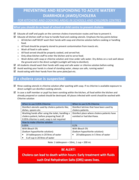
What you should do as head of school or child centre to prevent cholera:
Educate all staff and pupils on the common cholera transmission routes and how to prevent it.
Educate all kitchen staff on how to handle food and cooking utensils. Emphasis the key points below:
o All kitchen staff MUST wa
...
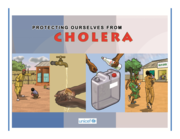
UNICEF: Protecting Ourselves from Cholera
recommended
This flipchart is a visual support for community workers, health workers, emergency workers, and in general all staff conducting face-to-face communication in response to a cholera outbreak.
How to use it?
The flipchart is intended as a support for animating individual or group discussions on
...
The main purpose of the meeting was to review tsetse control tools, activities and their contribution to the elimination of gHAT and the monitoring thereof. Seven endemic countries provided reports on recent and ongoing vector control interventions at the national level (Angola, Cameroon, Côte d’
...
This technical report presents the epidemiology of human and animal leishmaniases in the EU and its neighbouring countries and concludes that the disease remains widespread and underreported in many countries of southern Europe, northern Africa, and the Middle East and that there is a need to improv
...
Leishmaniasis is a vector-borne disease with a wide variety of parasite species, reservoirs, and vectors involved in transmission. It is caused by different species of the protozoa Leishmania and is transmitted to animals and humans through a bite of insects in the Psychodidae family. Its presence i
...
“Preferred product characteristics” (PPCs) are key tools to incentivize and guide the development of urgently needed health products. Some of the vector control interventions deployed in complex emergencies and in response to natural disasters – namely insecticide-treated nets (ITNs) and indoo
...
In this document, recommendations are provided on designing and implementing
a cross-sectional serosurvey using school-based sampling to estimate age-specific
DENV seroprevalence to inform a country’s national dengue vaccination program.
The document includes recommendations for methods for
...
This document outlines the evaluation process that WHO undertakes to assess novel tools and strategies targeted at VBDs. Its aim is to articulate the linkage between the generation of evidence that demonstrates public health impact of novel interventions, and the development of policy recommendation
...
Déclaration de Principe, octobre 2020
Este artículo analiza un grupo particularmente vulnerable a la pandemia de la COVID-2019: las personas privadas de libertad (PPLs). Con base en el análisis del Censo Carcelario de 2019, presentamos la situación actual de las PPLs y las condiciones de los establecimient
...
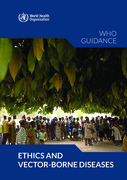
The primary audience for this guidance is persons
working directly in vector-borne disease prevention
and control, including programme managers,
researchers and field workers. A brief technical
background is provided for the benefit of persons
without expertise in vector-borne diseases; readers
...
Through the USAID-funded Organized Network of Services for Everyone’s Health (ONSE) Activity, MSH is assisting Malawi’s National Malaria Control Program to provide high-quality malaria services at the facility and community levels in 10 districts, covering nearly a third of the country.
Our
...
In areas of Mexico, Central America, and South America, where the Trypanosoma cruzi parasite is present in triatomine bugs, improved housing and spraying insecticide inside housing to eliminate the bugs has significantly decreased the spread of Chagas disease. Screening of blood donations for Chagas
...
