
Filter
55
Featured
2
6
Language
Document type
34
5
4
3
2
2
2
1
1
Countries
8
2
2
1
1
Authors & Publishers
Publication Years
Category
13
9
8
6
3
1
1
Children continue to be exposed to powerful food marketing, which predominantly promotes foods high in saturated fatty acids, trans-fatty acids, free sugars and/or sodium and uses a wide variety of marketing strategies that are likely to appeal to children. Food marketing has a harmful impact on chi
...
This report is the annual global monitoring report documenting progress towards Sustainable Development Goal (SDG) 2 targets 2.1 and 2.2. This year’s report explores the links between urbanization and changing food systems and how these changes are impacting the availability, affordability and des
...
Diets are changing everywhere, and the burden of disease associated with unhealthy diets is a worldwide concern. Measurement and monitoring of diets across countries and population groups is critical. However, there are no harmonized metrics for tracking how the healthfulness of diets around the wor
...

This guideline provides updated, evidence-informed guidance on the percentage of total fat in the diet to reduce the risk of unhealthy weight gain.
This guideline is intended for a wide audience involved in the development, design and implementation of policies and programmes in nutrition and pub
...
In 2019, following a request from the Codex Committee on Food Hygiene (CCFH), the Codex Alimentarius Committee (CAC) approved new work at its 42nd Session on the development of guidelines for the control of Shiga toxin-producing Escherichia coli (STEC) in leafy vegetables and in sprouts.
The obje
...
In 2019, following a request from the Codex Committee on Food Hygiene (CCFH), the Codex Alimentarius Committee (CAC) approved new work at its 42nd Session on the development of guidelines for the control of Shiga toxin-producing Escherichia coli (STEC) in leafy vegetables and in sprouts.
The obje
...
Complementary feeding, defined as the process of providing foods in addition to milk when breast milk or milk formula alone are no longer adequate to meet nutritional requirements, generally starts at age 6 months and continues until 23 months of age. This is a developmental period when it is critic
...
To address the health challenges brought about by the changing food environment and high salt intake, WHO China, jointly with the National Institute for Nutrition and Health of China CDC and Tsinghua University, conducted an innovative study that applied nudge-based interventions to promote lower sa
...
This guideline provides updated, evidence-informed guidance on the percentage of total fat in the diet to reduce the risk of unhealthy weight gain.
This guideline is intended for a wide audience involved in the development, design and implementation of policies and programmes in nutrition and pub
...
La forte augmentation des taux de surpoids et d’obésité1 constitue une menace pour la santé de milliards
de personnes dans le monde. En 2016, plus de 1,9 milliard d’adultes âgés de 18 ans ou plus étaient en surpoid
Las tasas cada vez mayores de sobrepeso y obesidad son una amenaza para la salud de miles de millones
de personas en todo el mundo. En 2016, más de 1900 millones de mayores de 18 años tenían sobrepeso , de los cuales más de 600 millones eran obesos. En 2020, más de 38 millones de menores de 5
...
Las escuelas juegan un papel fundamental a la hora de crear entornos seguros y enriquecedores que aseguren a los estudiantes los cimientos para desarrollarse, aprender y convertirse en ciudadanos sanos, instruidos y comprometidos
PROGRAMA DE PARTICIPACIÓN ESTUDIANTIL
Facing the global nutrition challenges, the World Health Organization (WHO) teamed up with the United Nations Institute for Training and Research (UNITAR) to design, under the guidance of the Department of Nutrition for Health and Development (NHD), a Nutrition Knowledge Hub. By building the techni
...
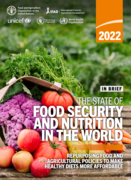
This year’s report should dispel any lingering doubts that the world is moving backwards in its efforts to end hunger, food insecurity and malnutrition in all its forms. We are now only eight years away from 2030, but the distance to reach many of the SDG 2 targets is growing wider each year. Ther
...
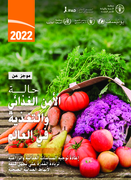
يحتوي الموجز من المنشور الرئيسي لمنظمة الأغذية والزراعة، حالة الأمن الغذائي والتغذية في العالم 2022، على الرسائل الرئيسية والنقاط لأساسية من المنشور ويستهدف وسائل ا
...
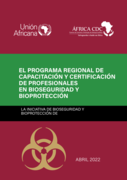
Biosafety involves the implementation of containment principles, technologies and practices to prevent unintentional exposure to biological agents. Biosecurity involves the protection, control and accountability of biological materials and information related to these materials and dualuse research,
...
The platform mapping climate risks and finding solutions
Obesity and diet-related noncommunicable diseases (NCDs) have been steadily increasing globally, and with them, a pressing need to implement effective responses to address the contributing factors. Among the available evidence-based policy options that enable healthier choices and improved diets is
...
Climate change triggers mounting food insecurity, poverty and displacement in Africa
