
Filter
488
Featured
31
17
Language
Document type
90
70
55
50
50
45
31
26
18
15
10
9
7
6
6
Countries
107
27
20
12
7
7
7
7
6
6
6
6
6
5
5
5
4
4
4
4
3
3
3
3
3
3
3
3
3
2
2
2
2
2
2
2
2
2
1
1
1
1
1
1
1
1
1
1
1
1
1
1
1
1
1
1
1
1
1
1
1
1
1
1
1
1
1
1
Authors & Publishers
Publication Years
Category
111
62
45
32
27
19
6
The aim of this protocol is to support the conduct of entomological comparative efficacy assessments for vector control products and the associated non-inferiority analysis. This evidence is used to inform discussions within the guidelines development context as to whether a new vector control prod
...
Malar J 23, 333 (2024). https://doi.org/10.1186/s12936-024-05165-w.
Prioritization of spending on prevention, anti-malarial medicines, and health systems strengthening can fight incident cases and fatalities simultaneously, especially in resource-scarce, malaria-endemic countries. Furthermore, imp
...
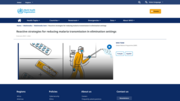
This WHO guidance outlines reactive strategies to interrupt malaria transmission in areas nearing elimination or to prevent re-establishment, triggered by confirmed cases.
The purpose of the guideline is to provide information to stakeholders on the necessary requirements for a complete prequalification dossier for insecticide-treated nets (ITNs). Its aim is to establish the baseline for dossier requirements which are necessary to assess ITN products for the purposes
...
Medicine 2024;103:29(e39010. This review underscores the urgency of adapting to the changing landscape of malaria transmission driven by climate change. It emphasizes the significance of proactively addressing climate-related challenges to enhance malaria control and protect the health and well-bein
...
This paper is the first quantitative analysis of how the impact of extreme weather events, such as floods and cyclones, affects the malaria burden on the continent, as well as the implications of long-onset climate change. This research involved developing a climate model to predict changes in inten
...

Reprogramming examples for GC7. This document supports the introduction of climate change-related interventions
into programs to reduce transmission of malaria and protect vulnerable populations.
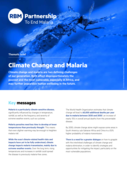
Thematic brief. Climate change and malaria are two defining challenges of our generation. Both affect disproportionately the
poorest and the most vulnerable, especially in Africa, and may further jeopardize human wellbeing in the future
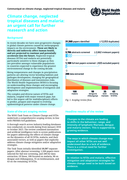
In recent decades we have seen progressive changes to global climate patterns caused by anthropogenic impacts on the environment. These are likely to directly and indirectly affect human health, and are projected to continue and potentially
accelerate into the future. Neglected tropical diseases (N
...
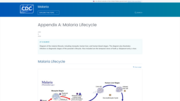
Diagram of the malaria lifecycle, including mosquito, human liver, and human blood stages. The diagram also illustrates infective vs diagnostic stages of the parasite's lifecycle. Also included are the temporal views of both p. falciparum and p. vivax.
Ce chapitre fait partie du Rapport 2024 sur les résultats.

Infographics
Dossier d'infomation

Decoding Infection and Transmission Volume 2, 2024, 100030


Trends in development assitance for health

Interactive map

Le paludisme est une maladie parasitaire grave transmise par le moustique Anopheles, principalement dans les zones tropicales.
