
Toolboxes
Filter
879
Featured
3
6
Language
866
114
75
74
73
64
29
8
8
7
7
7
3
2
2
1
1
1
1
1
1
1
1
Document type
389
95
89
56
49
44
42
28
20
20
17
16
12
1
1
Countries
384
85
26
18
16
11
10
6
5
5
4
4
4
4
3
3
2
2
1
1
1
1
1
1
1
1
1
1
1
1
1
1
1
1
1
1
1
1
1
Authors & Publishers
111
89
73
33
24
12
12
11
11
10
9
9
8
8
8
8
8
7
7
7
7
6
6
6
6
6
6
6
6
5
5
5
5
5
5
4
4
4
4
4
4
4
4
4
3
3
3
3
3
3
3
3
3
3
3
3
3
3
3
3
3
3
3
3
3
3
3
3
3
3
3
3
3
3
3
3
3
3
2
2
2
2
2
2
2
2
2
2
2
2
2
2
2
2
2
2
2
2
2
2
2
2
2
2
2
2
2
2
2
2
2
2
2
2
2
2
2
2
2
2
2
2
2
2
2
2
2
2
2
2
2
2
2
2
2
2
2
2
2
2
2
2
2
2
2
2
2
2
2
2
2
2
2
2
2
2
2
2
2
2
2
2
1
1
1
1
1
1
1
1
1
1
1
1
1
1
1
1
1
1
1
1
1
1
1
1
1
1
1
1
1
1
1
1
1
1
1
1
1
1
1
1
1
1
1
1
1
1
1
1
1
1
1
1
1
1
1
1
1
1
1
1
1
1
1
1
1
1
1
1
1
1
1
1
1
1
1
1
1
1
1
1
1
1
1
1
1
1
1
1
1
1
1
1
1
1
1
1
1
1
1
1
1
1
1
1
1
1
1
1
1
1
1
1
1
1
1
1
1
1
1
1
1
1
1
1
1
1
1
1
1
1
1
1
1
1
1
1
1
1
1
1
1
1
1
1
1
1
1
1
1
1
1
1
1
1
1
1
1
1
1
1
1
1
1
1
1
1
1
1
1
1
1
1
1
1
1
1
1
1
1
1
1
1
1
1
1
1
1
1
1
1
1
1
1
1
1
1
1
1
1
1
1
1
1
1
1
1
1
1
1
1
1
1
1
1
1
1
1
1
1
1
1
1
1
1
1
1
1
1
1
1
1
1
1
1
1
1
1
1
1
1
1
1
1
1
1
1
1
1
1
1
1
1
1
1
1
1
1
1
1
1
1
1
1
1
1
1
1
1
1
1
1
1
1
1
1
1
1
1
1
1
1
1
1
1
1
1
1
1
1
1
1
1
1
1
1
1
1
1
1
1
1
1
1
1
1
1
1
1
1
1
1
1
1
1
1
1
1
1
1
1
1
1
1
1
1
1
1
1
1
1
1
1
1
1
1
1
1
1
1
1
1
1
1
1
1
1
1
1
1
1
1
1
1
1
1
1
1
1
1
1
1
1
1
1
1
1
1
1
1
1
1
1
1
1
1
1
1
1
1
1
1
1
1
1
1
1
1
1
1
1
1
1
1
1
1
1
1
1
1
1
1
1
1
1
1
1
1
1
1
1
1
1
1
1
1
1
1
1
1
1
1
1
1
1
1
1
1
1
1
1
1
1
1
1
1
1
1
1
1
1
1
1
1
1
1
1
1
1
1
1
1
1
1
1
1
1
1
1
1
1
1
1
1
1
1
1
1
1
1
1
1
1
1
1
1
1
1
1
1
1
1
1
1
1
1
1
1
1
1
1
1
1
1
1
1
1
1
1
1
1
1
1
1
1
1
1
1
1
1
1
1
1
1
1
1
1
1
1
1
1
1
1
1
1
1
1
1
1
1
1
1
1
1
1
1
1
1
1
1
1
1
1
1
1
1
1
1
1
1
1
1
1
1
1
1
1
1
1
1
1
1
1
1
1
1
1
1
1
1
1
1
1
1
1
1
1
1
1
1
1
1
1
1
1
1
1
1
1
1
1
1
1
1
1
1
1
1
1
1
1
1
1
1
1
1
1
1
1
1
1
1
1
1
1
1
1
1
1
1
1
1
1
1
1
1
1
1
1
1
1
1
1
1
1
1
1
1
1
1
1
1
1
1
1
1
1
1
1
1
1
1
1
1
1
1
1
1
1
1
1
1
1
1
1
1
1
1
1
1
1
1
1
1
1
1
1
1
1
1
1
1
1
1
1
1
1
1
1
1
1
1
1
1
1
1
1
1
1
1
1
1
1
1
1
1
1
1
1
1
1
1
1
1
1
1
1
1
1
1
1
1
1
1
1
1
1
1
1
1
1
1
1
1
1
1
1
1
1
1
1
1
1
1
1
1
1
1
1
1
1
1
1
1
1
1
1
1
1
1
1
1
1
1
1
1
1
1
1
1
1
1
1
1
1
1
1
1
1
1
1
1
1
1
1
1
1
1
1
1
1
1
1
1
1
1
1
1
1
1
1
1
1
1
1
1
1
1
1
1
1
1
1
1
1
1
1
1
1
1
1
1
1
1
1
1
1
1
1
1
1
1
1
1
1
1
1
1
1
1
1
1
1
1
1
1
1
1
1
1
1
1
1
1
1
1
1
1
1
1
1
1
1
1
1
1
1
1
1
1
1
1
1
1
1
1
1
1
1
1
1
1
1
1
1
1
1
1
1
1
1
1
1
1
1
1
1
1
1
1
1
1
1
1
1
1
1
1
1
1
1
1
1
1
1
1
1
Publication Years
633
209
35
2
Category
562
76
56
36
4
2

Although air pollution is well known to be harmful to the lung and airways, it can also damage most other organ systems of the body. It is estimated that about 500,000 lung cancer deaths and 1.6 million COPD deaths can be attributed to air pollution, but air pollution may also account for 19% of all
...
cardiovascular deaths and 21% of all stroke deaths. Air pollution has been linked to other malignancies, such as bladder cancer and childhood leukemia. Lung development in childhood is stymied with exposure to air pollutants, and poor lung development in children predicts lung impairment in adults. Air pollution is associated with reduced cognitive function and increased risk of dementia. Particulate matter in the air (particulate matter with an aerodynamic diameter < 2.5 μm) is associated with delayed psychomotor development and lower child intelligence. Studies link air pollution with diabetes mellitus prevalence, morbidity, and mortality. Pollution affects the immune system and is associated with allergic rhinitis, allergic sensitization, and autoimmunity. It is also associated with osteoporosis and bone fractures, conjunctivitis, dry eye disease, blepharitis, inflammatory bowel disease, increased intravascular coagulation, and decreased glomerular filtration rate. Atopic and urticarial skin disease, acne, and skin aging are linked to air pollution. Air pollution is controllable and, therefore, many of these adverse health effects can be prevented.
more
The article "Air Pollution: The Emergence of a Major Global Health Risk Factor" discusses the significant health impacts of air pollution, a leading risk factor for global mortality. It highlights the adverse effects of fine particulate matter (PM2.5) and tropospheric ozone, linking them to cardiova
...
scular and respiratory diseases, cancer, and reduced life expectancy. While high-income countries have reduced air pollution levels, low- and middle-income countries face rising pollution, contributing to 4.9 million deaths in 2017. The article emphasizes the need for research to understand pollution’s health effects, identify key sources, and evaluate the effectiveness of interventions to improve air quality globally.
more
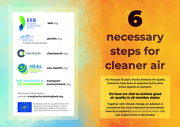
For the past 10 years, the EU Ambient Air Quality Directives have been an essential tool to drive
action against air pollution.
Air pollution is the second leading cause of deaths from noncommunicable diseases (NCDs) after tobacco smoking, according to WHO.
Disease burden is measured in Disability-Adjusted Life Years (DALYs) – both from years of life lost due to premature death and years lived witha disability. One DALY equals one year of healthy life.
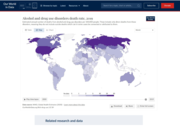
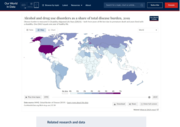
Estimated annual number of deaths from alcohol and drug use disorders per 100,000 people. These include only direct deaths from thesedisorders, meaning they do not include suicide deaths which can in some cases be connected or attributed to them.
The report provides an overview of alcohol consumption, related health harm, and policy responses in 30 European countries (EU Member States, Norway, and Switzerland). It highlights the high levels of alcohol consumption in the WHO European Region, which contribute to a significant disease burden co
...
mpared to other regions. The report covers trends in alcohol consumption and harm between 2010 and 2016, noting some progress in reducing alcohol-attributable mortality but stagnation in consumption reduction and heavy episodic drinking.
The assessment of alcohol policies shows variability in implementation across countries, particularly in areas like pricing and reducing the negative consequences of drinking. It emphasizes the need for stronger evidence-based policies, such as better regulation, taxation, and accessibility restrictions, to further reduce alcohol-related harm and achieve health-related Sustainable Development Goals.
more
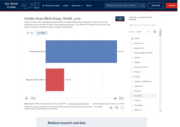
Shown in blue is the estimated annual number of deaths attributed to drug use. Shown in red is theestimated annual number of deaths from drug use disorders. The difference between them is that theyrelate to indirect and direct causes of death, respectively.
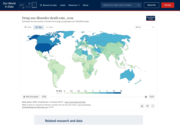
Estimated annual number of deaths from drug use disorders per 100,000 people.
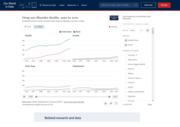
Estimated annual number of deaths from drug use disorders, by type of drug.
The document is a summary report by the World Health Organization (WHO) Regional Office for the Eastern Mediterranean, focusing on a capacity-building workshop held in Abu Dhabi in 2019. The workshop addressed the management and care of substance use disorders, aiming to improve technical and manage
...
rial capacities in areas such as policy development, treatment services, prevention, monitoring, and international collaboration. Participants included representatives from 12 countries, WHO collaborating centers, and other UN agencies.
more
The document discusses physical inactivity as a major risk factor for non-communicable diseases (NCDs), which contribute to two-thirds of global deaths, primarily in low- and middle-income countries. It emphasizes the global prevalence of physical inactivity and its health risks, such as increased m
...
ortality and chronic diseases. The text advocates for simple, sustainable interventions to promote physical activity, such as public initiatives like car-free days, to prevent and manage NCDs. It highlights the importance of exercise in improving physical and mental health and calls for collaborative, comprehensive approaches to increase activity levels.
more
This document updates the 1999 World Health Organization (WHO) classification of diabetes. It prioritizes clinical care and guides health professionals in choosing appropriate treatments at the time of diabetes diagnosis, and provides practical guidance to clinicians in assigning a type of diabetes
...
to individuals at the time of diagnosis. It is a compromise between clinical and aetiological classification because there remain gaps in knowledge of the aetiology and pathophysiology of diabetes. While acknowledging the progress that is being made towards a more precise categorization of diabetes subtypes, the aim of this document is to recommend a classification that is feasible to implement in different settings throughout the world. The revised classification is presented in Table 1. Unlike the previous classification, this classification does not recognize subtypes of type 1 diabetes and type 2 diabetes and includes new types of diabetes (“hybrid types of diabetes” and “unclassified diabetes”).
more
The article "Time to Align: Development Cooperation for the Prevention and Control of Non-Communicable Diseases" argues for greater international cooperation and investment in addressing non-communicable diseases (NCDs), especially in low- and middle-income countries. Traditionally, global health fu
...
nding has focused on infectious diseases, but the growing burden of NCDs—such as cardiovascular diseases, cancer, and diabetes—necessitates new approaches to development assistance.
more
Burden of fungal asthma in Africa: A systematic review and meta-analysis
Kwizera, R.; Musaazi, J.; Meya, D.B.; et al.
PLOS ONE, which is part of the Public Library of Science (PLOS)
(2019)
CC2
Asthma is one of the neglected diseases in Africa with a high prevalence. Allergic fungal diseases have been reported to complicate asthma progression and treatment outcomes. However, data about fungal asthma and its associated complications are limited in Africa. We aimed to estimate the burden of
...
fungal asthma among adults and children in Africa using a systematic review.
more

Silicosis is a group of occupational lung diseases caused by breathing in silica dust. It has been described since ancient times, when miners and stonecutters were exposed to dust containing this crystalline mineral.

The article "Asthma treatment in children: A guide to screening for and management of hypothalamic-pituitary-adrenal axis suppression" discusses the risks associated with the use of corticosteroids in pediatric asthma treatment. It highlights that prolonged corticosteroid use can suppress the hypoth
...
alamic-pituitary-adrenal (HPA) axis, potentially leading to adrenal insufficiency, especially during stress. The article reviews diagnostic and screening approaches, recommending specific tests and management strategies based on current evidence. It emphasizes the need for monitoring children on corticosteroids to mitigate the risk of serious complications and suggests modifications in treatment to prevent HPA axis suppression.
more
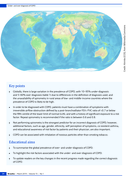
Under- and over-diagnosis of COPD: a global perspective
Ho T., Cusack R.P., Chaudhary N. et al.
Breathe, part of the European Respiratory Society (ERS)
(2019)
CC2
The article "Under- and over-diagnosis of COPD: a global perspective" reviews the worldwide variation in the prevalence of chronic obstructive pulmonary disease (COPD) and issues related to its misdiagnosis. It highlights that COPD is under-diagnosed due to factors such as limited access to spiromet
...
ry and variable diagnostic criteria, especially in low- and middle-income countries. Conversely, over-diagnosis often results from reliance on non-standard criteria or inadequate spirometry use. The article discusses key risk factors, including age, gender, exposure to pollutants, and comorbidities, and emphasizes the need for standardized diagnostic practices to better address and manage COPD globally.
more
Lack of information about economic burden of COPD is a major cause of lack of attention to this chronic condition from governments and policymakers.

The article investigates the effectiveness and challenges of remote monitoring systems for chronic respiratory diseases, focusing on COPD and asthma. It reviews various technologies and their potential to improve patient outcomes through better symptom tracking, medication adherence, and early detec
...
tion of exacerbations. The study highlights that while remote monitoring has significant potential, challenges such as data accuracy, patient compliance, and integration with existing healthcare systems remain. The authors call for further research to standardize and validate remote monitoring tools and emphasize the need for patient-centric approaches to enhance engagement and adherence.
more
