
Filter
106
Featured
5
90
Language
Document type
102
1
1
1
1
Countries
11
4
4
2
1
1
1
1
1
Authors & Publishers
Publication Years
Category
1
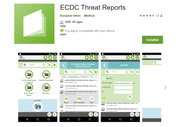
Free and open access application that gives you direct access to key updates and reports on communicable disease threats of concern to the EU on your mobile device.
The application is free to use and can be accessed by anyone. ECDC partners can access additional reports by logging in with their ECD
...
Arbovirus (arthropod-borne virus) is defined as any virus that is transmitted to humans and/or other vertebrates by certain species of blood-feeding arthropods, mostly insects (flies and mosquitoes) and arachnids (ticks). Arbovirus is a descriptive term based on transmission by vectors with particul
...

Updated: 20 July 2019
Fact sheet also available in Arabic, French, Spanish, Portuguese, Chinese and Russian. For other language versions go to: http://www.who.int/mediacentre/factsheets/zika/en/
WHO Zika Virus - Questions & Answers (Spanish)
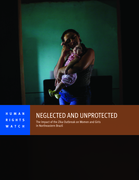
The Impact of the Zika Outbreak on Women and Girls in Northeastern Brazil
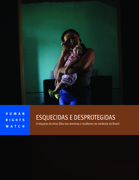
O impacto do vírus Zika nas meninas e mulheres no nordeste do Brasil
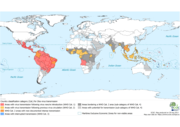
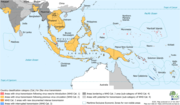
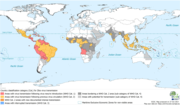

Zika virus (English)
recommended
Fact sheet on Zika virus containing recommendations for pregnant women and information for the treatment, prevention and control of the disease.
This factsheet is also available in Spanish, Portuguese and French!

WHO Zika Virus Fact Sheet (Portuguese)
Updated: January 2016
updated 05 April 2016
N Engl J Med. 2016 Jan 13. [Epub ahead of print] Free full text
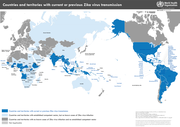
The explosive pandemic of Zika virus infection occurring throughout South America, Central America, and the Caribbean (see map) and potentially threatening the United States is the most recent of four unexpected arrivals of important a
...
WHO Factsheet. Updated 02 March 2016

Source: World Health Organisation
