Filter
889
Filtered Results: 889
Text search:
Ministry
of
Health,
Ministry
of
Food
and
Agriculture,
et
al.
Featured
Recommendations
57
New Publications
281
Language
Document type
No document type
444
Studies & Reports
243
Guidelines
84
Strategic & Response Plan
52
Manuals
34
Training Material
12
Fact sheets
10
Situation Updates
8
Resource Platforms
1
Online Courses
1
Countries / Regions
Global
48
Kenya
40
Ethiopia
32
Sierra Leone
24
Myanmar / Burma
24
Malawi
23
Zambia
23
Nepal
20
Liberia
19
Ghana
17
Uganda
17
Nigeria
16
Tanzania
16
Bangladesh
15
Africa
14
India
14
Senegal
12
Latin America and the Carribbean
12
Rwanda
11
Syria
11
Western and Central Europe
11
Lesotho
10
South–East Asia Region
10
South Africa
9
Haiti
8
Namibia
8
Guinea
7
Asia
7
Venezuela
7
South Sudan
7
Ukraine
6
Zimbabwe
6
Mozambique
6
Pakistan
6
Thailand
5
Afghanistan
5
Philippines
5
Jordan
5
Middle East and North Africa
5
Colombia
4
Cameroon
4
Burkina Faso
4
Cambodia
4
Western Pacific Region
4
Sri Lanka
4
Sudan
4
Indonesia
4
Tajikistan
3
Congo, Democratic Republic of
3
North America
3
Côte d’Ivoire / Ivory Coast
3
Lebanon
3
Vietnam
3
Eastern Europe
3
Iraq
3
Somalia
3
Turkey
2
Benin
2
China
2
Kazakhstan
2
Iran
2
Albania
2
Kyrgyzstan
2
Niger
2
Morocco
2
Saudi Arabia
2
West and Central Africa
2
Turkmenistan
2
Tunisia
2
Bosnia and Herzegovina
2
East and Southern Africa
2
Brazil
2
Mali
2
Libya
2
Botswana
2
Ecuador
2
Madagascar
2
North Macedonia
1
Timor Leste/ East Timor
1
Chile
1
Laos
1
Congo-Brazzaville
1
Peru
1
Bulgaria
1
Italy
1
Germany
1
Eastern Europe and Central Asia
1
Paraguay
1
Japan
1
Denmark
1
France
1
Mauritius
1
Latvia
1
Bolivia
1
Argentina
1
Papua New Guinea
1
Moldova
1
Russia
1
Djibouti
1
Yemen
1
Greece
1
Georgia
1
Central African Republic
1
Angola
1
Chad
1
Authors & Publishers
Publication Years
Category
Countries
399
Key Resources
78
Public Health
60
Clinical Guidelines
37
Women & Child Health
35
Capacity Building
18
Pharmacy & Technologies
2
Toolboxes
Planetary Health
113
AMR
68
NTDs
38
COVID-19
32
Mental Health
26
Conflict
26
Disability
24
Ebola & Marburg
24
Global Health Education
24
Natural Hazards
19
HIV
18
Health Financing Toolbox
16
Rapid Response
15
Refugee
15
TB
12
Pharmacy
12
Caregiver
11
NCDs
11
2.0 Rapid Response
9
Specific Hazards
8
Cholera
5
Malaria
5
Zika
3
South Sudan
1
The purpose of the report is to present some first recommendation for the development of Myanmar ecological quality criteria using the system of the EU Water Framework Directive (EU WFD) as baseline, with main focus on the characterization and classification processes. As background for the recommen...
The revised package of BFHI materials includes five sections: 1. Background and Implementation, 2. Strengthening and Sustaining the BFHI: A course for decision-makers, 3. Breastfeeding Promotion and Support in a Baby-friendly Hospital: a 20-hour course for maternity staff, 4. Hospital Self-Appraisal...
The second edition of the “A Region on the Move” report provides an overview of population movement trends in West and Central Africa in 2021. It aims to provide a comprehensive overview of mobility in the region and showcase the versatility, multidimensionality and nuances of regional mobility ...
Chagas disease is currently endemic and also predicted to be at increased transmission risk under future climate change scenarios. Similarly, an expansion of areas in the United States at increased risk for Chagas disease transmission is also expected over the next several decades under climate chan...
An Overview of Current Evidence with Recommendations for Strengthening Community Health Worker Programs to Accelerate Progress in Achieving the Health-related Millennium Development Goals
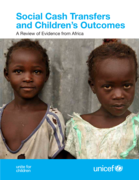
A Review of Evidence from Africa
Accessed: 21.08.2019
As a result of Russia’s invasion of Ukraine, the people of Ukraine, especially the most vulnerable, are paying an enormous price. Lives and livelihoods are being lost, with more than ten million people forced from their homes— and their country—in search of safety. The war has unleashed catast...
DHS Working Papers No. 105 - Rwanda has developed and implemented many strategies at the national level to reduce the incidence of HIV in the general population. One of the main objectives of such interventions is to improve the general level of knowledge of HIV, with the hypothesis that increasing...

In Kenya, the bacterial infections that contribute most to human disease are often those in which re-‐sistance is most evident. Examples are multidrug-‐resistant enteric bacterial pathogens such as typhoid, ...
The present report is based on a longitudinal analysis of assessments on mixed migration routes and dynamics, conducted over the course of 2018. It is based on six rapid thematic studies, conducted over the course of 2018, as well as a longitudinal analysis of changes in mixed migration routes and d...
Integrating WASH and MHCP interventions will always require imagination and creativity to adapt the approach to specific conditions, opportunities and constraints in each context. The book is designed to stimulate reflection and encourage initiatives to seek opportunities for closer integration of t...
In many conflicts around the world, more children die from diseases linked to unsafe water than from direct violence. UNICEF is releasing Water Under Fire volume 3, a report that highlights the issues children face in accessing water in times of war. The report demonstrates the humanitarian impact o...
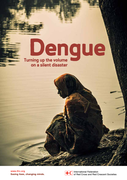
Over the past 50 years, dengue has spread from nine to over a hundred countries, making it the most rapidly spreading vector-borne disease. Yet, dengue continues to have a low profile among policy-makers and donors and does not receive the media attention it deserves. While there is no vaccine or cu...