
Filter
5751
Filtered Results: 5751
Text search:
risk
and
safety
assesment
Featured
Recommendations
667
New Publications
1527
Language
Document type
No document type
2949
Guidelines
952
Studies & Reports
883
Manuals
406
Strategic & Response Plan
267
Training Material
108
Fact sheets
98
Situation Updates
54
Brochures
11
Resource Platforms
10
Infographics
7
Online Courses
5
App
1
Countries / Regions
Global
243
India
218
Kenya
158
Sierra Leone
121
Western and Central Europe
110
South Africa
110
Liberia
106
Ethiopia
105
Nigeria
104
Myanmar / Burma
104
Syria
97
Nepal
90
Uganda
87
Bangladesh
73
Malawi
65
Tanzania
65
Ghana
64
Africa
62
Latin America and the Carribbean
59
Indonesia
58
Rwanda
57
Philippines
57
Ukraine
56
Namibia
56
Zambia
56
Congo, Democratic Republic of
48
South Sudan
48
Guinea
36
South–East Asia Region
35
West and Central Africa
34
Cambodia
30
East and Southern Africa
30
Lesotho
28
Zimbabwe
26
Russia
26
Eastern Europe
25
Haiti
24
Eastern Europe and Central Asia
24
Yemen
24
Asia
23
Brazil
21
Pakistan
21
Afghanistan
20
Middle East and North Africa
20
Jordan
18
Lebanon
18
Mozambique
17
Senegal
16
USA
15
Germany
14
Vietnam
14
Botswana
14
Western Pacific Region
13
Sudan
13
Central African Republic
13
Venezuela
12
Thailand
11
Cameroon
11
Burkina Faso
11
Somalia
11
Tajikistan
10
Madagascar
10
Colombia
9
Laos
9
Eswatini/ Swaziland
9
Turkey
8
Albania
8
Mali
8
Iraq
8
Peru
7
Guinea-Bissau
7
United Kingdom
7
Moldova
7
Palestine
7
China
6
Chile
6
Argentina
6
Benin
5
Kazakhstan
5
Iran
5
Sri Lanka
5
Angola
5
Chad
5
Gambia
4
Togo
4
Kyrgyzstan
4
North America
4
Spain
4
Côte d’Ivoire / Ivory Coast
4
Papua New Guinea
4
Georgia
4
Libya
4
Ecuador
4
North Macedonia
3
Timor Leste/ East Timor
3
El Salvador
3
Singapore
3
Uzbekistan
3
Burundi
3
Croatia
3
Paraguay
3
Turkmenistan
3
Mauritius
3
Portugal
3
Bosnia and Herzegovina
3
Bolivia
3
Egypt
3
Greece
3
Poland
3
Bhutan
3
Mexico
2
Serbia
2
Australia
2
Canada
2
Niger
2
Qatar
2
Mauritania
2
Dominican Republic
2
Lithuania
2
Saudi Arabia
2
Japan
2
Belarus
2
Djibouti
2
Romania
2
Honduras
2
Guatemala
2
Switzerland
1
Fiji
1
Estonia
1
Mongolia
1
Bulgaria
1
Italy
1
Hungary
1
Ireland
1
Denmark
1
Belgium
1
France
1
Maldives
1
Azerbaijan
1
Israel
1
Southern Africa
1
Nicaragua
1
Cuba
1
Authors & Publishers
Publication Years
Category
Countries
1924
Key Resources
507
Clinical Guidelines
483
Women & Child Health
360
Public Health
313
Capacity Building
138
Pharmacy & Technologies
78
Toolboxes
COVID-19
576
Mental Health
431
HIV
325
Planetary Health
246
Ebola & Marburg
226
Conflict
222
TB
218
Caregiver
195
AMR
184
Disability
167
Rapid Response
148
NTDs
133
Refugee
124
Natural Hazards
122
Pharmacy
114
2.0 Rapid Response
93
NCDs
90
Global Health Education
90
Malaria
60
Specific Hazards
53
Cholera
43
Zika
39
Polio
32
Health Financing Toolbox
22
Social Ethics
6
Typhoon
4
South Sudan
2
This document addresses preparedness as an important investment against natural and man-made disasters. Through good practices, it urges the humanitarian community, governments and regional bodies to use preparedness thinking to be aware of risks, to reduce them and to plan ahead to combat them in o...
The WHO Regional Office for Europe, the WHO Collaborating Centre on Culture and Health at the University of Exeter (United Kingdom) and the National Institute of Mental Health (Czechia) convened a workshop on culture and reform of mental health care in central and eastern Europe on 2–3 October 201...

An evidence-informed approach for non-formal, out-of-school CSE programmes that aims to reach young people from left-behind populations
This guidance is intended to assist anyone designing and/or implementing CSE in out-of-school settings, especially in low- and middle-income countries. This includ...
PLoS Negl Trop Dis 15(8): e0009697. Chagas disease (CD), caused by the parasite Trypanosoma cruzi, affects ~6–7 million people worldwide. Significant limitations still exist in our understanding of CD. Harnessing individual participant data (IPD) from studies could support more in-depth analyses t...
In recognition that Female Genital Mutilation (FGM) is not only a harmful practice but a violation of human rights, Kenya has adopted a robust legal framework. The country has ratified several international legal instruments that have become part of the Kenyan law as provided for in Article 2 of the...
PLoS ONE 7(12): e52986. doi:10.1371/journal.pone.0052986. Opern Access please download from the website
The purpose of this interim guidance is to provide information and insight to assist public policy and
health system leaders in preparing for and responding to an MCE caused by terrorist use of explosives
(TUE). This document provides practical information to promote comprehensive mass casualty ca...
The purpose of this handbook is to provide guidance to Member States on the practical aspects of maintaining sanitary standards at international borders at ports, airports, and ground crossings (points of entry) as set out in the International Health Regulations (2005). It provides technical advice ...
Physical distancing measures are important to reduce COVID-19 transmission. However, when stringently applied, they can result in negative health and socio-economic impacts. This report draws on a rapid review of available literature, case studies from across Africa and expert knowledge to make reco...

The publication aims to establish the rationale for inclusion and provides technical advice and tools for putting theory into practice. It is intended to be used as a reference during organizational and program/project development with a focus on gender responsiveness and disability inclusion as wel...
3rd Edition – July 2017
www.msfaccess.org

PLoS Negl TropDis14(10): e0008837. https://doi.org/ 10.1371/journal.pntd.0008837.
We conducted alandscape analysis on parasitic and vector-borne disease elimination approaches with the aim toidentify evidence-based strategies, core components and key concepts for achieving and sustaining schistosom...
Discussion Paper "Mental health, poverty and development", July 2009
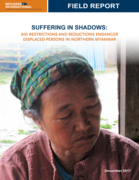
In northern Myanmar, nearly 100,000 people continue to live in displacement camps in Kachin and northern Shan States. Most were first displaced by fighting between the Myanmar military and the Kachin Independence Army in 2011, and many have been displaced multiple times, including in recent months. ...

The 10 recommendations in the COP26 Special Report on Climate Change and Health propose a set of priority actions from the global health community to governments and policy makers, calling on them to act with urgency on the current climate and health crises.
The recommendations were developed in ...
