
Filter
2632
Filtered Results: 2632
Text search:
urgent
funding
Featured
Recommendations
229
New Publications
674
Language
Document type
No document type
1334
Studies & Reports
619
Guidelines
248
Strategic & Response Plan
155
Manuals
132
Fact sheets
42
Training Material
40
Situation Updates
40
Brochures
8
Resource Platforms
8
Infographics
5
Online Courses
1
Countries / Regions
Global
167
India
77
South Africa
63
Syria
56
Kenya
55
Myanmar / Burma
55
Nigeria
54
Africa
47
Liberia
47
Ukraine
46
Sierra Leone
45
Western and Central Europe
44
Bangladesh
44
Latin America and the Carribbean
42
Congo, Democratic Republic of
40
Ethiopia
40
Nepal
39
Uganda
38
South Sudan
31
Yemen
27
Rwanda
24
Tanzania
24
Mozambique
23
Namibia
23
Eastern Europe
22
Zambia
22
Ghana
21
Asia
21
Malawi
19
Haiti
19
Venezuela
19
East and Southern Africa
19
Afghanistan
18
South–East Asia Region
18
Pakistan
18
Guinea
17
West and Central Africa
17
Central African Republic
16
Zimbabwe
15
Philippines
14
Lesotho
13
Senegal
13
Cambodia
13
Brazil
13
Indonesia
13
Somalia
12
Colombia
11
Middle East and North Africa
11
Lebanon
11
Germany
10
Laos
8
Jordan
8
Western Pacific Region
8
Sudan
8
Botswana
8
Vietnam
7
Thailand
6
Moldova
6
Russia
6
Burkina Faso
5
Burundi
5
Palestine
5
Mali
5
Eswatini/ Swaziland
5
Tajikistan
4
Mexico
4
Turkey
4
Benin
4
Cameroon
4
Albania
4
Niger
4
Peru
4
Libya
4
Iraq
4
Madagascar
4
North Macedonia
3
Timor Leste/ East Timor
3
Togo
3
Iran
3
USA
3
Jamaica
3
Southern Africa
3
Poland
3
Chad
3
Switzerland
2
Gambia
2
China
2
Canada
2
Hungary
2
United Kingdom
2
Portugal
2
Sri Lanka
2
Egypt
2
Romania
2
Angola
2
Ecuador
2
El Salvador
1
Serbia
1
Kazakhstan
1
Chile
1
Fiji
1
Estonia
1
Kyrgyzstan
1
Malaysia
1
Morocco
1
Bulgaria
1
Mauritania
1
Guinea-Bissau
1
Croatia
1
Eastern Europe and Central Asia
1
Japan
1
Denmark
1
Belgium
1
France
1
Mauritius
1
Norway
1
Spain
1
Belarus
1
Côte d’Ivoire / Ivory Coast
1
Argentina
1
Papua New Guinea
1
Djibouti
1
Georgia
1
Bhutan
1
Guatemala
1
Authors & Publishers
Publication Years
Category
Countries
875
Key Resources
201
Public Health
154
Clinical Guidelines
153
Women & Child Health
148
Capacity Building
41
Pharmacy & Technologies
19
Annual Report MEDBOX
1
Toolboxes
COVID-19
235
HIV
199
Mental Health
170
Conflict
157
TB
146
Planetary Health
123
Disability
99
AMR
87
Refugee
74
Ebola & Marburg
71
Natural Hazards
68
Health Financing Toolbox
68
Caregiver
63
NTDs
54
NCDs
49
Global Health Education
49
Rapid Response
47
2.0 Rapid Response
34
Malaria
29
Pharmacy
19
Polio
19
Cholera
13
Social Ethics
13
Zika
12
Specific Hazards
5
Typhoon
5
South Sudan
1
Updated 2022. This guide addresses the care pathway from presentation of the patient to a health facility to patient discharge. It considers different levels of disease severity, from asymptomatic individuals to critically ill patients. Accounting for variations in the benefits and harms of chest im...
Available in Russian
A detailed overview is provided of the implementation of alcohol policies described in the 10 action areas of the European Action Plan to Reduce the Harmful Use of Alcohol 2012–2020 (EAPA), including the current status of implementation of the five action areas of the WHO-led...
Anywhere But Syria: How 10 Years of Conflict Left Syria’s Displaced Children Without a Sense of Home
After ten years of war, the vast majority of Syria’s children cannot imagine a future in their country, according to a new report by Save the Children. On average, 86% of Syrian refugee children surveyed in Jordan, Lebanon, Turkey and the Netherlands said they would not want to return to their cou...
The 10 recommendations in the COP26 Special Report on Climate Change and Health propose a set of priority actions from the global health community to governments and policy makers, calling on them to act with urgency on the current climate and health crises.
The recommendations were developed in ...
This document aims to encourage countries to develop and implement policies to maintain and strengthen IPC programmes and measures in health care facilities in the context of the current ongoing transmission of the SARS-CoV-2, with recognition that epidemiological trends may vary and the risk of tra...
This report outlines the coordination and partnership between two key ministries (Education and Public Health) in Kenya, other line ministries, the private sector, NGOs and the community in implementing the first phase of a sub-national school-based deworming exercise. The areas targeted included Co...

This manual summarizes key issues related to the safety of NTD medicines and their administration, with a focus on essential medicines used in mass drug administration (MDA), also called preventive chemotherapy. It can be used as a standalone reference manual, but is intended to be used in conjuncti...
South Africa has faced many challenges over the past two decades, accomplishing profound positive changes in the social structure and government of the nation. This has not yet fully translated into better health for the population, however, particularly the poorest segment. In fact, the p...
The English terminology, and its translations into Arabic, Chinese, French, Russian, and Spanish, are available on the UNISDR website at: www.unisdr.org/publications and on PreventionWeb at: www.preventionweb.net
The power relations around global decisions which shape population health can be changed through new alliances and information flows. The Democratising Global Health Governance Initiative, of which WHO Watch is a project, is designed to contribute to improved population health (and health equity) th...
Disaster Preparedness Training Programme
World's largest Science, Technology & Medicine Open Access book publisher
Chapter 7 from the book People's Movements in the 21st Century - Risks, Challenges and Benefits
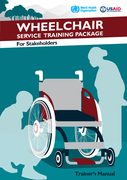
WHO published and launched the third part of the Wheelchair Service Training Package (WSTP) series consisting of two sub-packages: the Wheelchair Service Training Package for Managers (WSTPm) and the Wheelchair Service Training Package for Stakeholders (WSTPs). WHO recognises that in order to develo...
In 1989, the Republic of Benin was facing a great social and
economical crisis. Civil servants of all the sectors in public
administration were on strike. People did not know where to
go for their health care. Salaries were not paid for more than
six months and life for the general population wa...

Antimicrobial resistance (AMR) is an important public health concern shared by developed and developing countries. In developing countries the burden of infectious diseases is greater and exacerbated by limited access to, and availability and affordability of, antimicrobials required to treat infect...
