
Filter
10211
Filtered Results: 10211
Text search:
basic
health
care
Featured
Recommendations
898
New Publications
2676
Language
Document type
No document type
5740
Studies & Reports
1668
Guidelines
1263
Manuals
601
Strategic & Response Plan
350
Training Material
201
Fact sheets
183
Situation Updates
114
Infographics
28
Brochures
23
Resource Platforms
23
Online Courses
12
Videos
4
App
1
Countries / Regions
India
488
Global
424
Kenya
283
South Africa
233
Sierra Leone
216
Ethiopia
206
Liberia
204
Nepal
202
Uganda
194
Nigeria
192
Myanmar / Burma
179
Western and Central Europe
172
Bangladesh
155
Zambia
152
Malawi
147
Tanzania
146
Syria
140
Rwanda
139
Ghana
130
Latin America and the Carribbean
121
Africa
117
Ukraine
109
Namibia
101
Philippines
91
Congo, Democratic Republic of
85
South Sudan
78
Indonesia
73
Germany
71
Lesotho
65
Zimbabwe
64
Cambodia
60
South–East Asia Region
59
Guinea
53
Mozambique
53
Haiti
52
Eastern Europe
52
Venezuela
50
Yemen
50
Senegal
48
Asia
47
Burkina Faso
41
West and Central Africa
41
Brazil
40
Russia
40
East and Southern Africa
39
Botswana
39
Afghanistan
33
Cameroon
32
Middle East and North Africa
31
Pakistan
31
Eastern Europe and Central Asia
30
Lebanon
29
Eswatini/ Swaziland
26
Thailand
24
Jordan
24
Central African Republic
24
Colombia
23
Benin
21
China
21
Vietnam
21
Somalia
21
USA
19
Western Pacific Region
18
Sudan
18
Mali
18
Tajikistan
17
Iraq
17
Albania
14
Laos
13
Peru
13
North America
13
Moldova
13
Sri Lanka
13
Turkey
11
Argentina
11
Georgia
11
Côte d’Ivoire / Ivory Coast
10
Madagascar
9
Chile
8
Iran
8
United Kingdom
8
Palestine
8
Angola
8
Libya
8
North Macedonia
7
Togo
7
Burundi
7
Paraguay
7
Spain
7
Poland
7
Timor Leste/ East Timor
6
Kyrgyzstan
6
Niger
6
Hungary
6
Southern Africa
6
Bolivia
6
Papua New Guinea
6
Greece
6
Ecuador
6
Mexico
5
El Salvador
5
Gambia
5
Romania
5
Chad
5
Bhutan
5
Serbia
4
Kazakhstan
4
Singapore
4
Malaysia
4
Saudi Arabia
4
Turkmenistan
4
Jamaica
4
Japan
4
Portugal
4
Honduras
4
Guatemala
4
Canada
3
Uzbekistan
3
Armenia
3
Guinea-Bissau
3
Croatia
3
Mauritius
3
Nicaragua
3
Egypt
3
North Korea
2
Switzerland
2
Australia
2
Fiji
2
Estonia
2
Morocco
2
Mongolia
2
Bulgaria
2
Italy
2
Dominican Republic
2
Lithuania
2
France
2
Tunisia
2
Azerbaijan
2
Belarus
2
Bosnia and Herzegovina
2
Slovakia
2
Congo-Brazzaville
1
Vanuatu
1
Mauritania
1
Ireland
1
Denmark
1
Belgium
1
Maldives
1
Norway
1
South Korea
1
Algeria
1
French Guyana
1
Israel
1
Latvia
1
Belize
1
Costa Rica
1
Guyana
1
Oman
1
Panama
1
Djibouti
1
Solomon Islands
1
Authors & Publishers
Publication Years
Category
Countries
3904
Clinical Guidelines
647
Key Resources
636
Women & Child Health
541
Public Health
513
Capacity Building
247
Pharmacy & Technologies
99
Annual Report MEDBOX
2
Toolboxes
COVID-19
864
Mental Health
827
HIV
653
Disability
472
TB
428
Conflict
331
Ebola & Marburg
327
Planetary Health
321
Caregiver
311
AMR
253
NTDs
249
Refugee
240
Global Health Education
177
Pharmacy
176
Rapid Response
175
NCDs
159
Natural Hazards
154
Health Financing Toolbox
125
Malaria
105
2.0 Rapid Response
100
Social Ethics
71
Specific Hazards
63
Cholera
62
Zika
47
Polio
47
Typhoon
7
South Sudan
2
Guidelines for Good Clinical Laboratory Practices (GCLP) outlines the principles and procedures to be followed by medical laboratories involved in clinical research and/or patient care so as to provide quality data which can be used for health research and patient treatment. As the use of laboratory...
Bioethics - Medical, Ethical and Legal Perspectives
There’s evidence that implementing the four medical ethics principles may be challenging especially in low income country contexts with extreme resource scarcity and limited capacity to facilitate deliberations on the different ethical dilemmas....
The checklist tool described in this handbook is intended for EU/EEA public health authorities who need to assess the capacity for communicable disease prevention and control at migrant reception/detention centres hosting migrants for weeks/months (medium-term) in order to identify gaps and set prio...

Updated version – September 2020
The COVID-19 pandemic is affecting everyone. Globally, millions of people have been infected with the virus, while hundreds of thousands have lost their lives. In Moldova, the pandemic is placing an ever-increasing pressure on the health care and social protectio...
This Situation Update describes events occurring in Bilin Township, Thaton District during the period between July and October 2017, including healthcare, education, development projects and drug issues.
This revised trainer's guide contains a prototype training schedule for four days. Teaching and learning strategies are highly interactive, using participatory and experiential approach. Training outcomes include developing skills in assessment of clients for risk factors; conduct basic screening pr...
In most malaria-endemic countries, temperatures frequently exceed the recommended storage temperatures for malaria RDTs. Correct storage of the RDTs may be difficult, especially during transport and in locations where air-conditioning is unavailable.
This publication is intended to support health p...
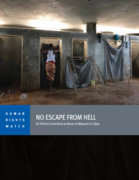
EU Policies Contribute to Abuse of Migrants in Libya
This report documents severe overcrowding, unsanitary conditions, malnutrition, and lack of adequate health care. Human Rights Watch found violent abuse by guards in four official detention centers in western Libya, including beatings and whippin...
The number of confirmed COVID-19 cases detected and reported in each country is influenced by
many factors including limited access and/or utilization of healthcare and COVID-19 testing, limited
surveillance, lack of knowledge amongst the population about when to seek testing, an asymptomatic pres...

This is the fifteenth edition of the lecture notes. They were first published in 1987 as a summary of the material used in the biannual epilepsy teaching weekend organised under the auspices of the UK Chapter of the International League against Epilepsy.
(Lecture series consist of a total of 59 cha...
This is the fifteenth edition of the lecture notes. They were first published in 1987 as a summary of the material used in the biannual epilepsy teaching weekend organised under the auspices of the UK Chapter of the International League against Epilepsy.
(Lecture series consist of a total of 59 cha...
COVID-19 is stretching formal and informal aspects of community life. The pandemic is overwhelming health systems. Country economies are reaching a breaking point, with particularly significant impact for the livelihoods of vulnerable families and those dependent on daily wages. COVID-19 is also aff...
In response to the first cases of coronavirus disease 2019 (COVID-19) reported on the continent, many African Union Member States implemented large-scale public health and social measures (PHSM) rapidly. These measures were aimed at reducing transmission and the number of new cases being reported, p...
Religion, belief and culture should be recognized as potential sources of moral purpose and personal strength in healthcare, enhancing the welfare of both clinicians and patients.
Ethics and communication skills| Volume 44, ISSUE 10, P589-592, October 01, 2016
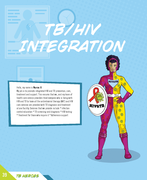
TB heroes
Hello, my name is Nurse X
My job is to promote integrated HIV and TB prevention, care, treatment and support. This ensures that we, and my team of health care service providers treat everyone who is living with HIV and TB to have all the antiretroviral therapy (ART) and HIV care services...
Antimicrobial resistance (AMR) is an increasing worldwide public health problem with
important implications for the European Union (EU). When antibiotics become
ineffective, bacterial infections lead to increased morbidity, use of healthcare,
mortality and cost. Globally, estimates suggest that ...
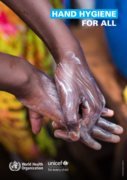
Three billion people – 40 per cent of the world’s population – do not have a place in their homes to wash their hands with water and soap. Three quarters of those who lack access to water and soap live in the world’s poorest countries and are amongst the most vulnerable: children and familie...
This regional technical guidance note was developed for the UNFPA Asia-Pacific Regional Office (APRO) and Asia-Pacific Country Offices to provide guidance on older persons, health workers, and caregivers in the contexts of COVID-19 to effectively support each member state and work with other partner...
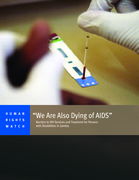
Barriers to HIV Services and Treatment for Persons with Disabilities in Zambia
The 80-page report documents the obstacles faced by people with disabilities in both the community and healthcare settings. These include pervasive stigma and discrimination, lack of access to inclusive HIV prevention ed...
A clear understanding of the knowledge, attitudes and practices (KAP) of a particular community is necessary in order to improve control of human African trypanosomiasis (HAT).New screening and diagnostic tools and strategies were introduced into South Sudan, as part of integrated delivery of primar...
