
Filter
3719
Filtered Results: 3719
Text search:
joint
sector
review
Featured
Recommendations
277
New Publications
1116
Language
Document type
No document type
2186
Studies & Reports
666
Guidelines
388
Strategic & Response Plan
200
Manuals
183
Training Material
36
Fact sheets
26
Situation Updates
20
Resource Platforms
6
Infographics
6
Brochures
1
Online Courses
1
Countries / Regions
Global
165
India
143
Kenya
141
Uganda
102
Myanmar / Burma
96
Nepal
93
Ethiopia
91
Sierra Leone
83
Liberia
76
Malawi
74
Western and Central Europe
74
Bangladesh
69
Nigeria
68
Zambia
65
Tanzania
60
South Africa
60
Rwanda
59
Africa
48
Namibia
46
Ghana
44
Latin America and the Carribbean
44
Syria
40
Ukraine
35
Lesotho
34
Cambodia
33
Philippines
32
Asia
30
Congo, Democratic Republic of
30
South–East Asia Region
29
Eastern Europe
28
South Sudan
27
Indonesia
25
Guinea
24
Zimbabwe
22
Mozambique
22
East and Southern Africa
20
Botswana
18
West and Central Africa
15
Pakistan
15
Yemen
14
Eswatini/ Swaziland
13
Cameroon
12
Venezuela
12
Sudan
12
Afghanistan
11
Haiti
11
Vietnam
11
Somalia
11
Laos
10
Brazil
10
Senegal
9
Jordan
9
Middle East and North Africa
9
Eastern Europe and Central Asia
9
Lebanon
9
Thailand
8
Western Pacific Region
8
Sri Lanka
8
Central African Republic
8
China
7
Moldova
7
Colombia
6
Iran
6
Burkina Faso
6
Russia
6
Georgia
6
Madagascar
6
Benin
5
Germany
5
Southern Africa
5
North Macedonia
4
Timor Leste/ East Timor
4
Turkey
4
Albania
4
Kyrgyzstan
4
Burundi
4
USA
4
North America
4
United Kingdom
4
Côte d’Ivoire / Ivory Coast
4
Papua New Guinea
4
Angola
4
Libya
4
Iraq
4
Tajikistan
3
Gambia
3
Peru
3
Armenia
3
Paraguay
3
Portugal
3
Spain
3
Mali
3
Chad
3
Serbia
2
Togo
2
Chile
2
Canada
2
Malaysia
2
Bulgaria
2
Dominican Republic
2
Croatia
2
Hungary
2
Turkmenistan
2
Japan
2
Mauritius
2
Belarus
2
Israel
2
Bosnia and Herzegovina
2
Romania
2
Greece
2
Palestine
2
Poland
2
Honduras
2
Bhutan
2
North Korea
1
Mexico
1
El Salvador
1
Kazakhstan
1
Singapore
1
Estonia
1
Niger
1
Vanuatu
1
Morocco
1
Mongolia
1
Qatar
1
Italy
1
Guinea-Bissau
1
Lithuania
1
Saudi Arabia
1
Gabon
1
Denmark
1
Belgium
1
France
1
Maldives
1
Tunisia
1
Azerbaijan
1
Bolivia
1
Belize
1
Costa Rica
1
Panama
1
Nicaragua
1
Egypt
1
Slovakia
1
Ecuador
1
Guatemala
1
Authors & Publishers
Publication Years
Category
Countries
1548
Key Resources
312
Public Health
210
Women & Child Health
165
Clinical Guidelines
149
Capacity Building
59
Pharmacy & Technologies
16
Annual Report MEDBOX
1
Toolboxes
HIV
382
COVID-19
206
Planetary Health
178
Mental Health
176
TB
173
Disability
151
AMR
126
Conflict
119
Global Health Education
82
Rapid Response
68
Caregiver
68
Ebola & Marburg
67
Health Financing Toolbox
63
Natural Hazards
61
NTDs
60
Refugee
55
2.0 Rapid Response
48
Pharmacy
46
NCDs
46
Malaria
36
Polio
19
Cholera
16
Zika
13
Specific Hazards
9
Social Ethics
9
Typhoon
4
South Sudan
1
Paper commissioned for the EFA Global Monitoring Report 2010, Reaching the marginalized

Reporting period: January 2008-December 2010
Accessed: 29.09.2019
A guide to promote health systems strengthening to achieve universal health coverage.
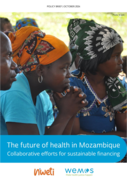
As part of the project ‘Equitable health financing for a strong health system in Mozambique’, N’weti and Wemos developed this policy brief with actionable policy recommendations for the Mozambican government and international organizations on how to increase resources for health in a sustainab...

In the initial chapters, you will find different approaches that describe how to support job creation for entrepreneurs or employees who live with disabilities. The interventions are often initiated by the readiness to find and pick the right opportunities, such as an engaged entrepreneur or an open...
Developed under the USAID-supported HRH2030 Capacity Building for Malaria (CBM) initiative, this guide offers a comprehensive framework for advising National Malaria Control Programmes (NMCPs) through the use of long-term technical advisors (LTTAs). It sets out key practices for implementing partner...

The Ghana National Malaria Strategic Plan 2021–2025 aims to reduce malaria mortality by 90% and malaria cases by 50% (using 2019 as baseline) and to achieve pre-elimination in at least six districts by 2025. The plan focuses on scaling up prevention measures like distributing insecticide-treated n...

This publication provides guidance for planning country-specific programming to achieve the triple elimination of mother-to-child (or vertical) transmission of HIV, syphilis and hepatitis B virus. It is based on the WHO Triple Elimination Framework, which promotes an integrated, person-centred appro...

Non-Communicable Diseases (NCDs) have emerged as conditions of great public health concern in Kenya accounting for 39% of deaths annually. The Ministry of Health through the Department of Non-Communicable Diseases has adopted the vision of achieving a nation free from preventable burden of NCDs. Fur...

This paper is motivated by the global spread of the coronavirus referred to as COVID-19 and its efect on Sub-Saharan African (SSA) economies. The International Monetary Fund (IMF) has alluded to the COVID-19 not only afecting the global health but also trade and tourism, commodity prices, and fnanci...
The Call to Action on Protection from GBV in Emergencies, formally launched in 2013 by the United Kingdom and Sweden, aims to fundamentally transform the way GBV is addressed in humanitarian operations via the collective action of numerous partners, each bringing our various strengths and capacities...

The Government of Myanmar has taken initial steps to implement some of the
recommendations, particularly those made by the Advisory Commission. The overarching
objectives of the recommendations, however, remain largely unaddressed, with no
significant progress observed on human rights concerns ra...
