
Filter
3335
Filtered Results: 3335
Text search:
adherence
to
treatment
Featured
Recommendations
316
New Publications
855
Language
Document type
No document type
1969
Studies & Reports
495
Guidelines
473
Manuals
156
Strategic & Response Plan
116
Training Material
46
Fact sheets
46
Situation Updates
19
Infographics
8
Resource Platforms
6
Brochures
1
Countries / Regions
India
163
Kenya
131
Global
108
South Africa
104
Uganda
82
Tanzania
80
Ethiopia
78
Western and Central Europe
73
Nigeria
70
Malawi
69
Zambia
66
Africa
56
Ghana
52
Liberia
52
Namibia
49
Sierra Leone
46
Nepal
41
Latin America and the Carribbean
41
Myanmar / Burma
36
Rwanda
35
Eastern Europe
34
Lesotho
33
Zimbabwe
31
Bangladesh
24
Ukraine
22
Mozambique
22
Syria
21
Asia
21
Botswana
21
South–East Asia Region
20
Cambodia
19
Congo, Democratic Republic of
17
Philippines
16
East and Southern Africa
16
Russia
15
Senegal
13
South Sudan
13
Guinea
12
West and Central Africa
11
Indonesia
11
Burkina Faso
10
Eastern Europe and Central Asia
10
Eswatini/ Swaziland
10
Haiti
9
Brazil
9
Cameroon
8
Germany
7
Middle East and North Africa
7
Georgia
7
Colombia
6
Benin
6
Afghanistan
6
Jordan
6
Yemen
6
Pakistan
6
Timor Leste/ East Timor
5
Thailand
5
Albania
5
USA
5
Western Pacific Region
5
Vietnam
5
Sri Lanka
5
Sudan
5
China
4
Armenia
4
North America
4
United Kingdom
4
Southern Africa
4
Lebanon
4
Tajikistan
3
Venezuela
3
Jamaica
3
Argentina
3
Mali
3
Bhutan
3
North Macedonia
2
El Salvador
2
Turkey
2
Laos
2
Estonia
2
Hungary
2
Spain
2
Belarus
2
Guyana
2
Moldova
2
Romania
2
Central African Republic
2
Poland
2
Angola
2
North Korea
1
Mexico
1
Gambia
1
Togo
1
Canada
1
Singapore
1
Kyrgyzstan
1
Burundi
1
Qatar
1
Dominican Republic
1
Guinea-Bissau
1
Saudi Arabia
1
Paraguay
1
Denmark
1
Belgium
1
France
1
Mauritius
1
Portugal
1
Latvia
1
Belize
1
Costa Rica
1
Panama
1
Papua New Guinea
1
Nicaragua
1
Egypt
1
Greece
1
Palestine
1
Honduras
1
Iraq
1
Somalia
1
Madagascar
1
Guatemala
1
Authors & Publishers
Publication Years
Category
Countries
1251
Clinical Guidelines
297
Public Health
187
Women & Child Health
140
Key Resources
130
Capacity Building
94
Pharmacy & Technologies
30
Toolboxes
HIV
559
TB
387
Mental Health
210
COVID-19
182
NCDs
121
AMR
104
Caregiver
93
NTDs
74
Pharmacy
70
Ebola & Marburg
62
Malaria
57
Conflict
49
Rapid Response
34
Disability
34
Refugee
33
2.0 Rapid Response
26
Planetary Health
23
Global Health Education
19
Natural Hazards
18
Polio
14
Cholera
12
Social Ethics
11
Health Financing Toolbox
10
Specific Hazards
9
Zika
4

Findings on maternal and child health in Nepal, Mozambique and
Rwanda, and neglected tropical diseases in Cambodia and Sierra Leone | This report synthesises findings from five country case studies from the health dimension of this project, which focus on maternal and child health (MCH) (Mozambique...
The leishmaniases are a group of diseases caused by Leishmania spp., which occur in cutaneous, mucocutaneous and visceral forms. They are neglected tropical diseases (NTDs), which disproportionately affect marginalized populations who have limited access to health care. HIV co-infected patients with...
Cardiovascular disease (CVD) is the leading cause of global deaths, with the majority occurring in low- and middle-income countries (LMIC). The primary and secondary prevention of CVD is suboptimal throughout the world, but the evidence-practice gaps are much more pronounced in LMIC. Barriers at the...

The Global Programme on Tuberculosis & Lung Health of the World Health Organization (WHO/GTB) is now combining all current recommendations into one overall set of consolidated guidelines on TB. The guidelines contain recommendations pertaining to all areas related to the programmatic management of T...
Mental health is critical to personal well-being, interpersonal relationships, and successful contributions to society. Mental health conditions consequently impose a high burden not only on individuals, families and society, but also on economies. In Jamaica, mental health conditions are highly pre...
Technical Note: Cholera treatment facilities provide inpatient care for cholera patients during outbreaks. Proper case management and isolation of cholera patients is essential to prevent deaths and help control the spread of
the disease. Traditionally, these structures have been referred to as ch...
These guidelines are based on the 3rd Edition of the WHO Guidelines (Published 2015) World Health Organization’s Guidelines for the treatment of malaria. Additional literature surveys have been undertaken. Factors that were considered in the choice of therapeutic options included effectiveness, sa...

The product of all this work is the Standard Treatment Guideline and Essential Medicines List of Common Medical Conditions in the Kingdom of Swaziland. These systematically developed statements are designed to assist practitioners in making decisions about appropriate treatment for specific clinical...
Q4: In individuals with long term and/or recurrent psychotic disorders (including schizophrenia), should individuals be maintained on pharmacotherapy indefinitely or withdrawn from treatment in order to allow for the best outcomes?
These guidelines provide new and updated recommendations on the use of point-of-care testing in children under 18 months of age and point-of-care tests to monitor treatment in people living with HIV; the treatment monitoring algorithm; and timing of antiretroviral therapy (ART) among people living w...

AIDS 2024, 38:1579–1588. Treatment interruptions are a barrier to successful antiretroviral therapy (ART). 'Fresh start messages', which leverage significant days on the calendar (e.g., new year, public holiday) in order to prompt action, have the potential to encourage people with HIV (PWH) to re...
This diagnostic and treatment manual is designed for use by medical professionals involved in curative care at the dispensary and hospital levels. We have tried to respond in the simplest and most practical way possible to the questions and problems faced by field medical staff, using the accumulate...
Antimicrobial resistance (AMR) has emerged as a major public health problem all over the world. Infections caused by resistant microbes fail to respond to treatment, resulting in prolonged illness and greater risk of death. This document focuses on the mechanism to develop a practically applicable h...
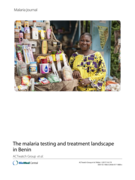
Malar J (2017) 16:174 DOI 10.1186/s12936-017-1808-x
Background: Since 2004, artemisinin-based combination therapy (ACT) has been the first-line treatment for uncomplicated malaria in Benin. In 2016, a medicine outlet survey was implemented to investigate the availability, price, and market share of...
The 7th edition of the Orange Guide provides practical guidance to health workers on the front line of TB control. It includes sections on HIV, MDR-TB and a review of the recommended treatment regimens
There is an urgent need for safer, simpler, more efficacious and accessible treatment regimens for all forms of TB. The development of Target Product Profiles for TB treatment regimens (referred to as Target Regimen Profiles or TRPs) seeks to guide the drug development process towards important regi...
2nd edition. These guidelines include several notable changes from the first edition. For cutaneous leishmaniasis, ketoconazole has been removed from the list of treatment options; the number of Leishmania species for which there is strong evidence for the efficacy of miltefosine has increased from ...

BMC Infectious Diseases volume 23, Article number: 342 (2023).
Tuberculosis (TB) is among the leading causes of death globally. The disease has a huge burden in Namibia, with a case notification rate of at least 442 per 100,000. To date, Namibia is among the countries with the highest global TB bur...
Updated Guideline.
The Emergency Triage Assessment and Treatment (ETAT) guidelines provide guidance on the most common emergency conditions in children presenting at the health facility. These include but are not limited to airway obstruction and other breathing problems; circulatory impairment or ...
