Filter
889
Filtered Results: 889
Text search:
Ministry
of
Health,
Ministry
of
Food
and
Agriculture,
et
al.
Featured
Recommendations
57
New Publications
281
Language
Document type
No document type
444
Studies & Reports
243
Guidelines
84
Strategic & Response Plan
52
Manuals
34
Training Material
12
Fact sheets
10
Situation Updates
8
Resource Platforms
1
Online Courses
1
Countries / Regions
Global
48
Kenya
40
Ethiopia
32
Sierra Leone
24
Myanmar / Burma
24
Malawi
23
Zambia
23
Nepal
20
Liberia
19
Ghana
17
Uganda
17
Nigeria
16
Tanzania
16
Bangladesh
15
Africa
14
India
14
Senegal
12
Latin America and the Carribbean
12
Rwanda
11
Syria
11
Western and Central Europe
11
Lesotho
10
South–East Asia Region
10
South Africa
9
Haiti
8
Namibia
8
Guinea
7
Asia
7
Venezuela
7
South Sudan
7
Ukraine
6
Zimbabwe
6
Mozambique
6
Pakistan
6
Thailand
5
Afghanistan
5
Philippines
5
Jordan
5
Middle East and North Africa
5
Colombia
4
Cameroon
4
Burkina Faso
4
Cambodia
4
Western Pacific Region
4
Sri Lanka
4
Sudan
4
Indonesia
4
Tajikistan
3
Congo, Democratic Republic of
3
North America
3
Côte d’Ivoire / Ivory Coast
3
Lebanon
3
Vietnam
3
Eastern Europe
3
Iraq
3
Somalia
3
Turkey
2
Benin
2
China
2
Kazakhstan
2
Iran
2
Albania
2
Kyrgyzstan
2
Niger
2
Morocco
2
Saudi Arabia
2
West and Central Africa
2
Turkmenistan
2
Tunisia
2
Bosnia and Herzegovina
2
East and Southern Africa
2
Brazil
2
Mali
2
Libya
2
Botswana
2
Ecuador
2
Madagascar
2
North Macedonia
1
Timor Leste/ East Timor
1
Chile
1
Laos
1
Congo-Brazzaville
1
Peru
1
Bulgaria
1
Italy
1
Germany
1
Eastern Europe and Central Asia
1
Paraguay
1
Japan
1
Denmark
1
France
1
Mauritius
1
Latvia
1
Bolivia
1
Argentina
1
Papua New Guinea
1
Moldova
1
Russia
1
Djibouti
1
Yemen
1
Greece
1
Georgia
1
Central African Republic
1
Angola
1
Chad
1
Authors & Publishers
Publication Years
Category
Countries
399
Key Resources
78
Public Health
60
Clinical Guidelines
37
Women & Child Health
35
Capacity Building
18
Pharmacy & Technologies
2
Toolboxes
Planetary Health
113
AMR
68
NTDs
38
COVID-19
32
Mental Health
26
Conflict
26
Disability
24
Ebola & Marburg
24
Global Health Education
24
Natural Hazards
19
HIV
18
Health Financing Toolbox
16
Rapid Response
15
Refugee
15
TB
12
Pharmacy
12
Caregiver
11
NCDs
11
2.0 Rapid Response
9
Specific Hazards
8
Cholera
5
Malaria
5
Zika
3
South Sudan
1
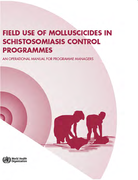
Recent systematic reviews and meta-analysis of the impact of chemical-based mollusciciding (King et al., 2015, Sokolow et al., 2016) have concluded that regular mollusciciding is likely to contribute significantly towards elimination of schistosomiasis in high-risk areas. The WHO roadmap’s new foc...
Operational guide: use of referral laboratories for the analysis of foodborne hazards in the Pacific
The Operational guide: use of referral laboratories for the analysis of foodborne hazards in the Pacific aims to strengthen the food analysis capacity of Pacific Island countries and areas by identifying national and reference laboratories capable of testing for priority foodborne hazards. The Pacif...


National-scale databases and reliability issue
Background report
A study conducted by the World Health Organisation Regional Office for Africa. The COVID-19 pandemic has had a significant impact on older persons both globally and in the African region. Although overall the region’s population is younger relative to many other world regions, the WHO AFRO region ...
Malawi Health Sector Strategic Plan 2011 - 2016
recommended
Moving towards equity and quality
This Eye health strategic plan presents the Ministry of Health’s five
year proposed strategies for eye care in Kenya. It sets the strategic
direction for the National Eye Health Care System and presents
information on the priorities, objectives and indicators that the
Ministry has adopted espe...

The NDMS&IP focuses on mainstreaming disability to promote equitable access to services in the six thematic areas of health, education, livelihoods, empowerment, and social inclusion and cross-cutting issues.
The first part of the NDMS&IP outlines incongruences between national and sectoral policie...
This report outlines the Ministry of Health’s National Health Research Agenda in which it identifies research priorities in health. It will be implemented in the same time frame as the Health Sector Strategic Plain 2012-2018. The Ministry of Health being the implementing agency of this document, i...
The COVID-19 pandemic has put significant pressure on health systems all around the world. The drastic measures established to contain its spread are creating serious impediments to economic activity (including agrifood systems) and, consequently, to livelihoods and food security and nutrition.

: Development assistance for health (DAH) is one of the most important means for Japan to promote
diplomacy with developing countries and contribute to the international community. This study, for the first time,
estimated the gross disbursement of Japan’s DAH from 2012 to 2016 and clarified its...