
Filter
6625
Filtered Results: 6625
Text search:
education
as
a
human
right
Featured
Recommendations
566
New Publications
1763
Language
Document type
No document type
3810
Studies & Reports
1153
Guidelines
715
Manuals
376
Strategic & Response Plan
275
Training Material
121
Fact sheets
87
Situation Updates
43
Brochures
18
Infographics
13
Resource Platforms
10
Online Courses
2
App
1
Videos
1
Countries / Regions
Global
293
India
236
Kenya
215
South Africa
137
Nepal
136
Ethiopia
135
Uganda
134
Myanmar / Burma
132
Nigeria
122
Sierra Leone
119
Western and Central Europe
118
Zambia
104
Bangladesh
98
Malawi
97
Latin America and the Carribbean
96
Liberia
96
Tanzania
94
Syria
92
Ghana
81
Rwanda
78
Africa
78
Ukraine
67
Namibia
66
Philippines
54
Lesotho
48
Congo, Democratic Republic of
48
Indonesia
46
South Sudan
45
Cambodia
43
South–East Asia Region
43
Asia
40
Venezuela
39
Zimbabwe
38
Eastern Europe
35
Mozambique
29
Haiti
29
Germany
28
Yemen
27
Senegal
26
Guinea
25
West and Central Africa
25
Botswana
25
Colombia
24
East and Southern Africa
24
Middle East and North Africa
22
Eastern Europe and Central Asia
21
Lebanon
21
Afghanistan
20
Cameroon
19
Eswatini/ Swaziland
19
Pakistan
19
Burkina Faso
18
Central African Republic
18
Jordan
17
Vietnam
17
Thailand
16
Western Pacific Region
15
Sudan
15
China
14
Laos
14
Russia
14
Moldova
13
Iraq
13
Albania
12
Paraguay
12
Brazil
11
Tajikistan
10
Somalia
10
Iran
9
Sri Lanka
9
Georgia
9
Turkey
8
Mali
8
USA
7
North America
7
Palestine
7
Peru
6
Southern Africa
6
Côte d’Ivoire / Ivory Coast
6
Papua New Guinea
6
Greece
6
Poland
6
Timor Leste/ East Timor
5
Benin
5
Bolivia
5
Egypt
5
Libya
5
Madagascar
5
Hungary
4
Turkmenistan
4
Romania
4
Ecuador
4
North Macedonia
3
Mexico
3
El Salvador
3
Serbia
3
Gambia
3
Togo
3
Canada
3
Burundi
3
Malaysia
3
Guinea-Bissau
3
Croatia
3
Japan
3
Bosnia and Herzegovina
3
Chad
3
Kazakhstan
2
Chile
2
Singapore
2
Estonia
2
Kyrgyzstan
2
Uzbekistan
2
Bulgaria
2
Armenia
2
Lithuania
2
Saudi Arabia
2
Jamaica
2
Mauritius
2
United Kingdom
2
Spain
2
Azerbaijan
2
Slovakia
2
Honduras
2
Guatemala
2
Switzerland
1
Australia
1
Fiji
1
Niger
1
Morocco
1
Qatar
1
Ireland
1
Gabon
1
Tunisia
1
Portugal
1
South Korea
1
Belarus
1
Israel
1
Argentina
1
Djibouti
1
Angola
1
Bhutan
1
Authors & Publishers
Publication Years
Category
Countries
2422
Key Resources
445
Women & Child Health
397
Clinical Guidelines
386
Public Health
374
Capacity Building
144
Pharmacy & Technologies
34
Annual Report MEDBOX
3
Toolboxes
Mental Health
573
HIV
531
Disability
454
COVID-19
404
TB
269
Planetary Health
249
Conflict
222
Caregiver
197
Refugee
185
AMR
158
NTDs
148
Global Health Education
148
Ebola & Marburg
116
Rapid Response
91
Natural Hazards
90
NCDs
87
Pharmacy
79
Health Financing Toolbox
76
Social Ethics
68
Malaria
64
2.0 Rapid Response
63
Cholera
30
Specific Hazards
28
Zika
26
Polio
19
South Sudan
2
Typhoon
2
Accessed: 04.10.2019
The data collection process was organized by UCDC Director, Natalia Nizova, and M&E Department Head, Igor Kuzin, and implemented by M&E specialists from oblast AIDS Centers: Zhanna Antonenko, Oksana Gorbachuk, Volodymyr Zahorovskyi (Kiev City); Anna Lopatenko, Irina Kozina, I...
Since the first edition of the CDAC snapshot of communication, community engagement and accountability (CCEA) across the Ukraine response was published in May 2022, a conscious effort has been made by international, national and local responders to ramp up CCEA action. Progress has been made in esta...
This guidance is targeted to primary health care policy-makers and only addresses issues relevant for primary health care providers. It has been prepared on the basis of a systematic review of the best available evidence and emergent country practices in response to the COVID-19 outbreak in the WHO ...
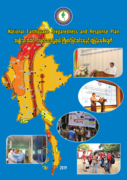
It aims to minimize damage to property, reduce injury and lives lost, and normalize the lives of those affected in a timely manner in the case of a damaging earthquake in the country.
It also seeks to contribute to the achievements of Myanmar Sustainable Development Goals as well as respond to Gl...

Human Papilloma Virus (HPV) is the most common sexually transmitted infection, and two types of HPV (16 and 18) cause nearly 50% of high-grade cervical pre-cancers. HIV and cervical cancer are inextricably linked. Women living with HIV are six times more likely to develop cervical cancer, which is o...
Vol. 5, No. 3 - 2011 | The Quarterly provides summaries of the best available research evidence on a variety of children’s mental health topics, prepared using systematic review and synthesis methods adapted from the Cochrane Collaboration and Evidence-Based Mental Health. Our goal is to improve ...

Terminology used to describe the transmission of pathogens through the air varies across scientific disciplines, organizations and the general public. While this has been the case for decades, during the coronavirus disease (COVID-19) pandemic, the terms ‘airborne’, ‘airborne transmission’ a...
This Toolkit is intended to guide humanitarian programme managers and healthcare providers to ensure that sexual and reproductive health interventions put into place both during and after a crisis are responsive to the unique needs of adolescents.
The aim of this paper is to map and critically analyse evidence of good practice in prevention and response to gender-based violence (GBV) in humanitarian contexts which can support humanitarian practitioners and policy makers to improve the quality of GBV programming in the field. The paper is stru...

“Because we struggle to survive” Child Labour among Refugees of the Syrian Conflict | This study provides pertinent first-hand information on the reality facing Syrian children who are working either in their homeland, the neighbouring countries or elsewhere in Europe. Syria's civil war is the w...

Vol 5 No 27 | ISSN 2039-2117 (online) | ISSN 2039-9340 (print) | The rate of sexual victimization of mentally retarded children is alarming and it goes unnoticed because the perpetrators could be parents, step- parents, relatives, well-respected individuals by family members, neighbours and educator...
Patient safety assessment manual
recommended
3rd edition. Patient safety standards are critical for the establishment and assessment of patient safety programmes within hospitals. This third edition of the Patient safety assessment manual provides an updated set of standards and assessment criteria that reflect current best practice and WHO gu...

The African Palliative Care Association is pleased to publish the first edition of Palliative Care Standards for Africa. The development of these standards was achieved through wide consultation with service beneficiaries and providers, and they have been developed to suit different levels of ...

According to the United Nations, Yemen has been the "Worst humanitarian crisis in the world," for the past two years. Despite the Hudaydah Agreement signed in December 2018, the fighting continued in many areas of the country, such as Hajjah in the north, Al Dhale' e in the south and Hudaydah along ...
Earthquake Haiti: Guidelines and Resources
recommended
25 August 2021. The earthquake on August 14, 2021 was almost as strong as the severe quake in 2010, which killed about 300,000 people. The current number of victims is more than 2,200 people, and more than 12,000 people have been injured. More than 52,000 houses were destroyed and more than 77,000 ...

The COVID-19 pandemic exposed critical gaps in the global response to health crises, particularly in the financing of pandemic prevention, preparedness, response, recovery, and reconstruction. This chapter presents a comprehensive framework for pandemic financing that spans the entire pandemic cycle...

An essential component of the return process is counselling, which aims to support counselling beneficiaries to make an informed decision on their future migration pathways. Counselling provides the space for migrants to exert their agency, supports them to prepare for return and positively contr...
Version 2 (unedited). The Basic Needs Analysis (BNA) is a multi-sector needs analysis approach that can be applied in both sudden onset and protracted emergencies. The methodology comprises the Guidance (this document) presenting the conceptual BNA framework and related processes, and a Toolbox, whi...
Since the beginning of the Ukraine crisis on 24 February 2022, WHO has supported Government-led efforts and initiatives alongside key partners on the ground. Building on efforts to date, and working alongside Bulgaria’s health authorities to bring added value to existing mechanisms, the WHO Countr...
