
Filter
3224
Filtered Results: 3224
Text search:
humanitarian
response
plan
Featured
Recommendations
330
New Publications
894
Language
Document type
No document type
1575
Studies & Reports
606
Guidelines
352
Strategic & Response Plan
235
Manuals
205
Situation Updates
107
Fact sheets
69
Training Material
40
Resource Platforms
16
Infographics
10
Brochures
6
Online Courses
2
App
1
Countries / Regions
Global
185
Syria
155
Myanmar / Burma
117
Congo, Democratic Republic of
104
South Sudan
82
Liberia
79
Ukraine
78
Sierra Leone
76
Indonesia
69
Kenya
63
Venezuela
63
Bangladesh
63
Yemen
57
Haiti
55
Nepal
49
Nigeria
47
Ethiopia
46
Uganda
43
Guinea
42
Latin America and the Carribbean
40
Western and Central Europe
38
Central African Republic
36
Mozambique
34
Africa
33
India
33
Colombia
30
Afghanistan
24
Philippines
24
Somalia
21
Rwanda
20
Malawi
19
East and Southern Africa
19
Lebanon
19
Brazil
19
Sudan
19
Jordan
18
West and Central Africa
18
South–East Asia Region
18
Senegal
17
Burkina Faso
16
Zimbabwe
16
Middle East and North Africa
16
Russia
16
Eastern Europe
14
Zambia
14
Turkey
13
Mali
13
Lesotho
12
Asia
11
Germany
11
Eastern Europe and Central Asia
11
Iraq
11
Pakistan
11
South Africa
10
Moldova
10
Palestine
10
Namibia
9
Madagascar
9
Ghana
8
Cameroon
8
Laos
8
Burundi
8
Vietnam
8
Thailand
7
China
7
Chile
7
Niger
7
Peru
7
Cambodia
7
Tanzania
7
Western Pacific Region
7
Libya
7
Côte d’Ivoire / Ivory Coast
6
Bolivia
5
Argentina
5
Greece
5
Angola
5
Ecuador
5
Tajikistan
4
Benin
4
Togo
4
Sri Lanka
4
Romania
4
Poland
4
Chad
4
Botswana
4
Eswatini/ Swaziland
4
Mexico
3
El Salvador
3
Gambia
3
Iran
3
Guinea-Bissau
3
Croatia
3
Hungary
3
Paraguay
3
Japan
3
Portugal
3
Papua New Guinea
3
Malaysia
2
Bulgaria
2
Italy
2
North America
2
Turkmenistan
2
Tunisia
2
Belarus
2
Southern Africa
2
Egypt
2
Honduras
2
Switzerland
1
Timor Leste/ East Timor
1
Serbia
1
Kazakhstan
1
Canada
1
Fiji
1
Singapore
1
Kyrgyzstan
1
Uzbekistan
1
Vanuatu
1
Mongolia
1
Armenia
1
Dominican Republic
1
Ireland
1
Saudi Arabia
1
Jamaica
1
Mauritius
1
United Kingdom
1
Spain
1
Algeria
1
Azerbaijan
1
French Guyana
1
Israel
1
Bosnia and Herzegovina
1
Nicaragua
1
Djibouti
1
Slovakia
1
Bhutan
1
Authors & Publishers
Publication Years
Category
Countries
1108
Key Resources
459
Women & Child Health
198
Public Health
124
Clinical Guidelines
118
Capacity Building
51
Pharmacy & Technologies
6
Annual Report MEDBOX
3
Toolboxes
COVID-19
492
Conflict
356
Mental Health
215
Ebola & Marburg
164
Natural Hazards
152
Refugee
143
Disability
139
HIV
118
Planetary Health
95
Rapid Response
83
Health Financing Toolbox
55
2.0 Rapid Response
55
Global Health Education
47
Cholera
44
Caregiver
35
TB
33
Malaria
27
Specific Hazards
26
NTDs
23
Polio
23
Typhoon
15
NCDs
14
Zika
11
Pharmacy
9
AMR
8
Social Ethics
5
South Sudan
2
Women, the elderly, adolescents, youth, and children,
persons with disabilities, indigenous populations, refugees,
migrants, and minorities experience the highest degree
of socio-economic marginalization. Marginalized people
become even more vulnerable in emergencies.1 This is due
to factors su...
Le présent document accompagne le document d’orientation provisoire Renforcer la préparation à l’épidémie de COVID-19 dans les villes et autres milieux urbains, qui vient compléter le plan stratégique de préparation et de riposte et la mise à jour de la stratégie
The WHO Guidance for Conducting a Country COVID-19 Intra-Action Review (IAR) was developed to guide countries to conduct periodic review(s) of their national and subnational COVID-19 response, so countries do not miss critical opportunities for learning and improvement to better respond to the COVID...

Community-based health care, including outreach and campaigns,in the context of the COVID-19 pandemic
recommended
The COVID-19 pandemic is challenging health systems across the world. Rapidly increasing demand for care of people with COVID-19 is compounded by fear, misinformation and limitations on the movement of people and supplies that disrupt the delivery of frontline health care for all people...
This g...

The target audience of this document (and the associated online companion tool) includes WHO country offices in Member States of the African Region; Member States’ ministries of health and their public health emergency operation centres; relevant external assessment teams; and partners looking to ...
Although the COVID-19 crisis is, in the first instance, a physical health crisis, it has the seeds of a major mental health crisis as well, if action is not taken. Good mental health is critical to the functioning of society at the best of times. It must be front and centre of every country’s resp...

Uganda is Africa's largest refugee-hosting country and ranks fifth globally. Over the decades, Uganda has hosted refugees from nations including South Sudan, the Democratic Republic of Congo, Eritrea, Somalia, Sudan, Burundi, and Rwanda. As of early 2024, it hosts 1 600 000 refugees, primarily in re...
Responding to a poliovirus event and outbreak, Part 1: General (SOPs) describes the general principles and steps to facilitate timely and effective responses to poliovirus events and outbreaks, and incorporate lessons learned from recent previous outbreak response efforts. This document summarizes r...
9 April 2020
The COVID-19 pandemic is presenting States in Europe with an extraordinary and unprecedented public health emergency. In response, States are taking necessary and legitimate measures to prevent the spread of the virus and to protect their populations. Some of these measures have been...
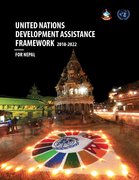
The United Nations Development Assistance Framework (UNDAF) 2018-2022 sets out the UN partnership aiming to support Nepal as it carves out its development agenda over the next five years. At the core of this new UNDAF are the SDGs, the Government of Nepal’s Fourteenth Plan, and international commi...

Produced by UNICEF and IRC, with the support of the German Corporation for International Cooperation GmbH (GIZ) and the generous funding from the German Federal Ministry of Economic Cooperation and Development (BMZ), the Caring for Child Survivors of Sexual Abuse (CCS) Resource Package (Second Editi...
Guidelines for drinking-water quality: Fourth edition incorporating the first and second addenda
recommended
Guidance has been updated on a number of chemicals: asbestos, bentazone, chromium, iodine, manganese, microcystins, nickel, silver, tetrachloroethene and trichloroethene. Guidance has also been added for chemicals not previously assessed in the Guidelines: anatoxin-a and analogues, cylindrospermopsi...
The Gaza Strip is experiencing one of the most severe food security crises globally, with the entire population of approximately 2.1 million people now facing crisis-level food insecurity or worse (IPC Phase 3+). As of May 2025, more than one in five Gazans—about
470,000 people—are at risk of s...
The use of explosive weapons, such as bombs, rockets, and mortar and
artillery shells, in cities, towns and villages and in other populated areas
has devastating humanitarian consequences. Explosive weapons act mainly
through the projection of blast and fragmentation wi...
This is the sixth of our 11-paper supplement entitled “Community Health Workers at the Dawn of New Era”. Expectations of community health workers (CHWs) have expanded in recent years to encompass a wider array
of services to numerous subpopulations, engage communities to collaborate with and to...

2018 monitoring report: current status and strategic priorities
The report sets out the status of women’s, children’s and adolescents’ health, and on health systems and social and environmental determinants. Regional dashboards on 16 key indicators highlight where progress is being made o...
The report sets out the status of women’s, children’s and adolescents’ health, and on health systems and social and environmental determinants. Regional dashboards on 16 key indicators highlight where progress is being made o...
This Guidance Document provides practical assistance to Country Offices scaling up programmes to manage SAM in young children. It outlines a step-by-step process through which countries can analyse their current situation, identify barriers and bottlenecks through the MoRES approach, and plan action...
Submitted to the US Agency for International Development by the Systems for Improved Access to Pharmaceuticals and Services (SIAPS) Program. Arlington, VA: Management Sciences for Health. Submitted to the United Nations Children’s Fund by JSI, Arlington, VA: JSI Research & Training Institute, Inc....
This is the fourth guidance note in a four-part series of notes related to impact evaluation developed by InterAction with financial support from the Rockefeller Foundation.This fourth guidance note, Use of Impact Evaluation Results, highlights three themes crucial for effective utilization of evalu...
The Sustainable Development Goals (SDGs) were launched in September 2015, made up of 17 Goals and 169 Targets that set out a plan of action that will shape the mainstream development agenda for the next 15 years1. There has already been much debate about how these Goals will be achieved, but the sig...
