
Filter
9343
Filtered Results: 9343
Text search:
Education
International
Featured
Recommendations
664
New Publications
2463
Language
Document type
No document type
5398
Studies & Reports
1636
Guidelines
931
Manuals
474
Strategic & Response Plan
392
Training Material
179
Fact sheets
142
Situation Updates
94
Resource Platforms
31
Infographics
30
Brochures
26
Online Courses
6
Videos
3
App
1
Countries / Regions
Global
372
India
290
Kenya
283
Ethiopia
185
Nepal
184
Myanmar / Burma
184
Latin America and the Carribbean
176
Uganda
171
Sierra Leone
170
Nigeria
166
South Africa
166
Liberia
150
Zambia
141
Western and Central Europe
140
Rwanda
135
Malawi
134
Bangladesh
134
Tanzania
131
Syria
126
Congo, Democratic Republic of
123
Africa
114
Senegal
112
Ghana
107
Namibia
95
Ukraine
91
Venezuela
90
Philippines
77
Burkina Faso
75
Haiti
74
Zimbabwe
73
Cambodia
71
Colombia
69
Paraguay
66
Indonesia
66
Lesotho
65
South Sudan
61
Benin
57
South–East Asia Region
53
Asia
52
Mozambique
49
Guinea
48
Cameroon
47
Eastern Europe
43
Germany
41
Central African Republic
41
Botswana
39
Yemen
38
West and Central Africa
37
Brazil
33
East and Southern Africa
32
Argentina
32
Afghanistan
31
Madagascar
31
Peru
28
Eswatini/ Swaziland
28
Russia
27
Chile
26
Middle East and North Africa
25
Eastern Europe and Central Asia
25
Pakistan
25
Lebanon
24
Vietnam
24
Mali
24
Jordan
22
Thailand
21
Bolivia
21
Sudan
21
Ecuador
19
China
17
Togo
16
Laos
16
Iraq
16
Western Pacific Region
14
Somalia
14
El Salvador
13
Albania
13
Burundi
13
Côte d’Ivoire / Ivory Coast
13
Moldova
13
Tajikistan
12
Sri Lanka
11
USA
10
Turkey
9
Niger
9
Georgia
9
Iran
8
Greece
8
Honduras
8
Guatemala
8
North Macedonia
7
Southern Africa
7
Papua New Guinea
7
Palestine
7
North America
6
Spain
6
Poland
6
Libya
6
Timor Leste/ East Timor
5
Mexico
5
Kazakhstan
5
Romania
5
Chad
5
Gambia
4
Kyrgyzstan
4
Malaysia
4
Morocco
4
Dominican Republic
4
Hungary
4
Turkmenistan
4
Japan
4
Portugal
4
Egypt
4
Switzerland
3
Serbia
3
Canada
3
Estonia
3
Armenia
3
Croatia
3
Saudi Arabia
3
Uruguay
3
Jamaica
3
Mauritius
3
Tunisia
3
Bosnia and Herzegovina
3
Angola
3
Fiji
2
Singapore
2
Uzbekistan
2
Bulgaria
2
Lithuania
2
Gabon
2
France
2
United Kingdom
2
Azerbaijan
2
Israel
2
Nicaragua
2
Slovakia
2
Bhutan
2
Austria
1
Vanuatu
1
Mongolia
1
Qatar
1
Mauritania
1
Guinea-Bissau
1
Ireland
1
Maldives
1
Belarus
1
Latvia
1
Belize
1
Costa Rica
1
Guyana
1
Panama
1
Authors & Publishers
Publication Years
Category
Countries
3845
Key Resources
535
Women & Child Health
500
Public Health
487
Clinical Guidelines
481
Capacity Building
186
Pharmacy & Technologies
42
Annual Report MEDBOX
3
Toolboxes
Mental Health
815
HIV
605
COVID-19
597
Disability
558
TB
381
Planetary Health
323
Conflict
283
Caregiver
261
AMR
231
NTDs
221
Ebola & Marburg
217
Refugee
213
Global Health Education
180
NCDs
160
Natural Hazards
139
Rapid Response
136
Pharmacy
109
Health Financing Toolbox
98
Malaria
96
2.0 Rapid Response
73
Social Ethics
67
Cholera
53
Zika
42
Specific Hazards
38
Polio
37
Typhoon
6
South Sudan
1

This country cooperation strategy (CCS) outlines how the World Health Organization (WHO) will work with the Lao People’s Democratic Republic over the next five years (2024–2028), supporting the implementation of the five-year health sector development plans and the Health Sector Reform Strategy ...
The 2014–2015 Ebola epidemic in western Africa was the longest and most deadly Ebola epidemic in history, resulting in 28,616 cases and 11,310 deaths in Guinea, Liberia, and Sierra Leone. The Ebola virus has been known since 1976, when two separate outbreaks were identified in the Democratic Repub...
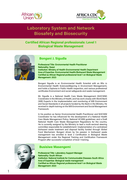
The Africa Centres for Disease Control and Prevention (Africa CDC) Biosafety and Biosecurity Initiative was launched by the Africa CDC in April 2019 with the aim of strengthening the African Union (AU) Member States’ biosafety and biosecurity systems and enabling them to comply with national and i...
Annex I to: To stay and deliver, good practice for humanitarians in complex security environments
The principal findings of the report include that despite overall improvements in aid agencies’ security risk management, national aid workers perceive continued inequities in security suppor...
The principal findings of the report include that despite overall improvements in aid agencies’ security risk management, national aid workers perceive continued inequities in security suppor...
The aim of the WHO QualityRights tool kit is to support countries in assessing and
improving the quality and human rights of their mental health and social care facilities.
The tool kit is based on an extensive international review by people with mental disabilities
and their organizations. It ha...
Provides clinical descriptions, diagnostic guidelines, and codes for all mental and behavioural disorders commonly encountered in clinical psychiatry. The book was developed from chapter V of the Tenth Revision of the International Statistical Classification of Diseases and Related Health Problems (...

The Government of Republic of Zambia reported the first confirmed cases of COVID-19 on 18th March 2020. As of April 27th, 2020, there were 89 confirmed cases, three deaths and 42 recoveries. Confirmed cases are located in three provinces: Lusaka (83 cases), Copperbelt province (5 cases) and Central ...

Key stakeholders must be involved in the planning, implementation, monitoring and evaluation of NCD plans and programmes. Within a ministry of health there will be different types of stakeholders, such as programme managers and senior managers in departments of prevention, health promotion, and hosp...
The purpose of this document is to share good practices and processes concerning the inclusion of disability issues in HIV policy and programming, drawing on specific experiences in Senegal, Ethiopia, Kenya, Rwanda and Cambodia and on lessons learned at international AIDS conferences.
Mental, Neurological, and Substance Use Disorders: Disease Control Priorities, Third Edition (Volume 4).
Patel V, Chisholm D, Dua T, et al., editors.
Washington (DC): The International Bank for Reconstruction and Development / The World Bank; 2016 Mar 14.

his revision to the Disaster Management Team’s (DMT) multi-sector response plan for COVID-19 is meant to align the multi-sector plan with the Department of Health’s COVID-19 Emergency Response Plan issued on 24 April 2020. Additionally, at the time of this version, the Department of Education an...
: Development assistance for health (DAH) is one of the most important means for Japan to promote
diplomacy with developing countries and contribute to the international community. This study, for the first time,
estimated the gross disbursement of Japan’s DAH from 2012 to 2016 and clarified its...
This report is from the National study on living conditions among people
with disabilities carried out in Nepal in 2014-2015. The study was carried
out as a household survey with two-stage stratified sampling, including a screening/listing procedure using the Washington Group on Disability
Statis...
Global HIV control funding falls short of need. To maximize health outcomes, it is critical that national governments sustain reasonable commitments, and that international donor assistance be distributed according to country needs and funding gaps. We develop a country classification framework in t...
This field workbook supports the implementation of the interagency (FAO, UNICEF, WHO) “Communication for Behavioural Impact (COMBI): A toolkit for behavioural and social communication in outbreak response”. It is a handheld guide and notebook for applying the WHO COMBI methodology in 7-steps, du...
L’Atelier de mise en œuvre de partenariat constitue une étape importante pour les Partenariats africains pour la sécurité des patients. Les équipes de chaque hôpital africain, suisse et anglais participant au programme ont assisté à l’atelier
dans le but de travailler ensemble dans leur...
Detecting breast cancer early improves survival, lowers morbidity and reduces the cost of care. Learn about the major breast cancer early detection strategies in this knowledge summary, including breast cancer education and awareness, and breast self-detection and clinical breast exams (CBE).
With sustained economic growth in many parts of the developing world, an increasing number of countries are transitioning away from the most subsidized development finance as they exceed income and other qualification requirements. Cross-country evidence suggests that Development Assistance Committe...
"Achieving, maintaining and improving accuracy, timeliness and reliability are major challenges for health laboratories. Countries worldwide committed themselves to build national capacities for the detection of, and response to, public health events of international concern when they decided to eng...

The Global Asthma Report (GAR) 2022, prepared by the Global Asthma Network (GAN), is the fourth such report (others 2011, 2014, 2018). GAN builds upon the work of the International Study of Asthma and Allergies in Childhood (ISAAC) and The International Union Against Tuberculosis and Lung Disease (T...
