
Filter
9339
Filtered Results: 9339
Text search:
Education
International
Featured
Recommendations
662
New Publications
2461
Language
Document type
No document type
5398
Studies & Reports
1635
Guidelines
930
Manuals
474
Strategic & Response Plan
391
Training Material
178
Fact sheets
142
Situation Updates
94
Resource Platforms
31
Infographics
30
Brochures
26
Online Courses
6
Videos
3
App
1
Countries / Regions
Global
372
India
290
Kenya
283
Ethiopia
185
Nepal
184
Myanmar / Burma
184
Latin America and the Carribbean
176
Uganda
171
Sierra Leone
170
Nigeria
166
South Africa
166
Liberia
150
Zambia
141
Western and Central Europe
140
Rwanda
135
Malawi
134
Bangladesh
134
Tanzania
131
Syria
126
Congo, Democratic Republic of
123
Africa
114
Senegal
112
Ghana
107
Namibia
95
Ukraine
91
Venezuela
90
Philippines
77
Burkina Faso
75
Haiti
74
Zimbabwe
73
Cambodia
71
Colombia
69
Paraguay
66
Indonesia
66
Lesotho
65
South Sudan
61
Benin
57
South–East Asia Region
53
Asia
52
Mozambique
49
Guinea
48
Cameroon
47
Eastern Europe
43
Germany
41
Central African Republic
41
Botswana
39
Yemen
38
West and Central Africa
37
Brazil
33
East and Southern Africa
32
Argentina
32
Afghanistan
31
Madagascar
31
Peru
28
Eswatini/ Swaziland
28
Russia
27
Chile
26
Middle East and North Africa
25
Eastern Europe and Central Asia
25
Pakistan
25
Lebanon
24
Vietnam
24
Mali
24
Jordan
22
Thailand
21
Bolivia
21
Sudan
21
Ecuador
19
China
17
Togo
16
Laos
16
Iraq
16
Western Pacific Region
14
Somalia
14
El Salvador
13
Albania
13
Burundi
13
Côte d’Ivoire / Ivory Coast
13
Moldova
13
Tajikistan
12
Sri Lanka
11
USA
10
Turkey
9
Niger
9
Georgia
9
Iran
8
Greece
8
Honduras
8
Guatemala
8
North Macedonia
7
Southern Africa
7
Papua New Guinea
7
Palestine
7
North America
6
Spain
6
Poland
6
Libya
6
Timor Leste/ East Timor
5
Mexico
5
Kazakhstan
5
Romania
5
Chad
5
Gambia
4
Kyrgyzstan
4
Malaysia
4
Morocco
4
Dominican Republic
4
Hungary
4
Turkmenistan
4
Japan
4
Portugal
4
Egypt
4
Switzerland
3
Serbia
3
Canada
3
Estonia
3
Armenia
3
Croatia
3
Saudi Arabia
3
Uruguay
3
Jamaica
3
Mauritius
3
Tunisia
3
Bosnia and Herzegovina
3
Angola
3
Fiji
2
Singapore
2
Uzbekistan
2
Bulgaria
2
Lithuania
2
Gabon
2
France
2
United Kingdom
2
Azerbaijan
2
Israel
2
Nicaragua
2
Slovakia
2
Bhutan
2
Austria
1
Vanuatu
1
Mongolia
1
Qatar
1
Mauritania
1
Guinea-Bissau
1
Ireland
1
Maldives
1
Belarus
1
Latvia
1
Belize
1
Costa Rica
1
Guyana
1
Panama
1
Authors & Publishers
Publication Years
Category
Countries
3845
Key Resources
535
Women & Child Health
500
Public Health
487
Clinical Guidelines
481
Capacity Building
186
Pharmacy & Technologies
42
Annual Report MEDBOX
3
Toolboxes
Mental Health
815
HIV
602
COVID-19
597
Disability
558
TB
381
Planetary Health
323
Conflict
283
Caregiver
261
AMR
231
NTDs
221
Ebola & Marburg
217
Refugee
213
Global Health Education
180
NCDs
160
Natural Hazards
139
Rapid Response
136
Pharmacy
109
Health Financing Toolbox
97
Malaria
96
2.0 Rapid Response
73
Social Ethics
67
Cholera
53
Zika
42
Specific Hazards
38
Polio
37
Typhoon
6
South Sudan
1

To survive and thrive, children and adolescents need good health, adequate nutrition, security, safety and a supportive clean environment, opportunities for early learning and education, responsive relationships and connectedness, and opportunities for personal autonomy and self-realization. To prom...
The Asthma Control Questionnaire (ACQ)1 was developed and validated to measure the primary clinical goal of asthma management as identified by international guidelines. They indicate that to achieve good control, treatment should minimise day and night time symptoms, activity limitation, airway narr...
This guideline covers care and management for adults (aged 18 and over) with type 2 diabetes. It focuses on patient education, dietary advice, managing cardiovascular risk, managing blood glucose levels, and identifying and managing long-term complications.
The main aim of this paper is to present the current situation of children with disabilities in the Republic of Namibia, with special regard to their educational chances and influence of cultural beliefs on their lives. Namibia has a law, which entitles education for all its citizens. Despite numero...

Zambia is facing a severe economic crisis marked by high inflation, increasing poverty and a heavy debt burden that is straining both its fiscal stability and progress in health outcomes. By 2020, the country's external debt reached United States dollars (USD) 12.7 billion, representing 108% of the ...

Namibia has, for many years, had a strong legislative and policy framework for the protection of children. These policies and laws have been developed through the combined expertise of those working in the field of child protection who have ensured Namibia has a robust legal framework that is in li...
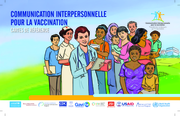
Les cartes de référence sur la communication
interpersonnelle pour la vaccination ont été créées
pour faciliter l’accès à l’information sur les vaccins et
les maladies évitables par la vaccination. Ces cartes
peuvent servir d’outils d’auto-apprentissage, de guides
pour les conv...
There are many calls for improved integration between
primary care and public health, but also sizeable obstacles to achieving
this, such as differences in the ways the two sectors are organised and
financed, as well as differences in education, culture and approach.
This article, based on a new...
Guía para la rehabilitación basada en la comunidad (RBC)
En el 2003, una Consulta Internacional para Revisar a Rehabilitación Basada en la Comunidad, celebrada en Helsinki, hizo un número de recomendaciones. Seguidamente, la rehabilitación basada en la comunidad se volvió a posicionar con una...
Guía para la rehabilitación basada en la comunidad (RBC)
En el 2003, una Consulta Internacional para Revisar a Rehabilitación Basada en la Comunidad, celebrada en Helsinki, hizo un número de recomendaciones. Seguidamente, la rehabilitación basada en la comunidad se volvió a posicionar con una...
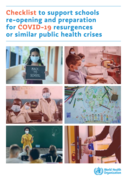
The checklist is aligned with, and builds upon, existing COVID-19-related WHO guidelines and is structured around protective measures related to: 1) hand hygiene and respiratory etiquette; 2) physical distancing; 3) use of masks in schools; 4) environmental cleaning and ventilation; and 5) respectin...
The Handbook is primarily addressed to child protection coordination teams, which may include coordinators, co-leads and information managers, the guidance is equally valid for all members of the child protection coordination group, including national and international nongovernmental organizations ...

Myanmar is one of the world’s 22 high tuberculosis (TB) burden countries, and supporting TB control in Myanmar is a global priority. This report reflects the findings, discussions, conclusions and recommendations of the fourth international review mission of the Myanmar National TB Programme (NTP)...
Climate change (CC) impacts on health outcomes, both direct and indirect, are sufficient to jeopardize achieving the World Bank Group’s visions and agendas in poverty reduction, population resilience, and health, nutrition and population (HNP). In the last 5 years, the number of voices calling for...
The results of the report clearly show that in 2020, a year dominated by the emergence of COVID-19 and its associated health and economic crises, governments around the world rose to the challenge. Sharp increases in government spending on health at all country income levels underpinned the rise in ...
This updated Comprehensive Mental Health Action Plan 2013-2030 builds upon its predecessor and sets out clear actions for Member States, the WHO Secretariat and international, regional and national partners to promote mental health and well-being for all, to prevent mental health conditions for thos...
WHO published the first COVID-19 Strategic Response and Preparedness Plan (SPRP) on 3 February, 2020. This report highlights the main points of progress that were made up to 30 June 2020 under the three objectives outlined in the SPRP: scaling up international coordination and support; scaling up co...
Community health nurses have the potential to make significant contributions to meet the health care needs of various population groups in a variety of community settings. In order to assess the extent to which CHNs are achieving this potential, WHO conducted a study between 2010 and 2014 that exami...

Report of the WHO/Bill & Melinda Gates Foundation Consultation. The Consultation was organized back-to-back with the first annual meeting of the International Coordinating Group of the BMGF-funded project for human and dog rabies elimination in developing countries, held at WHO headquarters, Geneva,...
