
Filter
2125
Filtered Results: 2125
Text search:
Ministry
of
Public
Health
and
Sanitation
and
Ministry
of
Medical
Services,
Republic
of
Kenya
Featured
Recommendations
194
New Publications
746
Language
Document type
No document type
1243
Studies & Reports
312
Guidelines
226
Strategic & Response Plan
142
Manuals
114
Situation Updates
42
Training Material
25
Fact sheets
16
Resource Platforms
2
Brochures
1
Infographics
1
Online Courses
1
Countries / Regions
Sierra Leone
142
Kenya
132
India
109
Liberia
78
Global
71
Ethiopia
65
Nepal
64
Myanmar / Burma
62
Indonesia
59
Uganda
49
Bangladesh
46
Syria
45
Rwanda
44
Zambia
43
Malawi
42
Nigeria
41
Ghana
40
Tanzania
37
Latin America and the Carribbean
30
Namibia
30
Congo, Democratic Republic of
29
Guinea
24
Mozambique
24
South Sudan
23
Africa
22
Haiti
21
Zimbabwe
20
Ukraine
18
Lesotho
18
Cambodia
16
South Africa
16
Senegal
15
South–East Asia Region
15
Yemen
14
Western and Central Europe
13
Venezuela
12
Jordan
11
Madagascar
11
Botswana
10
Pakistan
10
Cameroon
9
Burkina Faso
9
Lebanon
9
Brazil
8
Iraq
8
Eswatini/ Swaziland
8
Colombia
7
Asia
7
Sudan
7
Central African Republic
7
Mali
7
Benin
6
Western Pacific Region
6
Paraguay
6
East and Southern Africa
6
Laos
5
Burundi
5
West and Central Africa
5
Middle East and North Africa
5
Côte d’Ivoire / Ivory Coast
5
Greece
5
Palestine
5
Somalia
5
Afghanistan
4
Philippines
4
Germany
4
Timor Leste/ East Timor
3
Togo
3
China
3
Peru
3
Vietnam
3
Eastern Europe
3
Moldova
3
North Macedonia
2
Tajikistan
2
Mexico
2
Turkey
2
Gambia
2
Iran
2
Albania
2
Fiji
2
Niger
2
Italy
2
Guinea-Bissau
2
Saudi Arabia
2
Eastern Europe and Central Asia
2
Mauritius
2
Sri Lanka
2
Egypt
2
Chad
2
Libya
2
Ecuador
2
Thailand
1
El Salvador
1
Chile
1
Singapore
1
Morocco
1
Mongolia
1
Qatar
1
Mauritania
1
Armenia
1
Dominican Republic
1
Croatia
1
Hungary
1
Japan
1
Maldives
1
Tunisia
1
Belarus
1
Southern Africa
1
Bolivia
1
Argentina
1
Papua New Guinea
1
Romania
1
Georgia
1
Poland
1
Honduras
1
Bhutan
1
Authors & Publishers
Publication Years
Category
Countries
1173
Key Resources
174
Public Health
101
Clinical Guidelines
80
Women & Child Health
66
Capacity Building
29
Pharmacy & Technologies
5
Annual Report MEDBOX
1
Toolboxes
COVID-19
168
Ebola & Marburg
119
Conflict
96
AMR
82
Disability
80
Planetary Health
67
Rapid Response
62
NTDs
62
Caregiver
54
Natural Hazards
48
HIV
47
Mental Health
43
2.0 Rapid Response
41
Refugee
39
TB
39
Global Health Education
38
Cholera
33
Pharmacy
19
Malaria
17
Zika
13
Health Financing Toolbox
12
NCDs
12
Specific Hazards
8
Polio
5
Typhoon
4
Social Ethics
3
South Sudan
1
This technical brief was developed by the UNFPA Global Ageing Network to complement the UN Department of Economic and Social Affairs' (UN DESA) Issue Brief: Older Persons and COVID-19, which emphasized the humanitarian imperative of addressing older persons' specific needs within preparedness and re...

OECD Development Policy Tools
Recognising that donor policies and responses constantly evolve, this guidance recommends that donors operating in situations of forced displacement prioritise three broad areas of work, where they can best contribute to existing capacities at the national, regiona...
Recognising that donor policies and responses constantly evolve, this guidance recommends that donors operating in situations of forced displacement prioritise three broad areas of work, where they can best contribute to existing capacities at the national, regiona...
Guidelines.
The guidelines set out essential actions that humanitarian actors must take in order to effectively identify and respond to the needs and rights of persons with disabilities who are most at risk of being left behind in humanitarian settings.
The recommended actions in each chapter pl...
Community-Based Management of Acute Malnutrition (CMAM) is a decentralised community-based approach to treating acute malnutrition. Treatment is matched to the nutritional and clinical needs of the child, with the majority children receiving treatment at home using ready-to-use foods. In-patient car...
Early Childhood Matters is a journal about early childhood.
It looks at specific issues regarding the development
of young children, in particular from a psychosocial
perspective.
It is published twice per year by the Bernard
van Leer Foundation. The views expressed in Early Childhood
Matters ...
The Leonard Cheshire Disability and Inclusive Development Centre | University College London | 4 Taviton Street | London WC1H OBT | United Kingdom| Principal Investigator: Dr Raymond Lang | Email: r.lang@ucl.ac.uk | Tel: +44 (0)207 679 1519 | Research Commissioned by the Southern African Federation ...

The State of the World’s Children 2013: Children with Disabilities examines the barriers – from inaccessible buildings to dismissive attitudes, from invisibility in official statistics to vicious discrimination – that deprive children with disabilities of their rights and keep them from partic...
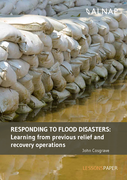
This paper presents lessons learned from previous flood responses in developing countries, based on a structured review of the literature. It is intended for people working in relief and recovery operations who have to decide if, when and how to intervene after a flood.
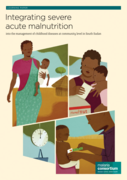
Since December 2010, Malaria Consortium has been implementing an innovative approach to community management of severe acute malnutrition, together with an existing integrated community case management (ICCM) programme in South Sudan. This learning paper considers Malaria Consortiums experience of t...
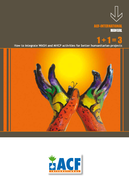
Integrating WASH and MHCP interventions will always require imagination and creativity to adapt the approach to specific conditions, opportunities and constraints in each context. The book is designed to stimulate reflection and encourage initiatives to seek opportunities for closer integration of t...
Previous pandemics have demonstrated that more people could die from the indirect consequences of an outbreak than from the disease itself. As the fight against the pandemic is pushing millions into poverty and hunger, COVID-19 will likely be no different.
The publication draws on pre-COVID data to highlight how children with disabilities face greater risks in the midst of this pandemic. It documents what has happened to services for children and adults with disabilities across the world and includes examples of what has been done to address disruptio...
n Autumn 2013, HHI Executive Director, Vincenzo Bollettino, traveled to the Philippines to participate in an assessment of civil-military engagement in the humanitarian response to Typhoon Haiyan. The report was sponsored by the Center for Excellence in Disaster Management and Humanitarian Assistanc...

The Central African Republic is at a major turning point in its history. The country
is just emerging from a very violent conflict, during which thousands of human lives were lost and one-third of the population was displaced. After
a three-year transition, and with the support of the internationa...
Beyond borders. How to make the global compacts on migration and refugees work for uprooted children
The report presents successful case studies from around the world, including the implementation of minimum protection standards for refugee children in Germany, cross border child protection systems in West Africa, and finding alternatives to the detention of migrant children in Zambia. Other countr...
you can find all 14 Technical Booklets on Inclusive Education, produced by UNICEF, in ENGLISH. Other versions can be found on the website https://www.ded4inclusion.com/inclusive-education-resources-free/unicef-inclusive-education-booklets-and-webinars-english-version. Each Technical Booklet (and com...
Housing at the forefront of the response to COVID-19: Discussion paper on policy options for Myanmar
Urban poor communities including the homeless, residents of informal settlements, residents at risk of being evicted, Internally Displaced Persons (IDPs), undocumented persons, low-income renters, as well as homeowners are perhaps at greatest risk from both COVID-19 and the response interventions to...
This publication includes quotes from various respondents interviewed in Tripoli, Akkar and Beirut. We focused on three main questions: How are the relations between refugees and Lebanese? How are refugees faring in the job market? Which concrete initiatives have already demonstrated positive impact...
The equation is simple: we cannot effectively respond to a global pandemic when millions of people are still caught in warzones. We cannot treat sick people when hospitals are being bombed, or prevent the spread of coronavirus when tens of millions are forced to flee from violence. We must have a gl...

he refugee flow to Ethiopia continued during 2018, with 36,1351 persons seeking safety and protection within the country’s borders. At the start of 2019, the nation hosted 905,8312 thousand refugees who were forced to flee their homes as a result of insecurity, political instability, military cons...
