
Filter
4030
Filtered Results: 4030
Text search:
life-saving
Featured
Recommendations
348
New Publications
1091
Language
Document type
No document type
2147
Studies & Reports
751
Guidelines
426
Manuals
235
Strategic & Response Plan
186
Training Material
92
Fact sheets
79
Situation Updates
67
Resource Platforms
15
Infographics
13
Brochures
10
Online Courses
5
App
2
Videos
2
Countries / Regions
Global
203
India
188
Kenya
104
Syria
99
Myanmar / Burma
96
Nepal
80
Uganda
77
Ethiopia
77
Sierra Leone
76
Bangladesh
73
South Africa
70
Nigeria
65
Malawi
62
Zambia
59
Ukraine
57
Liberia
57
South Sudan
53
Africa
51
Tanzania
51
Western and Central Europe
49
Rwanda
44
Namibia
43
Ghana
42
Congo, Democratic Republic of
42
Yemen
40
Philippines
36
Latin America and the Carribbean
36
Haiti
35
South–East Asia Region
30
Asia
27
Indonesia
27
Mozambique
26
Zimbabwe
24
Lesotho
20
Venezuela
20
Cambodia
19
Afghanistan
18
Lebanon
18
Eastern Europe
18
West and Central Africa
17
East and Southern Africa
17
Guinea
16
Central African Republic
15
Somalia
15
Cameroon
14
Botswana
14
Colombia
13
Burkina Faso
13
Jordan
13
Turkey
12
Germany
12
Middle East and North Africa
12
Pakistan
12
Vietnam
11
Sudan
11
Senegal
10
USA
10
Eastern Europe and Central Asia
10
Brazil
10
Russia
10
Iraq
10
Thailand
9
Western Pacific Region
9
Laos
7
Moldova
7
Sri Lanka
7
Palestine
7
Mali
7
Tajikistan
6
Benin
5
China
5
Kyrgyzstan
5
Burundi
5
Southern Africa
5
Libya
5
Niger
4
Peru
4
Hungary
4
United Kingdom
4
Portugal
4
Spain
4
Romania
4
Poland
4
Eswatini/ Swaziland
4
North Macedonia
3
Kazakhstan
3
Albania
3
Jamaica
3
Papua New Guinea
3
Egypt
3
Georgia
3
Chad
3
Switzerland
2
Timor Leste/ East Timor
2
Mexico
2
El Salvador
2
Serbia
2
Chile
2
Iran
2
Canada
2
Fiji
2
Italy
2
Armenia
2
Lithuania
2
Turkmenistan
2
Azerbaijan
2
Belarus
2
Israel
2
Bolivia
2
Argentina
2
Madagascar
2
Togo
1
Singapore
1
Estonia
1
Congo-Brazzaville
1
Uzbekistan
1
Morocco
1
Mongolia
1
Bulgaria
1
Croatia
1
Paraguay
1
North America
1
Japan
1
France
1
Tunisia
1
Norway
1
Bosnia and Herzegovina
1
Côte d’Ivoire / Ivory Coast
1
Slovakia
1
Greece
1
Honduras
1
Angola
1
Bhutan
1
Guatemala
1
Authors & Publishers
Publication Years
Category
Countries
1500
Key Resources
291
Women & Child Health
280
Clinical Guidelines
264
Public Health
174
Capacity Building
105
Pharmacy & Technologies
20
Toolboxes
COVID-19
330
HIV
313
Mental Health
284
Conflict
228
Planetary Health
155
Disability
151
TB
119
Caregiver
115
Natural Hazards
101
Refugee
99
AMR
85
Ebola & Marburg
79
Global Health Education
78
NTDs
69
Health Financing Toolbox
61
NCDs
58
Pharmacy
55
Rapid Response
51
Malaria
39
Cholera
32
Social Ethics
32
2.0 Rapid Response
31
Specific Hazards
24
Polio
11
Zika
10
South Sudan
2
Typhoon
2

Snakebite is an acute life threatening time limiting medical emergency. It is a preventable public
health hazard often faced by rural population in tropical and subtropical countries with heavy
rainfall and humid climate.

Antibiotics and other antimicrobial agents are invaluable life savers, particularly in resource-limited countries where infectious diseases are abundant. Both uncomplicated and severe infections are potentially curable as long as the aetiological agents are susceptible to the ...
National Safe Surgery Strategic PLAN Saving Lives Through Safe Surgery (SaLTS) Strategic Plan 2016–2020
Reduced healthy life expectancy due to the high burden of both mental ill health and noncommunicable diseases (NCDs) is a major public health concern in the European Region. The links between mental disorders and major NCDs are well established.
In clinical practice, however, mental disorders in pa...
Christian morality consists of living one’s life with guidance and inspiration from the Christian scriptures and traditions. Christian ethics as an academic discipline uses these scriptures and traditions in developing and critiquing ethical norms and theories and applying them to ethical issues....
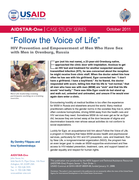
“Follow the Voice of Life”
AIDSTAR-One | Case study series October 2011
To improve survival and quality of life among the 2.5 million children living with HIV, a comprehensive package of prevention, care and treatment is required. This package should include management of infections such as pneumonia, diarrhoea, malaria and ear infections, as well as common opportunisti...
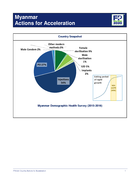
Commitment objective
The Government of Myanmar views family planning as critical to saving lives, protecting mothers and children from death, ill health, disability, and under development. It views access to family planning information, commodities, and services as a fundamental right for every...
The Government of Myanmar views family planning as critical to saving lives, protecting mothers and children from death, ill health, disability, and under development. It views access to family planning information, commodities, and services as a fundamental right for every...
More than 700 000 people lose their life to suicide every year. A core foundation of suicide prevention is the timely registration and regular monitoring of suicide and self-harm. Surveillance data can be used to show important progress towards reaching global targets, such as reducing the suicide r...
Mental illness can affect not only the life of the person with the illness, but also their close family, partners
and friends. Significant people in a person’s life are often a source of support with the illness.
However, family, partners and friends may be faced with a loved one’s men...
Accessed: 25.04.2020
COVID-19 represents a dramatic new threat to life in war-torn countries. International humanitarian law (IHL) is a key legal framework that provides crucial safeguards to people affected by armed conflicts. This overview summarizes some of the main provisions of IHL that may ...
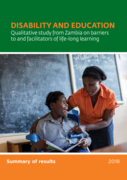
Qualitative study from Zambia on barriers to and facilitators of life-long learning

Nearly 800 women die every day from preventable maternal causes, and in 2022 alone, an estimated 2.3 million newborns died. For every maternal death, countless more women endure life-altering injuries, infections, and disabilities related to childbirth.
Maternal deaths are concentrated in the poo...
In 2024, we need US$1.5 billion to provide live-saving health care to millions of people in emergencies. An alarming combination of conflict, climate-related threats and increasing economic hardship mean an estimated 166 million people require health assistance.
The purpose of this guidance is to provide emergency planners with nuclear detonationspecific
response recommendations to maximize the preservation of life in the event of
an urban nuclear detonation. This guidance addresses the unique effects and impacts of a
nuclear detonation such as scale of ...

The report reflects on the trends, achievements and challenges in global health over the past decade during which Dr Margaret Chan has been Director-General of WHO. It discusses the role of WHO in dealing with such issues as the rise of noncommunicable diseases, leaps in life expectancy, and emergin...
In this COVID-19 pandemic, timely access to accurate information can be the difference between life and death. The stakes are high in developing countries like Ethiopia where millions of people have limited access to information because of low media access, insufficientin...
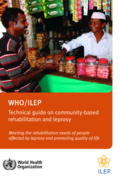
Meeting the rehabilitation needs of people affected by leprosy and promoting quality of life.
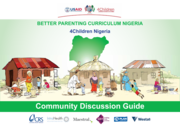
ts goals are to ensure that:
Children and parents experience fewer conflicts;
Parents make better decisions about the care of their children and are better able to solve problems; and
Children feel more supported by their families to further their education and make good decisions a...
Families and Societies Working Paper Series Changing families and sustainable societies: Policy contexts and diversity over the life course and across generations
