
Filter
2125
Filtered Results: 2125
Text search:
Ministry
of
Public
Health
and
Sanitation
and
Ministry
of
Medical
Services,
Republic
of
Kenya
Featured
Recommendations
194
New Publications
746
Language
Document type
No document type
1243
Studies & Reports
312
Guidelines
226
Strategic & Response Plan
142
Manuals
114
Situation Updates
42
Training Material
25
Fact sheets
16
Resource Platforms
2
Brochures
1
Infographics
1
Online Courses
1
Countries / Regions
Sierra Leone
142
Kenya
132
India
109
Liberia
78
Global
71
Ethiopia
65
Nepal
64
Myanmar / Burma
62
Indonesia
59
Uganda
49
Bangladesh
46
Syria
45
Rwanda
44
Zambia
43
Malawi
42
Nigeria
41
Ghana
40
Tanzania
37
Latin America and the Carribbean
30
Namibia
30
Congo, Democratic Republic of
29
Guinea
24
Mozambique
24
South Sudan
23
Africa
22
Haiti
21
Zimbabwe
20
Ukraine
18
Lesotho
18
Cambodia
16
South Africa
16
Senegal
15
South–East Asia Region
15
Yemen
14
Western and Central Europe
13
Venezuela
12
Jordan
11
Madagascar
11
Botswana
10
Pakistan
10
Cameroon
9
Burkina Faso
9
Lebanon
9
Brazil
8
Iraq
8
Eswatini/ Swaziland
8
Colombia
7
Asia
7
Sudan
7
Central African Republic
7
Mali
7
Benin
6
Western Pacific Region
6
Paraguay
6
East and Southern Africa
6
Laos
5
Burundi
5
West and Central Africa
5
Middle East and North Africa
5
Côte d’Ivoire / Ivory Coast
5
Greece
5
Palestine
5
Somalia
5
Afghanistan
4
Philippines
4
Germany
4
Timor Leste/ East Timor
3
Togo
3
China
3
Peru
3
Vietnam
3
Eastern Europe
3
Moldova
3
North Macedonia
2
Tajikistan
2
Mexico
2
Turkey
2
Gambia
2
Iran
2
Albania
2
Fiji
2
Niger
2
Italy
2
Guinea-Bissau
2
Saudi Arabia
2
Eastern Europe and Central Asia
2
Mauritius
2
Sri Lanka
2
Egypt
2
Chad
2
Libya
2
Ecuador
2
Thailand
1
El Salvador
1
Chile
1
Singapore
1
Morocco
1
Mongolia
1
Qatar
1
Mauritania
1
Armenia
1
Dominican Republic
1
Croatia
1
Hungary
1
Japan
1
Maldives
1
Tunisia
1
Belarus
1
Southern Africa
1
Bolivia
1
Argentina
1
Papua New Guinea
1
Romania
1
Georgia
1
Poland
1
Honduras
1
Bhutan
1
Authors & Publishers
Publication Years
Category
Countries
1173
Key Resources
174
Public Health
101
Clinical Guidelines
80
Women & Child Health
66
Capacity Building
29
Pharmacy & Technologies
5
Annual Report MEDBOX
1
Toolboxes
COVID-19
168
Ebola & Marburg
119
Conflict
96
AMR
82
Disability
80
Planetary Health
67
Rapid Response
62
NTDs
62
Caregiver
54
Natural Hazards
48
HIV
47
Mental Health
43
2.0 Rapid Response
41
Refugee
39
TB
39
Global Health Education
38
Cholera
33
Pharmacy
19
Malaria
17
Zika
13
Health Financing Toolbox
12
NCDs
12
Specific Hazards
8
Polio
5
Typhoon
4
Social Ethics
3
South Sudan
1

The "Stories from the field" document by the WHO Regional Office for the Eastern Mediterranean shares effective strategies from the Eastern Mediterranean Region for addressing noncommunicable diseases (NCDs) and mental health challenges, particularly during the COVID-19 pandemic. It highlights regio...
Chagas disease is currently endemic and also predicted to be at increased transmission risk under future climate change scenarios. Similarly, an expansion of areas in the United States at increased risk for Chagas disease transmission is also expected over the next several decades under climate chan...
As a result of Russia’s invasion of Ukraine, the people of Ukraine, especially the most vulnerable, are paying an enormous price. Lives and livelihoods are being lost, with more than ten million people forced from their homes— and their country—in search of safety. The war has unleashed catast...

The COVID-19 pandemic has exacerbated and added yet another layer of vulnerability to an already dire web of vulnerabilities of girls in the African continent, which constitute about 49% of the total child population. Critically, gender equality and girls’ multidimensional vulnerability have been ...
The audit was undertaken in order to ascertain whether allocations and donations received directly by the Government of Sierra Leone, in the fight against the Ebola Virus Disease were utilised with due regard to economy and efficiency and that internal controls were observed accordingly. The audit f...
The limitation of a single sector approach. HNP Discussion Paper
J of Pharm Policy and Pract 14, 27 (2021). https://doi.org/10.1186/s40545-021-00309-8
As of 21 May 2020, 4.8 million confirmed cases of Coronavirus disease 2019 (COVID-19) have been reported globally. In South America, COVID-19 was first detected on 26 February 2020, when Brazil confirmed a case in São Paulo.
Millions of children in Yemen could be pushed to ‘the brink of starvation’ due to huge shortfalls in humanitarian aid funding amid the COVID-19 pandemic – according to a new UNICEF report marking more than five years since conflict escalated in the country.
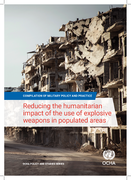
Reducing the humanitarian impact of the use of explosive weapons in populated areas is a key priority for the United
Nations, the International Committee of the Red Cross (ICRC), civil society and an increasing number of Member States.
The United Nations Secretary-General has expressly called on...

The report provides an overview of the disaster risk reduction and management in Nepal, a country under threat of multiple natural hazards: earthquakes, floods, landslides, fires, storms, the epidemics, and others. It presents background information on the country, its disaster profile, its legal an...
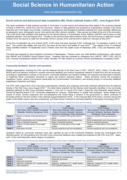
This rapid compilation of data analyses provides a ‘stock-take’ of social science and behavioural data related to the on-going outbreak of Ebola in North Kivu, South Kivu and Ituri provinces. Based on data gathered and analysed by organisations working in the Ebola response and in the region mor...

The primary aim of this assessment is to evaluate current approaches to malaria surveillance in Myanmar and to provide a set of practical and feasible recommendations to further strengthen the surveillance system in the short to medium term. The assessment focuses on the surveillance of malaria case...
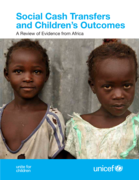
A Review of Evidence from Africa
Accessed: 21.08.2019
This predominantly qualitative research on disability and development in Myanmar was conducted between August 2011 and February 2012, in three commercial centres of Yangon, Mandalay and Taunggyi. Stakeholders of service providers, persons with disabilities (PWDs) and families of disabled people were...
Despite improvements in recent years, the prevalence of undernutrition among women and children in Myanmar remains unacceptably high. One in three children are stunted and about 8% are acutely malnourished. Micronutrient deficiencies are common among infants, young children and pregnant women. In fa...
For close to 15 years, the Monitor has tracked the impact of victim assistance on the lives of victims of landmines, cluster munitions,
and other explosive remnants of war (hereafter “mine/ERW victims”). Over this time, the international communi...
As of June 2019, the number of Venezuelans leaving their country reached 4 million, with Colombia, Peru, Chile, Ecuador and Brazil hosting the vast majority of Venezuelans in Latin America. The end of the first half of the year was marked by the announcement of tighter immigration measures in Peru ...
Education of children with disabilities in India and Pakistan: An analysis of developments since 2000 | Background paper prepared for the Education for All Global Monitoring Report 2015 | Education for All 2000-2015: achievements and challenges
