
Filter
4561
Filtered Results: 4561
Text search:
priority
medicines
Featured
Recommendations
474
New Publications
1220
Language
Document type
No document type
2342
Studies & Reports
822
Guidelines
662
Manuals
283
Strategic & Response Plan
251
Training Material
74
Fact sheets
56
Situation Updates
44
Resource Platforms
12
Infographics
7
Brochures
5
Online Courses
3
Countries / Regions
Global
209
India
166
Kenya
141
Ethiopia
100
South Africa
99
Nepal
97
Sierra Leone
89
Uganda
86
Nigeria
84
Liberia
81
Western and Central Europe
76
Africa
74
Latin America and the Carribbean
74
Bangladesh
70
Zambia
67
Malawi
64
Ghana
58
Tanzania
58
Myanmar / Burma
58
Ukraine
53
Syria
53
Rwanda
47
Congo, Democratic Republic of
42
Namibia
41
Philippines
31
Eastern Europe
31
Haiti
30
South–East Asia Region
30
Asia
29
Lesotho
27
Zimbabwe
27
Mozambique
27
Senegal
24
Guinea
24
Cambodia
23
South Sudan
21
Burkina Faso
20
Botswana
20
Indonesia
18
West and Central Africa
17
Middle East and North Africa
17
Eastern Europe and Central Asia
17
East and Southern Africa
17
Yemen
17
Benin
16
Cameroon
16
Germany
14
Sudan
14
Pakistan
14
Afghanistan
13
Venezuela
13
Madagascar
13
Russia
12
Moldova
11
Thailand
10
Lebanon
9
Vietnam
9
Somalia
9
Eswatini/ Swaziland
9
USA
8
Jordan
8
Western Pacific Region
8
Brazil
8
Tajikistan
7
Albania
7
Laos
7
Côte d’Ivoire / Ivory Coast
7
Georgia
7
Mali
7
China
6
Sri Lanka
6
Central African Republic
6
Ecuador
6
Colombia
5
Turkey
5
Niger
5
Peru
5
North America
5
Bolivia
5
Iraq
5
Timor Leste/ East Timor
4
Kazakhstan
4
Iran
4
Burundi
4
Saudi Arabia
4
Turkmenistan
4
United Kingdom
4
Palestine
4
North Macedonia
3
Togo
3
Chile
3
Kyrgyzstan
3
Hungary
3
Jamaica
3
France
3
Mauritius
3
Southern Africa
3
Papua New Guinea
3
Egypt
3
Poland
3
Libya
3
Bhutan
3
El Salvador
2
Serbia
2
Canada
2
Fiji
2
Estonia
2
Congo-Brazzaville
2
Uzbekistan
2
Morocco
2
Qatar
2
Bulgaria
2
Lithuania
2
Gabon
2
Tunisia
2
Belarus
2
Argentina
2
Nicaragua
2
Romania
2
Angola
2
Chad
2
Guatemala
2
Switzerland
1
Gambia
1
Mongolia
1
Mauritania
1
Armenia
1
Dominican Republic
1
Guinea-Bissau
1
Paraguay
1
Japan
1
Denmark
1
Maldives
1
French Guyana
1
Latvia
1
Belize
1
Costa Rica
1
Panama
1
Djibouti
1
Slovakia
1
Greece
1
Honduras
1
Authors & Publishers
Publication Years
Category
Countries
1685
Clinical Guidelines
397
Public Health
280
Women & Child Health
241
Key Resources
227
Capacity Building
80
Pharmacy & Technologies
49
Annual Report MEDBOX
2
Toolboxes
HIV
415
COVID-19
361
Mental Health
303
TB
265
AMR
228
Caregiver
146
Disability
124
Conflict
120
NTDs
115
Pharmacy
114
Ebola & Marburg
112
Planetary Health
109
NCDs
89
Global Health Education
87
Rapid Response
82
Malaria
76
Health Financing Toolbox
68
Natural Hazards
55
Refugee
51
2.0 Rapid Response
45
Zika
20
Specific Hazards
17
Cholera
17
Social Ethics
16
Polio
14
Typhoon
1
This regional technical guidance note was developed for the UNFPA Asia-Pacific Regional Office (APRO) and Asia-Pacific Country Offices to provide guidance on older persons, health workers, and caregivers in the contexts of COVID-19 to effectively support each member state and work with other partner...
2nd edition .
This Framework applies to the sharing of H5N1 and other influenza viruses with human pandemic potential and the sharing of benefits. This Framework does not apply to seasonal influenza viruses or other non-influenza pathogens or biological substances that may be contained in clinical ...

This Plan envisions a future with the elimination of cervical cancer as a public health problem as a result of universal access to sexual health and STI prevention services, HPV vaccines, effective screening and precancer treatment services, treatment of invasive cervical cancer, and palliative care...
Руководство МПК по психическому здоровью и психосоциальной поддержке в условиях чрезвычайной ситуации
recommended
Межведомственный постоянный комитет (МПК) подготовил данное Руководство с целью оказания помощи гуманитарным организациямв планировании, осуществлении и коордиÐ...

Epilepsy: a public health imperative
recommended
This is the first global report on epilepsy summarizing the available evidence on the burden of epilepsy and the public health response required at global, regional and national levels.
The reports highlights major gaps in awareness, diagnosis, treatment, and health policies through a series of a...
Очень часто дети это уязвимая под-группа внутри уже уязвимых групп населения. Поэтому необходимо, чтобы политики, гражданское общество и медицинские работники без...
Considerations for implementing and adjusting public health and social measures in the context of COVID-19
recommended
interim guidance, 14 June 2021
This document is intended for national authorities and decision makers in countries that have introduced large scale public health and social measures. It offers guidance for adjusting public health and social measures, while managing the risk of a resurgence of cases...
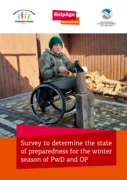
The winter season is approaching fast, while older people (OP) and people with disabilities (PwD) have already been living in the harsh environment of a full-scale war for eight months, with their basic needs and human rights at risk of being neglected and violated for eight years of ongoing war.
T...
8 March 2022
A very large number of people from Ukraine are fleeing the country and entering the European Union (EU) countries bordering Ukraine (Hungary, Poland, Romania, Slovakia) and the EU-neighbourhood country of the Republic of Moldova. Those fleeing Ukraine - mainly women and children - are ...

The Lancet Published Online September 13, 2016 http://dx.doi.org/10.1016/S0140-6736(16)31404-0

Interim rapid response guidance, 10 June 2022.
It includes considerations for certain populations such as patients with mild disease with considerations for community care, patients with moderate to severe disease, sexually active persons, pregnant or breastfeeding women, children and young persons...
This policy brief aims to provide a review of the current progress on implementing the Kenya national action plan on AMR, identifies critical gaps, and highlights findings to accelerate further progress in the human health sector. The target audience includes all those concerned with implementing ac...

This report assesses the impact of the conflict in Ukraine and its implications for organized crime and security-related issues for neighbouring countries, with a focus on Moldova.
These include:
Organized crime and illicit trafficking (including trafficking in persons, drugs, arms, illicit toba...
Approximately 80% of the 463 million adults worldwide with diabetes live in low-income and middle-income countries (LMICs). A major obstacle to designing evidence-based policies to improve diabetes outcomes in LMICs is the scarce availability of nationally representative data on the current patterns...
Shoman et al. Globalization and Health (2017) 13:1 DOI 10.1186/s12992-016-0224-2
Antibiotics have been a critical public health tool since the discovery of Penicillin in 1928, saving the lives of millions of people around the world. In developing country like ours, where the burden of treatable disease is very high and access to health facilities and laboratories is difficult, a...
n 2015, Member States of the United Nations adopted the 2030 Agenda for Sustainable Development and its accompanying Sustainable Development Goals (SDGs), with the third goal of the agenda focusing on health – good health and well-being. This has the attainment of universal health coverage (UHC) a...
