
Filter
2118
Filtered Results: 2118
Text search:
family
adaptation
Featured
Recommendations
218
New Publications
499
Language
Document type
No document type
1115
Studies & Reports
382
Guidelines
268
Manuals
165
Strategic & Response Plan
94
Training Material
57
Fact sheets
15
Situation Updates
10
Resource Platforms
7
Brochures
2
Infographics
2
Online Courses
1
Countries / Regions
Global
94
India
77
Latin America and the Carribbean
58
Western and Central Europe
43
Uganda
39
Kenya
37
Sierra Leone
37
Nepal
35
Nigeria
33
Ethiopia
32
Bangladesh
31
Malawi
30
South Africa
29
Africa
28
Liberia
27
Syria
25
Myanmar / Burma
25
Tanzania
24
Namibia
24
Ghana
23
Zambia
22
Ukraine
20
Congo, Democratic Republic of
20
South Sudan
17
South–East Asia Region
15
Rwanda
14
Mozambique
12
Eastern Europe
12
Zimbabwe
11
West and Central Africa
11
Philippines
10
Lesotho
9
Senegal
9
Cambodia
9
Asia
9
East and Southern Africa
9
Brazil
9
Indonesia
9
Cameroon
8
Guinea
8
Yemen
8
Thailand
7
Afghanistan
7
Haiti
7
Lebanon
7
Colombia
6
Burkina Faso
6
Jordan
6
Middle East and North Africa
6
Papua New Guinea
6
Russia
6
Pakistan
6
Venezuela
5
Sudan
5
Timor Leste/ East Timor
4
Benin
4
China
4
Laos
4
Peru
4
Germany
4
Vietnam
4
Botswana
4
North Macedonia
3
Tajikistan
3
Kazakhstan
3
Iran
3
Niger
3
North America
3
Turkmenistan
3
Moldova
3
Sri Lanka
3
Central African Republic
3
Somalia
3
Eswatini/ Swaziland
3
Mexico
2
Serbia
2
Turkey
2
Albania
2
Kyrgyzstan
2
Burundi
2
USA
2
Croatia
2
Western Pacific Region
2
Eastern Europe and Central Asia
2
Japan
2
Bolivia
2
Argentina
2
Palestine
2
Mali
2
El Salvador
1
Togo
1
Chile
1
Canada
1
Singapore
1
Estonia
1
Uzbekistan
1
Italy
1
Guinea-Bissau
1
Hungary
1
Lithuania
1
Paraguay
1
Mauritius
1
Tunisia
1
Portugal
1
Spain
1
Azerbaijan
1
Bosnia and Herzegovina
1
Nicaragua
1
Poland
1
Honduras
1
Angola
1
Chad
1
Libya
1
Bhutan
1
Iraq
1
Ecuador
1
Madagascar
1
Guatemala
1
Authors & Publishers
Publication Years
Category
Countries
617
Women & Child Health
189
Clinical Guidelines
175
Key Resources
168
Public Health
153
Capacity Building
54
Pharmacy & Technologies
6
Toolboxes
Mental Health
263
Disability
185
COVID-19
180
HIV
130
Planetary Health
114
Caregiver
85
TB
74
Conflict
68
Refugee
53
Ebola & Marburg
47
Global Health Education
44
NCDs
43
NTDs
41
Natural Hazards
35
Malaria
24
AMR
24
Rapid Response
21
Pharmacy
17
2.0 Rapid Response
16
Health Financing Toolbox
13
Cholera
9
Zika
8
Polio
8
Specific Hazards
7
Social Ethics
7
Typhoon
2
VADEMECUM | This Vademecum is intended to provide a benchmark for aid workers—whether working in the field or at a strategic level—in particular concerning the formulation and implementation of programmes of prevention or response to humanitarian crises. It is not solely a theoretical document b...
This Making It Work multi-stakeholder initiative documents good practice for inclusive employment of people with disabilities, in order to promote effective implementation Article 27 of the Convention on the Rights of Persons with Disabilities in seven West African countries. “The objective was to...
The message contained in this publication is clear: countries need a
public health system that can respond to the deliberate release of
chemical and biological agents. Regrettable though this message may
be, the use of poison gas in the war between Iraq and the Islamic
Republic of Iran in the 19...
10 points from field experience
The standards of care cover the routine care and management of complications occurring for women and their babies during labour, childbirth and the early postnatal period, including those of small babies during the first week of life. They define priorities for improving the quality of maternal and ...

This report situates disability and inclusion within the broader context of sustainable development, with a particular focus on the Sustainable Development Goals (SDGs). The paper provides background on the historical role of the UN in promoting inclusion and outlines the current trends and challeng...
New criteria for classifying and diagnosing hyperglycaemia first detected during pregnancy have been accepted by a group of experts convened by WHO. These new criteria are an update of recommendations published by WHO in 1999
Manual for use in primary care.
There is substantial evidence for the benefits of screening and brief intervention in primary health care for alcohol problems. However, there is a need for screening and brief interventions with cross-cultural relevance for substances other than alcohol or tobacco,...
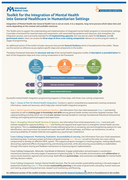
This Toolkit aims to support the understanding and implementation of integrated mental health programs in humanitarian settings. It provides a framework for essential steps and components, with associated key guidance and resources, that strengthen the integration process, and is primarily intended ...

At present at least 2.2 billion people around the world have a vision impairment, of whom at least 1 billion have a vision impairment that could have been prevented or is yet to be addressed. The world faces considerable challenges in terms of eye care, including inequalities in the coverage and qua...
More than three months since the start of the war in Ukraine, people globally are facing a cost-of-living crisis not seen in more than a generation, with escalating price shocks in the global food, energy and fertilizer markets - in a world already grappling with the COVID-19 pandemic and climate ch...

1 June 2020
Countries around the world are facing the challenge of increased demand for care of people with COVID-19, compounded by fear, misinformation and limitations on movement that disrupt the delivery of health care for all conditions. Maintaining essential health services: operational guidan...
Comprehensive Reviews in Food Science and Food Safety, Vol.12 (2013) pp.234-248
In 2006, the Institute of Food Technologists (IFT) published an Expert Report entitled “Antimicrobial Resistance: Implications for the Food System” (IFT 2006). That report summarized current scientific knowledge pe...
