
Filter
2011
Filtered Results: 2011
Text search:
Ministry
of
Medical
Services
and
Ministry
of
Public
Health
&
Sanitation,
Republic
of
Kenya
Featured
Recommendations
186
New Publications
713
Language
Document type
No document type
1175
Studies & Reports
294
Guidelines
215
Strategic & Response Plan
137
Manuals
108
Situation Updates
38
Training Material
24
Fact sheets
15
Resource Platforms
2
Brochures
1
Infographics
1
Online Courses
1
Countries / Regions
Kenya
130
Sierra Leone
130
India
109
Liberia
77
Global
71
Ethiopia
64
Nepal
63
Myanmar / Burma
61
Uganda
49
Bangladesh
46
Syria
44
Rwanda
43
Nigeria
41
Malawi
41
Zambia
41
Ghana
40
Tanzania
35
Indonesia
35
Namibia
30
Latin America and the Carribbean
28
Congo, Democratic Republic of
27
Guinea
24
Mozambique
23
South Sudan
22
Africa
21
Zimbabwe
20
Haiti
20
Ukraine
18
Lesotho
17
South Africa
16
Senegal
15
Cambodia
15
South–East Asia Region
14
Venezuela
12
Western and Central Europe
12
Yemen
12
Jordan
11
Botswana
10
Pakistan
10
Cameroon
9
Burkina Faso
9
Lebanon
8
Brazil
8
Iraq
8
Colombia
7
Asia
7
Sudan
7
Central African Republic
7
Mali
7
Eswatini/ Swaziland
7
Benin
6
Western Pacific Region
6
Laos
5
Burundi
5
West and Central Africa
5
East and Southern Africa
5
Côte d’Ivoire / Ivory Coast
5
Greece
5
Palestine
5
Somalia
5
Afghanistan
4
Philippines
4
Germany
4
Middle East and North Africa
4
Madagascar
4
Timor Leste/ East Timor
3
Togo
3
China
3
Peru
3
Vietnam
3
Eastern Europe
3
Moldova
3
Tajikistan
2
Mexico
2
Turkey
2
Gambia
2
Iran
2
Albania
2
Fiji
2
Niger
2
Italy
2
Guinea-Bissau
2
Eastern Europe and Central Asia
2
Mauritius
2
Sri Lanka
2
Egypt
2
Chad
2
North Macedonia
1
Thailand
1
El Salvador
1
Chile
1
Singapore
1
Morocco
1
Qatar
1
Mauritania
1
Armenia
1
Dominican Republic
1
Croatia
1
Hungary
1
Saudi Arabia
1
Paraguay
1
Japan
1
Maldives
1
Tunisia
1
Belarus
1
Southern Africa
1
Bolivia
1
Argentina
1
Papua New Guinea
1
Romania
1
Georgia
1
Poland
1
Honduras
1
Libya
1
Bhutan
1
Authors & Publishers
Publication Years
Category
Countries
1104
Key Resources
170
Public Health
98
Clinical Guidelines
72
Women & Child Health
66
Capacity Building
28
Pharmacy & Technologies
5
Annual Report MEDBOX
1
Toolboxes
COVID-19
162
Ebola & Marburg
108
Conflict
94
Disability
79
AMR
76
Planetary Health
62
Rapid Response
55
NTDs
54
Caregiver
53
Natural Hazards
48
HIV
46
Mental Health
43
2.0 Rapid Response
40
Refugee
38
Global Health Education
38
TB
37
Cholera
29
Pharmacy
17
Malaria
16
Health Financing Toolbox
11
NCDs
11
Zika
11
Specific Hazards
8
Polio
4
Typhoon
4
Social Ethics
3
South Sudan
1

Midwifery Capacity Building Strategy for Northern Syria
2017-2021
Available in Arabic
From Exclusion to Inclusion
On Sunday 16th December 2018, some villages in the Province of Mai-Nambiar, Democratic Republic of Congo, neighboring the district of Makotimpoko in the Republic of Congo (CongoBrazzaville) were affected by inter-ethnic conflict between the Banunu and the Batende. The fighting has resulted in 400 fa...
This monograph presents 12 reports of successful programs serving children with special needs in various nations. The program locations and the program report titles and authors are as follows: (1) Austria: "Integration Models for Elementary and Secondary Schools in Austria" (Volker Rutte)...

World Health Organization Chief Tells Security Council, Urging Sustained Focus to Prevent Future Outbreaks

Education in emergencies is a young area; the evidence of its impact is often anecdotal, and although its status as a humanitarian concern has gained legitimacy in recent years, it has yet to be accepted across the humanitarian community. Much more needs to be done to enhance our understanding of t...
Multi-country outbreak of cholera External Situation Report # 23, published 20 February 2025

This companion to the ALNAP EHA Guide offers protection-specific insights for evaluators and evaluation commissioners across the humanitarian sector. It covers the planning, data management and analysis phases of evaluation and addresses a range of challenges that – whilst not all unique to protec...
Version 1: March 9, 2021. A living document
The primary aim of this assessment is to evaluate current approaches to malaria surveillance in Myanmar and to provide a set of practical and feasible recommendations to further strengthen the surveillance system in the short to medium term. The assessment focuses on the surveillance of malaria case...
Background paper 8
The Independent Panel for Pandemic Preparedness and Response
May 2021

J of Pharm Policy and Pract 14, 27 (2021). https://doi.org/10.1186/s40545-021-00309-8
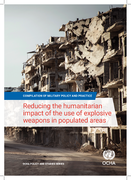
Reducing the humanitarian impact of the use of explosive weapons in populated areas is a key priority for the United
Nations, the International Committee of the Red Cross (ICRC), civil society and an increasing number of Member States.
The United Nations Secretary-General has expressly called on...

The COVID-19 pandemic has exacerbated and added yet another layer of vulnerability to an already dire web of vulnerabilities of girls in the African continent, which constitute about 49% of the total child population. Critically, gender equality and girls’ multidimensional vulnerability have been ...
