
Filter
4925
Filtered Results: 4925
Text search:
HIV
patients
Featured
Recommendations
478
New Publications
1310
Language
Document type
No document type
2999
Studies & Reports
687
Guidelines
628
Manuals
215
Strategic & Response Plan
141
Fact sheets
99
Training Material
81
Situation Updates
33
Infographics
19
Resource Platforms
13
Brochures
6
Online Courses
3
Videos
1
Countries / Regions
India
233
South Africa
180
Kenya
166
Global
143
Tanzania
110
Malawi
109
Uganda
108
Ethiopia
104
Western and Central Europe
93
Nigeria
91
Liberia
91
Sierra Leone
90
Zambia
90
Africa
76
Rwanda
75
Namibia
74
Nepal
72
Myanmar / Burma
60
Eastern Europe
58
Latin America and the Carribbean
56
Ukraine
52
Ghana
52
Lesotho
48
Bangladesh
47
Senegal
45
Congo, Democratic Republic of
42
Zimbabwe
37
Cambodia
36
Mozambique
35
Asia
35
Germany
35
Philippines
33
Indonesia
30
Russia
29
Burkina Faso
26
Haiti
25
Botswana
25
Guinea
23
South–East Asia Region
23
East and Southern Africa
18
Brazil
17
Benin
16
Cameroon
16
Eswatini/ Swaziland
16
South Sudan
15
Colombia
14
Madagascar
14
Venezuela
13
West and Central Africa
13
Syria
12
Albania
12
Argentina
12
Central African Republic
12
Eastern Europe and Central Asia
11
Tajikistan
10
Middle East and North Africa
10
Vietnam
10
Georgia
9
Pakistan
9
Thailand
7
Peru
7
Southern Africa
7
Laos
6
Yemen
6
Ecuador
6
North Macedonia
5
Switzerland
5
Moldova
5
El Salvador
4
Turkey
4
Jordan
4
Western Pacific Region
4
Lebanon
4
Sri Lanka
4
Somalia
4
Timor Leste/ East Timor
3
Mexico
3
China
3
Chile
3
Iran
3
Estonia
3
Niger
3
Afghanistan
3
Burundi
3
Armenia
3
USA
3
Hungary
3
Côte d’Ivoire / Ivory Coast
3
Papua New Guinea
3
Sudan
3
Romania
3
Poland
3
Mali
3
Angola
3
Bhutan
3
Gambia
2
Morocco
2
Bulgaria
2
Paraguay
2
North America
2
France
2
Mauritius
2
United Kingdom
2
Portugal
2
Bolivia
2
Chad
2
Iraq
2
North Korea
1
Serbia
1
Kazakhstan
1
Canada
1
Singapore
1
Kyrgyzstan
1
Uzbekistan
1
Qatar
1
Guinea-Bissau
1
Saudi Arabia
1
Gabon
1
Turkmenistan
1
Jamaica
1
Tunisia
1
Norway
1
Spain
1
Israel
1
Slovakia
1
Greece
1
Palestine
1
Honduras
1
Solomon Islands
1
Authors & Publishers
Publication Years
Category
Countries
2003
Clinical Guidelines
455
Women & Child Health
235
Public Health
187
Key Resources
165
Capacity Building
111
Pharmacy & Technologies
54
Annual Report MEDBOX
2
Toolboxes
HIV
750
TB
641
COVID-19
274
Mental Health
197
Caregiver
154
AMR
144
Ebola & Marburg
112
NTDs
110
Refugee
89
Pharmacy
83
Rapid Response
70
Conflict
64
Global Health Education
59
NCDs
54
Disability
52
Malaria
45
Health Financing Toolbox
39
Cholera
29
Planetary Health
29
Natural Hazards
28
Polio
24
2.0 Rapid Response
22
Zika
19
Social Ethics
10
Specific Hazards
6
South Sudan
1
Typhoon
1
Buruli ulcer : management of Mycobacterium ulcerans disease : a manual for health care providers
recommended
This manual is addressed to health care providers dealing with Mycobacterium ulcerans disease (Buruli ulcer). The manual aims to achieve a better understanding of the disease, its clinical presentation and its surgical management. The manual is aimed particularly at district health care providers. A...
JOIN European First Aid Guidelines
recommended
In the event of an accident or medical emergency, First Aid saves lives. Keeping the patient alive and safe until the arrival of expert professional help is a vital part of the chain of care which leads to recovery. The principle of First Aid must be simple skills, clearly taught and capable of bein...
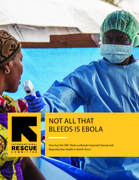
Not all that bleeds is Ebola
recommended
How has the DRC Ebola outbreak impacted Sexual and Reproductive Health in North-Kivu?
Recommendations (more specifics found in the assessment):
1. Sexual and reproductive health needs and services are to be embedded in the EVD response from the outset.
2. Reduce delays at every stage of the patie...
Key questions
What is already known?
Critical illness is common throughout the world and COVID-19 has caused a global surge of critically ill patients.
There are large gaps in the quality of care for critically ill patients, especially in low-staffed and low-resourced settings, and mortal...

Ethiopia has been repeatedly affected by conflict, flooding, drought, and disease outbreaks in the past years. As of January 2024, the country is actively responding to the longest recorded cholera outbreak which started in August 2022, recurrent measles outbreaks which started in August 2021, and t...
This was a Phase 3, multi-center, randomized, open-label, parallel-group, active control study where 273 male and female patients with first stage Trypanosoma brucei gambiense HAT were treated at six sites: one trypanosomiasis reference center in Angola, one hospital in South Sudan, and four hospita...

Language influences the way we think, how we perceive reality, and how we behave. With respect to HIV, language can embody stigma and discrimination, which impacts access to testing, acquisition of HIV, and engagement with treatment. Language plays a role in supporting respect and empowerment of ind...
A case study from Bosnia and Herzegovina Eurasian Harm Reduction Network
The case study was prepared by Samir Ibisevic, President of PROI between March and June 2016 and edited by Graham Shaw.
EHRN is grateful to all who contributed to this document, especially: Dr. Serifa Godinjak, Chairperson...
Time has seen management for Cystic Fibrosis (CF) advance drastically, most recently in the development of the disease-modifying triple combination therapy ivacaftor/tezacaftor/elexacaftor. There is currently limited evidence regarding both the global epidemiology of CF and access to this transforma...
Recognizing the extent to which the COVID-19 outbreaks affects women and men differently is hugely important. Some preliminary data suggested that more men than women are dying, potentially due to sex-based immunological differences, higher rates of cardiovascular disease for men and lifestyle choic...
This publication seeks to describe the best treatments and practices based on the scientific evidence available at the time of writing as evaluated by the authors and may change as a result of new research. Readers need to apply this knowledge to patients in accordance with the guidelines and laws o...
This policy will serve as a cornerstone from which to address the accessibility of Family Planning services and to encourage its integration with services for HIV/AIDS, maternal health, child health, and other development initiatives. This policy is timely, as Rwanda is embarking on the introduction...

Chronic respiratory diseases, such as asthma and
chronic obstructive pulmonary disease, kill more than
four million people every year and affect hundreds
of millions more. These diseases erode the health
and well-being of the patients and have a negative
impact on families and societies. Women ...
PEPFAR Malawi’s Country Operational Plan (COP) 2021 reflects a culmination of strong interagency collaboration between the PEPFAR Malawi team, Government of Malawi (GoM), and civil society organizations (CSOs) to mitigate the devastating impacts of COVID-19 and sustain progress achieved over the l...

Antimicrobial resistance (AMR) as a serious public health threat was globally acknowledged by WHO in 2015, through the launch of the Global Action Plan (GAP). With a limited number of new antibiotics in the developmental pipeline, many countries are in the process of establishing strategies for anti...
A clinical case definition of post COVID-19 condition by a Delphi consensus, 6 October 2021
recommended
WHO has developed a clinical case definition of post COVID-19 condition by Delphi methodology that includes 12 domains, available for use in all settings. This first version was developed by patients, researchers and others, representing all WHO regions, with the understanding that the definition ma...

The National Strategic Plan is based on the following guiding principles:
1) Life-course approach: adolescence is a key decade in the course of life that influences the health outcomes later in life.
2) Comprehensive approach: It recognizes the cross cutting health and development needs o...
1) Life-course approach: adolescence is a key decade in the course of life that influences the health outcomes later in life.
2) Comprehensive approach: It recognizes the cross cutting health and development needs o...
Abstract: Chagas disease is caused by infection with the protozoan Trypanosoma cruzi, and although over 100 years have passed since the discovery of Chagas disease, it still presents an increasing problem for global public health. A plethora of information concerning the chronic phase of human Chaga...
Despite being a curable and preventable disease, tuberculosis (TB) remains as one of the major challenges for health systems, globally. Every year, TB affects more than 10 million people and kills more than 1.4 million people. WHO’s Digital Health for the End TB Strategy – an Agenda for Action o...
Formularies are lists of antibiotics that are suggested for certain healthcare settings. In developing a recommended formulary, countries should consider the needs of patients and facilities where they receive care. For example, clinicians in rural or primary health centers may need wide access to f...
