
Filter
6810
Filtered Results: 6810
Text search:
Centers
for
Disease
Control
and
Prevention
,
WHO
Featured
Recommendations
713
New Publications
1731
Language
Document type
No document type
3550
Studies & Reports
1122
Guidelines
1050
Manuals
390
Strategic & Response Plan
299
Fact sheets
170
Training Material
100
Situation Updates
68
Resource Platforms
21
Infographics
20
Brochures
10
Online Courses
5
App
3
Dashboards/Maps
2
Countries / Regions
India
317
Global
295
Sierra Leone
179
Kenya
178
Liberia
166
Ethiopia
151
Nigeria
139
Western and Central Europe
139
Africa
136
Uganda
122
Latin America and the Carribbean
106
South Africa
103
Nepal
98
Rwanda
94
Malawi
93
Zambia
91
Tanzania
90
Congo, Democratic Republic of
75
Bangladesh
73
Namibia
72
Ukraine
66
Syria
66
Ghana
65
West and Central Africa
64
Myanmar / Burma
62
Philippines
61
Guinea
60
Middle East and North Africa
56
East and Southern Africa
56
Eastern Europe
55
Mozambique
54
Senegal
49
Russia
49
South Sudan
48
Germany
46
Zimbabwe
44
South–East Asia Region
44
Haiti
43
Asia
42
Cambodia
38
Lesotho
36
Brazil
36
Yemen
32
Burkina Faso
31
Indonesia
29
Eastern Europe and Central Asia
25
Botswana
23
Colombia
22
Madagascar
22
Cameroon
21
Mali
20
Venezuela
19
Eswatini/ Swaziland
18
USA
17
Pakistan
17
Thailand
15
Afghanistan
15
Côte d’Ivoire / Ivory Coast
15
Somalia
15
Vietnam
14
Sudan
14
Angola
14
Western Pacific Region
13
Central African Republic
13
Albania
12
Tajikistan
11
Moldova
11
Benin
10
Togo
10
China
10
Laos
10
Guinea-Bissau
10
Chile
9
Niger
9
Peru
9
Jordan
9
North America
9
Argentina
9
Lebanon
9
Burundi
8
Georgia
8
Chad
8
Ecuador
8
North Macedonia
7
Saudi Arabia
7
Paraguay
7
Iraq
7
Timor Leste/ East Timor
6
Gambia
6
Armenia
6
Spain
6
Bolivia
6
Sri Lanka
6
Palestine
6
Turkey
5
Papua New Guinea
5
Romania
5
Poland
5
El Salvador
4
Kazakhstan
4
Iran
4
Hungary
4
Japan
4
France
4
Egypt
4
Honduras
4
Libya
4
Mexico
3
Canada
3
Gabon
3
Turkmenistan
3
Tunisia
3
United Kingdom
3
Belarus
3
Southern Africa
3
Bhutan
3
Estonia
2
Kyrgyzstan
2
Congo-Brazzaville
2
Uzbekistan
2
Malaysia
2
Morocco
2
Qatar
2
Bulgaria
2
Mauritania
2
Dominican Republic
2
Jamaica
2
Belgium
2
Mauritius
2
Portugal
2
Slovakia
2
Greece
2
North Korea
1
Switzerland
1
Serbia
1
Australia
1
Singapore
1
Austria
1
Italy
1
Cape Verde
1
Lithuania
1
Ireland
1
Uruguay
1
Maldives
1
Morocco
1
Israel
1
Belize
1
Costa Rica
1
Panama
1
Nicaragua
1
Djibouti
1
Guatemala
1
Authors & Publishers
Publication Years
Category
Countries
2538
Clinical Guidelines
561
Public Health
395
Key Resources
348
Women & Child Health
249
Capacity Building
100
Pharmacy & Technologies
84
Annual Report MEDBOX
2
Toolboxes
COVID-19
821
HIV
557
TB
463
Mental Health
383
Ebola & Marburg
337
AMR
236
NTDs
235
Rapid Response
177
Planetary Health
170
NCDs
160
Caregiver
156
Conflict
132
Refugee
114
Malaria
102
Pharmacy
95
Disability
94
2.0 Rapid Response
94
Zika
93
Global Health Education
92
Cholera
82
Health Financing Toolbox
66
Natural Hazards
63
Polio
43
Specific Hazards
40
Social Ethics
10
Typhoon
3
South Sudan
2

The World Health Organization (WHO) recommends the use of insecticide-treated nets (ITNs) and intermittent preventive treatment in pregnancy (IPTp) as a cost-effective intervention for the prevention of malaria during pregnancy in endemic areas. This study was conducted to investigate: (1) the exten...
Atherosclerotic lower-extremity peripheral artery disease (PAD) is increasingly recognized as an important cause of cardiovascular morbidity and mortality that affects more than 230 million people worldwide. Traditional cardiovascular risk factors, including advanced age, smoking, and diabetes, are ...

The document "Chronic Respiratory Diseases: A Handbook for Pharmacists" outlines the significant role pharmacists play in managing asthma and COPD, emphasizing patient education, disease prevention, medication management, and promoting healthy lifestyles. It highlights the importance of pharmacists ...
This guidance is intended for use in developing standalone TB strategic plans, or TB interventions as part of multidisease or health sector plans. It describes key considerations and steps for strategic planning for TB in line with the World Health Organization’s End TB strategy, and the proposed ...

One of the main aims of the WHO Global Initiative for Childhood Cancer and the CureAll Americas framework is to strengthen centers of excellence and promote the training of the health workforce, especially pediatric oncology nurses, specialized in nursing care for children and adolescents with cance...
This publication provides recommendations for the management of critically ill adult patients with COVID-19 being treated in intensive care units (ICUs) in the Americas. These clinical practice guidelines provide evidence-informed recommendations for identifying markers and mortality risk factors in...

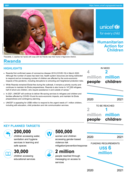
Rwanda first confirmed cases of coronavirus disease 2019 (COVID-19) in March 2020. Although the number of cases has been low, health system resources are being redirected to respond and an increasing number of children are affected by the socio-economic impacts of the pandemic, including disruptions...
The pharmacological management of asthma has changed considerably in recent decades, as it has come to be understood that it is a complex, heterogeneous disease with different phenotypes and endotypes. It is now clear that the goal of asthma treatment should be to achieve and maintain control of the...

ABSTRACT
More than 500 million people worldwide live with cardiovascular disease (CVD). Health systems today face fundamental challenges in delivering optimal care due to ageing populations, healthcare workforce constraints, financing, availability and affordability of CVD medicine, and service del...
Obesity and diet-related noncommunicable diseases (NCDs) have been steadily increasing globally, and with them, a pressing need to implement effective responses to address the contributing factors. Among the available evidence-based policy options that enable healthier choices and improved diets is ...

The Strategic Malaria Communication Guide for Central America is intended to facilitate the shift from malaria control to elimination by strengthening communication and advocacy initiatives throughout the region. Based on interviews and a review of literature, the guide offers National Malaria Progr...

WHY THIS GUIDE?
Because, in the face of crises and emergencies, it is vital to include a human rights perspective in responses. Vulnerable groups face major obstacles to accessing and benefiting from prevention, mitigation, and health care policies due to structural barriers of inequality. To offer...
Heart failure (HF) is a global public health concern with disproportionate socioeconomic, morbidity and mortality burden on low- and middle-income countries (LMICs). This review summarises contemporary data on the demographic and clinical characteristics, aetiologies, treatment, economic burden and ...
Antimicrobial resistant (AMR) organisms are increasing globally, threatening to render existing treatments ineffective against many infectious diseases. In Africa, AMR has already been documented to be a problem for HIV and the pathogens that cause malaria, tuberculosis, typhoid, cholera, meningitis...

The seventh WHO Report on the global tobacco epidemic analyses national efforts to implement the most effective measures from the WHO Framework Convention on Tobacco Control (WHO FCTC) that are proven to reduce demand for tobacco.
The report showed that while only 23 countries have implemented ce...
This brief summarizes current evidence and guidance for maintaining safe and effective care across the spectrum of maternal, newborn and infant care while protecting mother and child and health care providers during COVID-19. Furthermore, implications of the principle of “do no harm” are reviewe...

In the absence of a such a measure, and building on the success of developing the APCA African
Palliative Outcome Scale (POS) for adults, the African Palliative Care Association has developed the
APCA African Children’s POS. The tool has been validated across diseases, countries, settings and ...
