
Filter
2830
Filtered Results: 2830
Text search:
healthy
workforce
Featured
Recommendations
248
New Publications
677
Language
Document type
No document type
1278
Studies & Reports
629
Guidelines
362
Strategic & Response Plan
216
Manuals
185
Fact sheets
63
Training Material
42
Situation Updates
26
Resource Platforms
15
Infographics
7
Brochures
5
Dashboards/Maps
1
App
1
Countries / Regions
Global
179
Kenya
111
India
79
Sierra Leone
75
Liberia
70
Ethiopia
67
Western and Central Europe
60
Rwanda
55
Africa
54
Nigeria
53
Malawi
51
South Africa
49
Uganda
48
Namibia
46
Myanmar / Burma
46
Nepal
44
Syria
41
Bangladesh
41
Zambia
39
Latin America and the Carribbean
35
Ghana
32
Tanzania
31
South–East Asia Region
30
Ukraine
27
East and Southern Africa
25
Lesotho
24
West and Central Africa
24
Guinea
23
Congo, Democratic Republic of
22
Eastern Europe
20
Philippines
17
Botswana
17
Indonesia
17
Asia
16
Middle East and North Africa
15
Haiti
14
Cambodia
14
Eastern Europe and Central Asia
14
Brazil
14
Yemen
14
Senegal
13
Afghanistan
13
Zimbabwe
12
Russia
12
South Sudan
12
Pakistan
12
Cameroon
11
Mozambique
11
Peru
8
Somalia
8
Thailand
7
Venezuela
7
Western Pacific Region
7
Lebanon
7
Turkey
6
Laos
6
Burkina Faso
6
Jordan
6
Sudan
6
Iraq
6
Moldova
5
Sri Lanka
5
Central African Republic
5
Eswatini/ Swaziland
5
Iran
4
USA
4
Colombia
3
Timor Leste/ East Timor
3
Mexico
3
Benin
3
Gambia
3
China
3
Chile
3
Burundi
3
Germany
3
Southern Africa
3
Vietnam
3
Papua New Guinea
3
Palestine
3
Mali
3
Ecuador
3
North Macedonia
2
El Salvador
2
Togo
2
Qatar
2
Bulgaria
2
Paraguay
2
Jamaica
2
Mauritius
2
United Kingdom
2
Bolivia
2
Egypt
2
Chad
2
Libya
2
Tajikistan
1
Switzerland
1
Kazakhstan
1
Albania
1
Kyrgyzstan
1
Niger
1
Malaysia
1
Dominican Republic
1
Guinea-Bissau
1
Hungary
1
Lithuania
1
Saudi Arabia
1
North America
1
Maldives
1
South Korea
1
Côte d’Ivoire / Ivory Coast
1
Belize
1
Costa Rica
1
Guyana
1
Panama
1
Argentina
1
Nicaragua
1
Djibouti
1
Romania
1
Slovakia
1
Poland
1
Honduras
1
Angola
1
Bhutan
1
Guatemala
1
Authors & Publishers
Publication Years
Category
Countries
1167
Public Health
217
Clinical Guidelines
152
Women & Child Health
136
Key Resources
135
Capacity Building
48
Pharmacy & Technologies
20
Annual Report MEDBOX
1
Toolboxes
COVID-19
348
Mental Health
201
Caregiver
146
HIV
129
Planetary Health
114
Disability
106
TB
83
Conflict
80
Global Health Education
80
Ebola & Marburg
75
NCDs
65
Health Financing Toolbox
60
AMR
58
Rapid Response
54
2.0 Rapid Response
48
NTDs
42
Refugee
38
Natural Hazards
36
Malaria
35
Pharmacy
28
Polio
16
Social Ethics
9
Zika
9
Specific Hazards
8
Cholera
6
Typhoon
1

Operational Guidance. This operational guidance provides a structured approach to support countries in sustaining priority services for HIV, viral hepatitis and sexually transmitted infections in the context of reduced external funding. The guidance is intended for national governments, public healt...

January 2020 to December 2021
The backsliding of immunization coverage during the COVID-19 pandemic, combined with delayed catch-up efforts has resulted in a large and growing immunity gap. There is an urgent need to close this gap, and enable millions of missed children to be vaccinated. The Essential Immunization Recovery Plan...
The Multi-professional Patient Safety Curriculum Guide (2011) was developed to assist in the teaching of patient safety in universities and schools in the fields of dentistry, medicine, midwifery, nursing and pharmacy. It also supports the on-going training of all health care professionals.
The C...
Antimicrobial Resistance Resource Platform
recommended
Antimicrobial resistance (AMR) threatens the effective prevention and treatment of an ever-increasing range of infections caused by bacteria, parasites, viruses and fungi.
AMR occurs when bacteria, viruses, fungi and parasites change over time and no longer respond to medicines making infections ha...

Ebola disease and Marburg disease outbreaks continue to occur in Africa, with increased frequency. In addition to resulting in high mortality and morbidity, the outbreaks generate fear and mistrust about the response activities within the communities affected.
Infection prevention and control (IP...
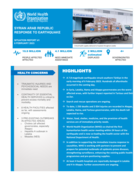
TUATION UPDATE
In the early morning of 6 February 2023, a magnitude 7.8 earthquake occurred in southern Türkiye near the
northern border of Syria. The earthquake was followed 11 minutes later by a magnitude 6.7 aftershock. Many
aftershocks are still being felt across the region. Whilst the imp...
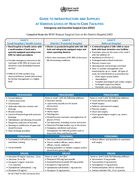
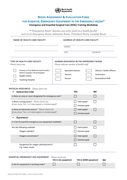

Mpox, previously known as monkeypox, is a viral illness caused by the monkeypox virus (MPXV).1
It causes a painful rash, enlarged lymph nodes, fever, headache, muscle ache, back pain and low energy or feeling sick. In most cases, the symptoms of mpox go away within a few weeks with supportive care...
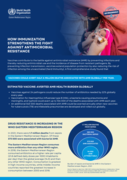
Vaccines contribute to the battle against antimicrobial resistance (AMR) by preventing infections and thereby reducing antimicrobial use and the incidence of disease from resistant pathogens. By preventing infection transmission, vaccines extend population protection by also reducing the risk of inf...
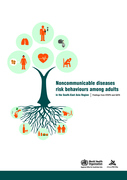
The publication conveys the most recent quantitative surveillance results focusing on noncommunicable disease (NCDs)-related risk behaviours among adults from the WHO STEPwise approach to NCD risk factor surveillance (STEPS) and tobacco use among adults from the Global Adult Tobacco Survey (GATS) in...
In March 2020 the World Health Organization (WHO) declared the outbreak of a novel coronavirus disease, COVID-19, to be a pandemic, due to the speed and scale of transmission.
WHO and public health authorities around the world are taking action to contain the COVID-19 outbreak. Certain populations,...

The WHO COVID-19 Clinical management: living guidance contains the Organization’s most up-to-date recommendations for the clinical management of people with COVID-19. Providing guidance that is comprehensive and holistic for the optimal care of COVID-19 patients throughout their entire illness is ...

Abbreviated Report of a WHO Consultation
The Strategy provides a high-level unifying framework to leverage existing capacities, address barriers and strengthen the use of genomic surveillance in the detection, monitoring and response to public health threats. Genomic surveillance is part of the broader surveillance and laboratory system, a...
Updated 20 Nov. 2020
Countries can use this checklist of hospital governance, structures, plans and protocols to rapidly determine the current capacities of hospitals to respond to the COVID-19 pandemic and to identify gaps and major areas that require investment and action for the development of h...

At the end of 2023, WHO convened our first-ever annual WHO Stakeholder Review Conference for Prevention and Response to Sexual Misconduct. Aimed at joint learning and frank discussion on challenges faced in the achieving zero tolerance for all forms of sexual misconduct by aid workers, the Conferenc...
