
Filter
8033
Filtered Results: 8033
Text search:
treatment
policy
Featured
Recommendations
648
New Publications
2107
Language
Document type
No document type
4582
Studies & Reports
1381
Guidelines
956
Manuals
413
Strategic & Response Plan
299
Fact sheets
148
Training Material
114
Situation Updates
81
Resource Platforms
19
Infographics
17
Brochures
15
Online Courses
6
App
1
Videos
1
Countries / Regions
Global
335
India
334
Kenya
251
South Africa
184
Western and Central Europe
171
Uganda
163
Ethiopia
162
Sierra Leone
160
Liberia
154
Nigeria
153
Nepal
151
Malawi
132
Myanmar / Burma
128
Zambia
124
Tanzania
118
Bangladesh
118
Africa
113
Latin America and the Carribbean
110
Ghana
107
Namibia
107
Rwanda
94
Ukraine
88
Syria
73
Eastern Europe
70
Zimbabwe
69
Lesotho
63
Philippines
56
Indonesia
56
Congo, Democratic Republic of
55
Asia
53
Mozambique
51
Cambodia
49
South–East Asia Region
49
South Sudan
48
Russia
46
Guinea
44
Botswana
43
Senegal
42
Haiti
36
Germany
33
East and Southern Africa
33
Eswatini/ Swaziland
32
Burkina Faso
31
Venezuela
29
West and Central Africa
28
Cameroon
27
Eastern Europe and Central Asia
26
Brazil
26
Yemen
26
Middle East and North Africa
25
Colombia
23
Afghanistan
23
Pakistan
23
Sudan
22
Lebanon
19
Benin
17
Jordan
17
Thailand
16
Central African Republic
16
Madagascar
16
Vietnam
15
Peru
14
China
13
Mali
13
Iraq
13
Tajikistan
12
Albania
12
Moldova
12
Paraguay
11
Sri Lanka
11
Western Pacific Region
10
Georgia
10
Somalia
10
Iran
9
Laos
9
Turkey
8
Burundi
8
USA
8
North America
8
Papua New Guinea
8
North Macedonia
7
Mexico
7
Chile
7
Romania
7
Greece
7
Palestine
7
Poland
7
Bhutan
7
Timor Leste/ East Timor
6
Kyrgyzstan
6
Armenia
6
United Kingdom
6
Southern Africa
6
Bolivia
6
Argentina
6
Libya
6
Togo
5
Hungary
5
Saudi Arabia
5
Côte d’Ivoire / Ivory Coast
5
Egypt
5
Angola
5
Ecuador
5
El Salvador
4
Gambia
4
Canada
4
Fiji
4
Estonia
4
Niger
4
Guinea-Bissau
4
Belarus
4
Serbia
3
Kazakhstan
3
Morocco
3
Italy
3
Turkmenistan
3
Jamaica
3
Japan
3
Mauritius
3
Portugal
3
Spain
3
Switzerland
2
Singapore
2
Uzbekistan
2
Malaysia
2
Mongolia
2
Qatar
2
Bulgaria
2
Dominican Republic
2
Croatia
2
Lithuania
2
Gabon
2
Belgium
2
Tunisia
2
Azerbaijan
2
Slovakia
2
Honduras
2
Guatemala
2
North Korea
1
Austria
1
Vanuatu
1
Mauritania
1
Ireland
1
Uruguay
1
Denmark
1
France
1
Maldives
1
Norway
1
Israel
1
Bosnia and Herzegovina
1
Latvia
1
Belize
1
Costa Rica
1
Panama
1
Nicaragua
1
Djibouti
1
Chad
1
Authors & Publishers
Publication Years
Category
Countries
3088
Clinical Guidelines
542
Public Health
412
Key Resources
403
Women & Child Health
401
Capacity Building
127
Pharmacy & Technologies
65
Annual Report MEDBOX
2
Toolboxes
HIV
803
Mental Health
686
TB
568
COVID-19
536
AMR
257
Disability
254
Caregiver
212
Conflict
198
Planetary Health
195
Ebola & Marburg
194
NTDs
175
Refugee
157
Pharmacy
156
NCDs
144
Global Health Education
120
Rapid Response
117
Malaria
106
Health Financing Toolbox
100
Natural Hazards
70
2.0 Rapid Response
67
Specific Hazards
48
Polio
37
Social Ethics
32
Cholera
31
Zika
31
Typhoon
4
South Sudan
1
Operational considerations for case management of COVID-19 in health facility and community
recommended
This document is intended to guide the care of COVID-19 patients as the response capacity of health systems is challenged; to ensure that COVID-19 patients can access life-saving treatment, without compromising public health objectives and safety of health workers.
It promotes two key messages:
...
Guidelines for Good Clinical Laboratory Practices (GCLP) outlines the principles and procedures to be followed by medical laboratories involved in clinical research and/or patient care so as to provide quality data which can be used for health research and patient treatment. As the use of laboratory...
The toolkit provides guidance on where to get started, including the structures and resources that should be put in place at the national and health-care facility level, through a stepwise approach in low-resource settings. As the ultimate goal of an AMS programme is sustainable behaviour change in ...
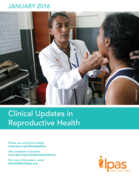
The publication is designed to provide Ipas staff, trainers, partners and other health-care providers with access to up-to-date, evidence-based recommendations. In general, the recommendations are the same as those in the World Health Organization’s 2012 Safe Abortion: Technical and Policy Guidanc...
Following the encouraging initial results of the pilot project, the Ministry of Health is committed to increasing access to MDR-TB diagnosis, treatment and care. An expansion plan for the programmatic management of drug-resistant TB has been developed and forms part of the Five Year National Strateg...
A series of information sheets to help empower communities and strengthen health systems
This series of information sheets introduces health literacy, its
relevance to public policy, and the ways it can be used to inform
the promotion of good health, the prevention and management
of communicab...
This updated glossary for malaria aims to improve communication and mutual understanding within the scientific community, as well as with funding agencies, public health officials responsible for malaria programmes, and policy-makers in malaria-endemic countries
The third edition, released in 2018, has grown to include a total of 18 chapters, contributed by 20 experts and authors from many countries. The goal remains the same: to educate primary care providers on the best practices in TB diagnosis, treatment and follow-up. All articles are richly illustrate...
This article reexamines a set of study findings that directly relate to the influence of gender on workplace violence, synthesizes these findings with other research from Rwanda, and examines the subsequent impact of the study on Rwanda’s policy environment.
On 15–16 December 2020, WHO and the Medicines for Malaria Venture co-convened a technical consultation to consider the preferred product characteristics (PPCs) for drugs used in malaria chemoprevention. The main goal of the technical consultation was to agree on the most important PPCs for drugs t...
Indian markets caused a stir across the country.1
According to the Centre for Science and the Environment (CSE), a respected New Delhi-based NGO, most honey brands
sold in India contained varying amounts of antibiotics. Their consumption over time could induce resistance to antibiotics,
putting p...

Birth defect has been an emerging major cause of child mortality in the region. Scarcity of the birth defects information hampers policy decisions and control measures at national level. In order to create evidence for action for birth defects prevention in the region, WHO-SEARO in collaboration wit...

The document "Chronic Respiratory Diseases: A Handbook for Pharmacists" outlines the significant role pharmacists play in managing asthma and COPD, emphasizing patient education, disease prevention, medication management, and promoting healthy lifestyles. It highlights the importance of pharmacists ...
It is impossible to address the many complex needs of respiratory virus surveillance with a single surveillance system. Multiple systems, investigations and studies must each be fit-for-purpose to specific priority surveillance objectives, and only together can they provide essential information to ...
Palliative care for children with life-limiting illness is the active total care of the child’s body, mind, and spirit. It begins at diagnosis and continues regardless of whether the child receives treatment directed at the disease. It seeks to control all forms of suffering related to the illness...
As of 12 December 2022, over 645 million people worldwide have been diagnosed with COVID-19, with over 6.6 million deaths (4).
The Omicron variant, which emerged in late November 2021, and its subvariants, are now the dominant circulating viruses, contributing to the ongoing surge in several countr...

Lancet Infectious Diseases Volume 22, Issue 11e327-e335.
In February, 2022, WHO published new guidelines with six recommendations to update the global public health strategy against schistosomiasis, including expansion of preventive chemotherapy eligibility from the predominant group of school-age...
Noncommunicable diseases (NCDs) such as cancer, cardiovascular disease, diabetes and chronic respiratory diseases and their risk factors are an increasing public health and development challenge in Kazakhstan. This report provides evidence through three analyses that NCDs reduce economic output and ...
This report aims to estimate the economic cost of providing regular access to healthcare for migrants in an irregular situation, compared with the cost of providing treatment in emergency cases only. Two specific medical conditions – hypertension and prenatal care – were selected as examples, an...
The recommendation in this document thus supersedes the previous WHO recommendation for the prevention of PPH as published in the 2012 guideline, WHO recommendations for the prevention and treatment of postpartum haemorrhage.
