
Filter
2030
Filtered Results: 2030
Text search:
incidence
of
poverty
Featured
Recommendations
138
New Publications
583
Language
Document type
No document type
1257
Studies & Reports
424
Guidelines
116
Strategic & Response Plan
114
Manuals
63
Training Material
19
Fact sheets
16
Situation Updates
13
Infographics
4
Brochures
2
Resource Platforms
2
Countries / Regions
Global
95
India
69
Kenya
64
Nepal
56
Ethiopia
52
Sierra Leone
49
Latin America and the Carribbean
48
Zambia
47
Africa
46
Western and Central Europe
45
Myanmar / Burma
44
Liberia
42
Malawi
41
Rwanda
40
Bangladesh
39
South Africa
39
Uganda
38
Namibia
34
Tanzania
33
Nigeria
32
Lesotho
26
Ghana
23
Philippines
20
Asia
20
Eastern Europe
19
Mozambique
18
Cambodia
18
South–East Asia Region
17
Indonesia
17
Syria
13
Zimbabwe
12
Congo, Democratic Republic of
12
Pakistan
12
Guinea
10
Botswana
10
Ukraine
9
Benin
9
South Sudan
9
Brazil
8
Sudan
8
West and Central Africa
7
Cameroon
6
Senegal
6
Burkina Faso
6
Venezuela
6
Jordan
6
East and Southern Africa
6
Lebanon
6
Sri Lanka
6
Somalia
6
Eswatini/ Swaziland
6
Timor Leste/ East Timor
5
Albania
5
Haiti
5
Eastern Europe and Central Asia
5
Argentina
5
Russia
5
Laos
4
Germany
4
Middle East and North Africa
4
Iraq
4
Thailand
3
Turkey
3
Iran
3
Afghanistan
3
Western Pacific Region
3
Vietnam
3
Palestine
3
Georgia
3
Tajikistan
2
Saudi Arabia
2
Paraguay
2
United Kingdom
2
Moldova
2
Egypt
2
Greece
2
Mali
2
Bhutan
2
North Korea
1
Colombia
1
El Salvador
1
Gambia
1
China
1
Kazakhstan
1
Chile
1
Canada
1
Kyrgyzstan
1
Niger
1
Burundi
1
Peru
1
Morocco
1
Mongolia
1
Qatar
1
Bulgaria
1
Armenia
1
Dominican Republic
1
Croatia
1
North America
1
France
1
Mauritius
1
Tunisia
1
Portugal
1
Spain
1
Southern Africa
1
Belize
1
Costa Rica
1
Panama
1
Papua New Guinea
1
Nicaragua
1
Djibouti
1
Yemen
1
Romania
1
Central African Republic
1
Honduras
1
Angola
1
Libya
1
Ecuador
1
Madagascar
1
Guatemala
1
Authors & Publishers
Publication Years
Category
Countries
903
Public Health
122
Key Resources
87
Women & Child Health
84
Clinical Guidelines
79
Capacity Building
25
Pharmacy & Technologies
3
Toolboxes
TB
181
HIV
165
Mental Health
124
Planetary Health
108
COVID-19
98
Disability
92
NTDs
86
Global Health Education
53
AMR
50
NCDs
41
Conflict
38
Malaria
34
Ebola & Marburg
33
Health Financing Toolbox
30
Refugee
24
Caregiver
23
Natural Hazards
16
Polio
13
Cholera
12
Rapid Response
10
2.0 Rapid Response
8
Zika
5
Social Ethics
4
Pharmacy
4
Specific Hazards
1
South Sudan
1
Typhoon
1
Global UNIDO Project: Strengthening the local production of essential medicines in least developed and developing countries
This guide provides a comprehensive overview of essential information related to immunization, including technical information about vaccines, a review of immunization program management best practices, guidance on the delivery of immunization services, monitoring and evaluation, disease surveillanc...
The World Climate and Security Report (WCSR) 2021 from the Expert Group of the International Military Council on Climate and Security is a global assessment of the security dimensions of a changing climate and effective means to address them. It is intended to inform timely climate and security poli...
On 19 August 2016, the former UN Secretary-General announced a new approach to cholera in Haiti, consisting of two tracks. Track 1 focuses on reducing cholera transmission, improving access to care, and addressing water, sanitation, and health system issues. Track 2 aims to provide material assistan...
WHO consolidated guidelines on tuberculosis: module 1: prevention: tuberculosis preventive treatment
The 2020 recommendations for the programmatic management of TB preventive treatment are the first to be released under the rubric of WHO consolidated TB guidelines (Module 1 – Prevention). The WHO consolidated TB guidelines will gradually group all TB recommendations and will be complemented by ma...
The WHO Cholera Vaccine Position Paper (August 2017) highlights the importance of oral cholera vaccines (OCVs) as a key tool in outbreak response and prevention, alongside water, sanitation, and hygiene (WASH) measures. It recommends OCVs for high-risk populations, endemic areas, and humanitarian cr...
Zoonotic tuberculosis (TB) is a form of TB in people predominantly caused by the bacterial species, Mycobacterium bovis, which belongs to the M. tuberculosis complex. The implications of zoonotic TB go beyond human health. The organism is host-adapted to cattle, where it is refer...
Training manual that outlines the training of smallholder farmers to improve biosecurity and practices in their farms to prevent infectious diseases and thus the need for use of veterinary drugs. Describes training sessions and includes exercises and handouts.
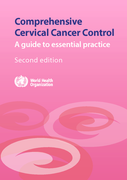
This publication gives a broad vision of what a comprehensive approach to cervical cancer prevention and control means. In particular, it outlines the complementary strategies for comprehensive cervical cancer prevention and control, and highlights the neners. This new guide updates the 2006 edition...
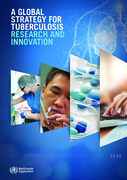
The Global Strategy for Tuberculosis Research and Innovation will support the efforts of governments and other stakeholders to accelerate TB research and innovation, and improve equitable access to the benefits of research.
Availabl in Arabic, Chinese, English, French, Spanish and Russian
This publication marks the 25th anniversary of the Beijing Declaration and Platform for Action. It is dedicated to the women leaders and allied community mobilizers who have devoted their lives to advancing the human rights and dignity of all people affected by the HIV epidemic, and to opposing soci...

This policy brief presents a summary of current evidence on vulnerability to TB and proposes interventions for equitable, person-centred, and human rights-based TB prevention and care. It aligns with WHO policies and guidance on TB prevention and screening, management of TB and comorbidities, access...
The World Health Organization (WHO) and the global community of countries, partners, donors, technical experts, scientists and field implementation teams continue to work towards the ultimate goal of a world free of the burden of neglected tropical diseases (NTDs).
This National Prevention Road Map addresses the above-mentioned challenges and aims to guide, focus and reinvigorate the HIV prevention response during the period 2018-2020. It also renews the commitment of political leadership,

3 June 2021. After 40 years of AIDS, charting a course to end the pandemic.
The report shows that countries with progressive laws and policies and strong and inclusive health systems have had the best outcomes against HIV. In those countries, people living with and affected by HIV are more likely t...

Terminology used to describe the transmission of pathogens through the air varies across scientific disciplines, organizations and the general public. While this has been the case for decades, during the coronavirus disease (COVID-19) pandemic, the terms ‘airborne’, ‘airborne transmission’ a...

Men lag behind women regarding use of HIV services and represent the majority of individuals living with uncontrolled HIV, advanced HIV, and who experience HIV-related mortality. Men (15+) globally are less likely than women (15+) to know their HIV status (83% for men vs 91% for women), be on antire...

Integrated Outbreak Analytics (IOA) applies a multidisciplinary approach to understanding outbreak dynamics and to inform outbreak response. It aims to drive comprehensive, accountable, and effective public health and clinical strategies by enabling communities, and national and subnational health a...
A guide to facilitating community-managed disaster risk reduction in the Horn of Africa.
This manual describes how to help communities implement disaster risk reduction activities. It was written for development workers and community-based organizations in the Horn of Africa, but practitioners can ...

The article focuses on "The State of the World’s Children 2023" report published by UNICEF. It highlights the critical role of vaccines in saving lives and the challenges in global immunization efforts, especially for marginalized and underserved children. The report emphasizes the impact of COVID...
