
Filter
6810
Filtered Results: 6810
Text search:
Centers
for
Disease
Control
and
Prevention
,
WHO
Featured
Recommendations
713
New Publications
1731
Language
Document type
No document type
3550
Studies & Reports
1122
Guidelines
1050
Manuals
390
Strategic & Response Plan
299
Fact sheets
170
Training Material
100
Situation Updates
68
Resource Platforms
21
Infographics
20
Brochures
10
Online Courses
5
App
3
Dashboards/Maps
2
Countries / Regions
India
317
Global
295
Sierra Leone
179
Kenya
178
Liberia
166
Ethiopia
151
Nigeria
139
Western and Central Europe
139
Africa
136
Uganda
122
Latin America and the Carribbean
106
South Africa
103
Nepal
98
Rwanda
94
Malawi
93
Zambia
91
Tanzania
90
Congo, Democratic Republic of
75
Bangladesh
73
Namibia
72
Ukraine
66
Syria
66
Ghana
65
West and Central Africa
64
Myanmar / Burma
62
Philippines
61
Guinea
60
Middle East and North Africa
56
East and Southern Africa
56
Eastern Europe
55
Mozambique
54
Senegal
49
Russia
49
South Sudan
48
Germany
46
Zimbabwe
44
South–East Asia Region
44
Haiti
43
Asia
42
Cambodia
38
Lesotho
36
Brazil
36
Yemen
32
Burkina Faso
31
Indonesia
29
Eastern Europe and Central Asia
25
Botswana
23
Colombia
22
Madagascar
22
Cameroon
21
Mali
20
Venezuela
19
Eswatini/ Swaziland
18
USA
17
Pakistan
17
Thailand
15
Afghanistan
15
Côte d’Ivoire / Ivory Coast
15
Somalia
15
Vietnam
14
Sudan
14
Angola
14
Western Pacific Region
13
Central African Republic
13
Albania
12
Tajikistan
11
Moldova
11
Benin
10
Togo
10
China
10
Laos
10
Guinea-Bissau
10
Chile
9
Niger
9
Peru
9
Jordan
9
North America
9
Argentina
9
Lebanon
9
Burundi
8
Georgia
8
Chad
8
Ecuador
8
North Macedonia
7
Saudi Arabia
7
Paraguay
7
Iraq
7
Timor Leste/ East Timor
6
Gambia
6
Armenia
6
Spain
6
Bolivia
6
Sri Lanka
6
Palestine
6
Turkey
5
Papua New Guinea
5
Romania
5
Poland
5
El Salvador
4
Kazakhstan
4
Iran
4
Hungary
4
Japan
4
France
4
Egypt
4
Honduras
4
Libya
4
Mexico
3
Canada
3
Gabon
3
Turkmenistan
3
Tunisia
3
United Kingdom
3
Belarus
3
Southern Africa
3
Bhutan
3
Estonia
2
Kyrgyzstan
2
Congo-Brazzaville
2
Uzbekistan
2
Malaysia
2
Morocco
2
Qatar
2
Bulgaria
2
Mauritania
2
Dominican Republic
2
Jamaica
2
Belgium
2
Mauritius
2
Portugal
2
Slovakia
2
Greece
2
North Korea
1
Switzerland
1
Serbia
1
Australia
1
Singapore
1
Austria
1
Italy
1
Cape Verde
1
Lithuania
1
Ireland
1
Uruguay
1
Maldives
1
Morocco
1
Israel
1
Belize
1
Costa Rica
1
Panama
1
Nicaragua
1
Djibouti
1
Guatemala
1
Authors & Publishers
Publication Years
Category
Countries
2538
Clinical Guidelines
561
Public Health
395
Key Resources
348
Women & Child Health
249
Capacity Building
100
Pharmacy & Technologies
84
Annual Report MEDBOX
2
Toolboxes
COVID-19
821
HIV
557
TB
463
Mental Health
383
Ebola & Marburg
337
AMR
236
NTDs
235
Rapid Response
177
Planetary Health
170
NCDs
160
Caregiver
156
Conflict
132
Refugee
114
Malaria
102
Pharmacy
95
Disability
94
2.0 Rapid Response
94
Zika
93
Global Health Education
92
Cholera
82
Health Financing Toolbox
66
Natural Hazards
63
Polio
43
Specific Hazards
40
Social Ethics
10
Typhoon
3
South Sudan
2

The toolkit's purpose is to:
improve the primary health care response for older persons.
sensitize and educate primary health care workers about the specific needs of their older clients.
provide primary care health workers with a set of tools/instruments to assess older people's hea...
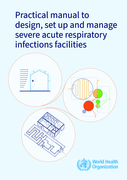
This document, with a focus on the built environment and health care facilities, intends to guide the audience in preparing for and responding to SARI pandemics caused by existing and novel pathogens. It provides technical guidance on designing, establishing, and managing health care facilities for ...
2nd edition.
Like the original, this second edition of the guidance aims to inform the revision of existing national guidelines and standards for managing Tuberculosis (TB), many of which include guidance on children. It includes recommendations, based on the best available evidence, for improving ...
A lack of knowledge about the threat of vaccine-preventable diseases, risks and benefits of vaccines, mistrust of government and health workers, poor service delivery and alternative health or religious beliefs play a role in lower uptake of some vaccines. These challenges underscore the importance ...

Access to NCD medicines: emergent issues during the COVID-19 pandemic and key structural factors
recommended
The coronavirus disease (COVID-19) pandemic exacerbated pre-existing inequalities in the treatment and care of noncommunicable diseases (NCDs). This report examines the effect of the COVID-19 pandemic on access to NCD medicines, and the policies and strategies implemented by countries and health sys...

The coronavirus disease (COVID-19) pandemic exacerbated pre-existing inequalities in the treatment and care of noncommunicable diseases (NCDs). This report examines the effect of the COVID-19 pandemic on access to NCD medicines, and the policies and strategies implemented by countries and health sys...

Every year, around 830 000 children die from unintentional or "accidental" injuries. The vast majority of these injuries occur in low-income and middle-income countries. However, dozens of prevention strategies and programmes exist. If they were integrated into other child survival programmes and im...

The 2022 report reviews the global malaria diagnostics market and technological landscape to support Unitaid’s 2023–2027 strategy for quality malaria case management. The report highlights the stalled progress of malaria control efforts, the gaps in access to diagnostics and the public health im...
The intention of this document is to clarify and outline the steps to effective cholera surveillance. It discusses when,
where and why surveillance for cholera is needed and how to establish a useful and cost-effective surveillance
system for cholera. To make comments, corrections and additions,...

In 1964 medical mission was challenged and called to define its distinctiveness and its special role in the context of that particular time. The consultation "Tuebingen I" clearly stated: "The Christian church has a specific task in the field of health and healing"1, and developed a conce...
People with underlying noncommunicable diseases (NCDs) such as hypertension, diabetes, cardiovascular disease, chronic respiratory disease and cancer have a high risk for developing severe and even fatal COVID-19. It is important for them to strictly follow basic protective measures and make sure th...
Diphtheria is caused by Corynebacterium species, mostly by toxin-producing Corynebacterium diphtheriae and rarely by toxin-producing strains of C. ulcerans and C. pseudotuberculosis. The most common type of diphtheria is classic respiratory diphtheria, whereby the exotoxin produced characteristicall...

Trachoma is the leading infectious cause of blindness worldwide. In April 2023, it was a public health problem
in approximately 40 countries, with an estimated 116 million people at risk and 1.5 million people affected
by the late blinding stage of the disease (1). About 84% of those at risk of tr...
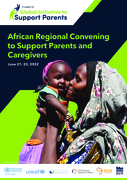
The African Regional Convening of the Global Initiative to Support Parents (GISP) stimulated the interest or engagement of almost 1500 individuals from 742 unique organizations in the fields of health, education, social welfare, women’s affairs, early childhood, water and sanitation, mental health...
This document is based on currently available scientific evidence on treatment for drug use disorders and sets out a framework for the implementation of the Standards, in line with principles of public health care. The Standards identify major components and features of effective systems for the tre...
The thirty-seventh meeting of the Programme, Budget and Administration Committee was held in Geneva from 25 to 27 January 2023 and chaired by Ms Aishath Rishmee (Maldives). The Committee adopted its agenda and agreed its programme of work. In his opening remarks, the Director-General emphasized the ...
9 March 2022, Timely and accurate diagnostic testing for SARS-CoV-2 is an essential part of a comprehensive COVID-19 response strategy. Ag-RDTs can be performed by individuals in which they collect their own specimen, perform a simple rapid test and interpret their test result themselves at a time a...
8 January 2021
Sequencing enabled the world to rapidly identify SARS-CoV-2 and develop diagnostic tests and other tools for outbreak management. Continued genome sequencing supports the monitoring of the disease’s spread and evolution of the virus. Accelerated integration of genome sequencing int...
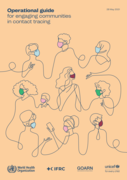
28 May 2021
Contact tracing is a key component of a public health response to infectious disease outbreaks. The purpose of this guidance is to reinforce the place of community engagement and participation in the contact tracing process. The guidance and related products articulate best practice pri...
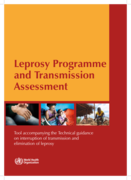
The Leprosy Programme and Transmission Assessment (LPTA) is an activity that is carried out by internal teams towards the end of Phase 1 (see Leprosy Elimination Framework in the Annex) when a subnational jurisdiction (typically second-tier) reaches the milestone for interruption of transmission, i....
