Filter
4304
Filtered Results: 4304
Text search:
World
Health
Organization,
Unicef
Featured
Recommendations
411
New Publications
1294
Language
Document type
No document type
2456
Studies & Reports
649
Guidelines
484
Manuals
198
Strategic & Response Plan
184
Fact sheets
125
Training Material
90
Situation Updates
71
Resource Platforms
17
Brochures
12
Infographics
12
Online Courses
4
App
1
Videos
1
Countries / Regions
Global
184
Sierra Leone
139
Liberia
124
Kenya
116
Ethiopia
108
India
106
Nepal
102
Uganda
95
Nigeria
92
Myanmar / Burma
86
Syria
79
Bangladesh
79
Zambia
74
Congo, Democratic Republic of
73
Malawi
70
South Sudan
61
Ukraine
55
Latin America and the Carribbean
54
Tanzania
53
Rwanda
51
Mozambique
50
Africa
50
Namibia
48
Ghana
47
Indonesia
42
Zimbabwe
39
Guinea
38
South Africa
37
Yemen
37
Haiti
36
Philippines
35
Western and Central Europe
35
Senegal
34
Cambodia
33
Lesotho
32
Middle East and North Africa
30
Russia
27
Asia
25
Pakistan
25
West and Central Africa
23
East and Southern Africa
23
Brazil
23
Cameroon
22
Madagascar
22
Burkina Faso
21
Afghanistan
21
Venezuela
21
South–East Asia Region
21
Lebanon
21
Central African Republic
21
Somalia
20
Jordan
18
Sudan
17
Mali
15
Benin
14
Germany
14
Botswana
14
Colombia
13
Eastern Europe and Central Asia
13
Côte d’Ivoire / Ivory Coast
13
Niger
12
Angola
12
Eastern Europe
10
Thailand
9
Togo
9
China
9
Burundi
9
Vietnam
9
Western Pacific Region
8
Eswatini/ Swaziland
8
Turkey
7
Albania
7
Laos
7
Guinea-Bissau
7
Portugal
7
Papua New Guinea
7
Peru
6
Malaysia
6
Paraguay
6
Spain
6
Argentina
6
Moldova
6
Iraq
6
Mexico
5
Japan
5
Sri Lanka
5
Chad
5
Timor Leste/ East Timor
4
Greece
4
Libya
4
North Macedonia
3
Tajikistan
3
Iran
3
Kyrgyzstan
3
Italy
3
Croatia
3
Turkmenistan
3
Belarus
3
Ecuador
3
El Salvador
2
Serbia
2
Gambia
2
Kazakhstan
2
Singapore
2
Bulgaria
2
Hungary
2
Saudi Arabia
2
Gabon
2
France
2
Bolivia
2
Egypt
2
Romania
2
Slovakia
2
Palestine
2
Georgia
2
Poland
2
Guatemala
2
North Korea
1
Chile
1
Fiji
1
Congo-Brazzaville
1
Vanuatu
1
Morocco
1
Mongolia
1
Mauritania
1
Uruguay
1
Denmark
1
Tunisia
1
Azerbaijan
1
Bosnia and Herzegovina
1
Southern Africa
1
Nicaragua
1
Honduras
1
Bhutan
1
Solomon Islands
1
Authors & Publishers
Publication Years
Category
Countries
1759
Women & Child Health
438
Key Resources
323
Clinical Guidelines
235
Public Health
149
Capacity Building
90
Pharmacy & Technologies
26
Toolboxes
COVID-19
470
HIV
312
Disability
235
Mental Health
208
Conflict
178
Ebola & Marburg
176
Caregiver
126
Planetary Health
115
Refugee
97
Global Health Education
72
Rapid Response
67
Health Financing Toolbox
61
Natural Hazards
60
TB
59
AMR
52
Cholera
49
Pharmacy
44
NTDs
37
Polio
35
2.0 Rapid Response
32
Malaria
31
Zika
29
Specific Hazards
10
NCDs
9
Social Ethics
6
South Sudan
1
Typhoon
1
For health care providers.
Sub-Saharan Africa has the highest maternal mortality in the world. According to estimates by the United Nations Maternal Mortality Estimation Inter-Agency Group (UN MMEIG)1 in September 2017, while the African Region had recorded a significant decline in maternal mortali...
The purpose of this document is to offer guidance to Member States on quarantine measures for individuals in the context of COVID-19. It is intended for those responsible for establishing local or national policy for quarantine of individuals, and adherence to infection prevention and control measur...
La vaccination est un service de santé essentiel qui protège les sujets sensibles contre les maladies à prévention vaccinale (MPV).2 La vaccination en temps voulu permet aux individus et aux communautés de rester protégés et diminue la probabilité d’une poussée épidémi...
The WHO Cholera Rapid Diagnostic Test (RDT) Target Product Profile outlines the key requirements for developing improved cholera RDTs. It highlights the need for fast, accurate, and easy-to-use tests for early outbreak detection in resource-limited settings. The document sets desired and acceptable ...
Mothers, newborns, young children and adolescents are losing 20 percent of their health and social services due to the COVID-19 pandemic says a Panel of senior global health experts.
These guidelines provide specific recommendations and expert suggestions — for national policy-makers and programme managers and their partners and stakeholders— on prioritizing, planning and providing HIV testing, counselling, treatment and care services for adolescents

Myanmar, as a country going through rapid socio-political transition and institutional development also suffers with a high burden of infectious disease. An ongoing challenge has been to effectively reach its 51 million population, most of whom battle tuberculosis, acute respiratory infections, diar...

This publication is part of WHO 75th anniversary and aims to capture key successes in public health globally and in Namibia. It includes contributory messages from the Head of State, Prime Minister and the Minister of Health and Social Services.

Trachoma is the world’s leading infectious cause of blindness. It is one of 18 neglected
tropical diseases (NTDs) that affect over one billion of the world’s poorest people.
The WHO Cholera Vaccine Position Paper (August 2017) highlights the importance of oral cholera vaccines (OCVs) as a key tool in outbreak response and prevention, alongside water, sanitation, and hygiene (WASH) measures. It recommends OCVs for high-risk populations, endemic areas, and humanitarian cr...
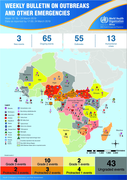
Cyclone in Mozambique and Zimbabwe
Ebola virus disease in Democratic Republic of the Congo
Humanitarian crisis in Mali
Humanitarian crisis in Central African Republic.
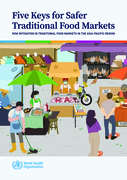
Traditional food markets play important economic, cultural, and social role and are sources of livelihood for millions of people in urban and rural areas. The manual Five keys for safer traditional food markets: risk mitigation in traditional food markets in the Asia-Pacific Region aims to support a...