
Filter
5504
Filtered Results: 5504
Text search:
Clinical
Healthcare
Workers
Featured
Recommendations
648
New Publications
1345
Language
Document type
No document type
2907
Guidelines
939
Studies & Reports
780
Manuals
341
Strategic & Response Plan
203
Fact sheets
122
Training Material
109
Situation Updates
50
Infographics
17
Resource Platforms
11
Online Courses
11
Brochures
10
App
2
Videos
2
Countries / Regions
India
258
Global
191
Kenya
181
South Africa
163
Liberia
126
Uganda
122
Sierra Leone
119
Western and Central Europe
114
Ethiopia
112
Nigeria
108
Tanzania
94
Nepal
89
Rwanda
86
Africa
85
Zambia
83
Malawi
76
Latin America and the Carribbean
70
Ghana
69
Namibia
69
Bangladesh
67
Ukraine
50
Syria
49
Philippines
46
Congo, Democratic Republic of
46
Myanmar / Burma
45
West and Central Africa
41
Eastern Europe
41
East and Southern Africa
40
South–East Asia Region
39
Mozambique
34
Zimbabwe
33
Middle East and North Africa
33
Russia
33
South Sudan
32
Guinea
31
Lesotho
30
Asia
29
Cambodia
28
Haiti
26
Brazil
26
Botswana
25
Indonesia
21
Senegal
19
Eastern Europe and Central Asia
19
Burkina Faso
17
Western Pacific Region
15
Germany
14
Eswatini/ Swaziland
14
Colombia
13
Venezuela
13
Cameroon
12
Afghanistan
12
Vietnam
12
Yemen
12
Angola
12
Pakistan
12
Tajikistan
11
Albania
11
USA
11
Moldova
9
Sudan
9
Georgia
9
Madagascar
9
Benin
8
China
8
Mali
8
Iraq
8
Somalia
8
Thailand
7
Peru
7
Lebanon
7
Sri Lanka
7
Central African Republic
7
Laos
6
Armenia
6
North America
6
Spain
6
Southern Africa
6
Chile
5
Guinea-Bissau
5
Jordan
5
United Kingdom
5
North Macedonia
4
Timor Leste/ East Timor
4
Turkey
4
Portugal
4
Papua New Guinea
4
Bhutan
4
Ecuador
4
Mexico
3
Gambia
3
Estonia
3
Kyrgyzstan
3
Saudi Arabia
3
Belarus
3
Côte d’Ivoire / Ivory Coast
3
Bolivia
3
Argentina
3
Palestine
3
Libya
3
El Salvador
2
Kazakhstan
2
Iran
2
Fiji
2
Burundi
2
Bulgaria
2
Italy
2
Ireland
2
Jamaica
2
Japan
2
France
2
Mauritius
2
Romania
2
Greece
2
Chad
2
Guatemala
2
North Korea
1
Togo
1
Canada
1
Singapore
1
Uzbekistan
1
Malaysia
1
Morocco
1
Qatar
1
Dominican Republic
1
Hungary
1
Lithuania
1
Paraguay
1
Turkmenistan
1
Belgium
1
Tunisia
1
Israel
1
Belize
1
Costa Rica
1
Panama
1
Nicaragua
1
Slovakia
1
Poland
1
Honduras
1
Authors & Publishers
Publication Years
Category
Countries
2095
Clinical Guidelines
505
Women & Child Health
322
Public Health
284
Key Resources
242
Capacity Building
146
Pharmacy & Technologies
60
Annual Report MEDBOX
3
Toolboxes
COVID-19
627
HIV
504
Mental Health
399
TB
353
Caregiver
239
Ebola & Marburg
227
AMR
151
NTDs
147
Rapid Response
140
Disability
110
Conflict
104
NCDs
99
Pharmacy
98
Planetary Health
71
Refugee
68
Malaria
62
2.0 Rapid Response
62
Global Health Education
55
Cholera
38
Zika
33
Natural Hazards
32
Health Financing Toolbox
31
Specific Hazards
23
Social Ethics
23
Polio
21
Typhoon
1
Essential medicines are those that satisfy the priority health care needs of a population. They are selected with due regard to disease prevalence and public health relevance, evidence of efficacy and safety and comparative cost-effectiveness. They are intended to be available in functioning health ...
Since the beginning of the Ukraine crisis on 24 February 2022, WHO has supported Government-led efforts and initiatives alongside key partners on the ground. Building on efforts to date, and working alongside Bulgaria’s health authorities to bring added value to existing mechanisms, the WHO Countr...
DHS Further Analysis Reports No. 115

Universal health coverage ensures everyone has access to the health services they need without suffering financial hardship as a result. In December 2012, a UN resolution was passed encouraging governments to move towards providing universal access to affordable and quality health care services. As ...
Schistosoma haematobium is a parasitic digenetic trematode responsible for schistosomiasis (also known as bilharzia). The disease is caused by penetration of the skin by the parasite, spread by intermediate host molluscs in stagnant waters, and can be treated by administration of praziquantel. Schis...
As part of the Mental Health Gap Action Programme, WHO has developed training manuals (Training of trainers and supervisors training manual and Training of health-care providers training manual) to support implementation of the mhGAP Intervention Guide for mental, neurological and substance use (MNS...
The guide helps network managers and technical experts navigate the steps necessary for gathering, structuring, analyzing and reporting information needed to make strategic plans that improve sustainability and equity.
This version of Field Trials of Health Interventions includes seven new chapters on conducting systematic literature reviews, trial
governance, preliminary studies and pilot testing, budgeting and accounting, intervention costing and economic analysis, and Phase IV studies. Before new interventions...
From Individual to Collective healing: A trainer’s manual
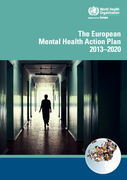
The European Mental Health Action Plan 2013–2020
recommended
Mental disorders are one of the top public health challenges in the WHO European Region, affecting about 25% of the population every year. In all countries, mental health problems are much more prevalent among the people who are most deprived. The WHO European Region therefore faces diverse challeng...
(New 2015)
Scoping question: Within the context of mental health and developmental assessment of children and youth, what are the effective strategies for detecting maltreatment?
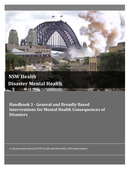
NSW Health Disaster Mental Health, handbook 3
The Disaster Mental Health Manual and associated handbooks are intended as a resource for mental health staff who are seeking background information and practical guidance and resources to assist in a disaster mental health response.
Reference Manual for Programme Managers on Accreditation Process
A WHO-UNICEF joint statement encouraging greater health commodity supply chain integration for temperature-sensitive pharmaceuticals where appropriate, 19 November 2020
This Community Health Systems (CHS) Catalog country profile is the 2016 update of a landscape
assessment that was originally conducted by the Advancing Partners & Communities (APC) project
in 2014. The CHS Catalog focuses on 25 countries deemed priority by the United States Agency for
Internation...
