
Filter
1821
Filtered Results: 1821
Text search:
Mental
health
legislation
Featured
Recommendations
137
New Publications
363
Language
Document type
No document type
1099
Studies & Reports
289
Guidelines
177
Manuals
109
Strategic & Response Plan
85
Training Material
29
Fact sheets
14
Situation Updates
9
Resource Platforms
6
Brochures
3
Infographics
1
Countries / Regions
Global
73
Kenya
60
South Africa
54
Western and Central Europe
53
Latin America and the Carribbean
39
India
35
Uganda
33
Ukraine
31
Zambia
29
Ghana
26
Malawi
26
Nigeria
25
Africa
25
Nepal
23
Ethiopia
23
Lesotho
22
Namibia
22
Myanmar / Burma
22
Liberia
21
Sierra Leone
20
Syria
18
Rwanda
17
Philippines
17
Bangladesh
17
Eastern Europe
16
Cambodia
13
Congo, Democratic Republic of
12
South–East Asia Region
12
Eswatini/ Swaziland
12
Asia
10
Indonesia
10
Senegal
9
Tanzania
9
Botswana
9
Benin
8
Burkina Faso
8
Zimbabwe
8
Paraguay
8
South Sudan
8
Colombia
7
Afghanistan
7
Germany
7
Eastern Europe and Central Asia
7
Pakistan
7
Peru
6
Mozambique
6
Venezuela
6
Moldova
6
Sudan
6
Somalia
6
Chile
5
Albania
5
Middle East and North Africa
5
Western Pacific Region
5
Argentina
5
Vietnam
5
Sri Lanka
5
Iraq
5
Tajikistan
4
Thailand
4
China
4
Cameroon
4
East and Southern Africa
4
Bolivia
4
Russia
4
Ecuador
4
Iran
3
Laos
3
USA
3
Haiti
3
Jordan
3
Brazil
3
Yemen
3
Greece
3
Central African Republic
3
Poland
3
Timor Leste/ East Timor
2
El Salvador
2
Kazakhstan
2
Kyrgyzstan
2
Guinea
2
Hungary
2
Lithuania
2
West and Central Africa
2
Spain
2
Lebanon
2
Papua New Guinea
2
Romania
2
Palestine
2
Georgia
2
North Macedonia
1
Mexico
1
Serbia
1
Gambia
1
Canada
1
Fiji
1
Singapore
1
Estonia
1
Niger
1
Burundi
1
Malaysia
1
Qatar
1
Ireland
1
Saudi Arabia
1
North America
1
Turkmenistan
1
Mauritius
1
United Kingdom
1
Azerbaijan
1
Belarus
1
Nicaragua
1
Djibouti
1
Egypt
1
Slovakia
1
Honduras
1
Mali
1
Angola
1
Libya
1
Bhutan
1
Madagascar
1
Guatemala
1
Authors & Publishers
Publication Years
Category
Countries
628
Public Health
112
Key Resources
104
Women & Child Health
100
Clinical Guidelines
61
Capacity Building
23
Pharmacy & Technologies
7
Toolboxes
Mental Health
378
Disability
216
HIV
112
COVID-19
83
Conflict
66
Caregiver
59
Planetary Health
57
Refugee
52
TB
49
Global Health Education
34
NCDs
33
Pharmacy
31
NTDs
29
Rapid Response
22
Specific Hazards
19
Ebola & Marburg
16
Natural Hazards
15
2.0 Rapid Response
15
Health Financing Toolbox
8
AMR
4
Zika
3
Polio
3
Social Ethics
2
Malaria
1

Over half a billion children are living in areas with extremely high levels of floods and nearly 160 million children live in areas of high or extremely high droughts. The World Health Organisation (WHO) estimates that 26% of the annual 6.6 million deaths of children under five are linked to environ...
Human Rights based research into COVID-19 related violations with focus on persons with disabilities
The goal of the study was to assess the feasibility of the COVID-19 measures and their resultant impact on Persons with Disabilities in Malawi.
Specifically, the study addressed the following objectives:
a) To evaluate Government’s response to COVID-19 following the adoption of the new measures...
Introduction: Considering the global prevalence of coronavirus disease 2019 (COVID-19), a vaccine is being developed to control the disease as a complementary solution to hygiene measures—and better, in social terms, than social distancing. Given that a vaccine will eventually be produced, informa...
23 February 2022
A summary of the commitments and targets within the United Nations General Assembly’s 2021 Political Declaration on HIV and AIDS.The United Nations General Assembly’s 2021 Political Declaration on AIDS features bold global commitments and targets for 2025 that are ambitious but...
The COVID-19 pandemic has been the biggest disaster in living memory, on almost any measure. More than 6.5 million people are confirmed to have died in less than three years, and the pandemic’s indirect impacts have touched the lives of virtually every community on the planet.
Our World Disasters...
While the full effects of COVID-19 remain unknown, the pandemic continues to profoundly impact regional migration and mobility dynamics, with deep health, social and economic consequences for the most vulnerable, including migrants, displaced populations and their host communities, and returnees.
The following Emergency Response Plan for the COVID-19 pandemic seeks to set out activities that will be undertaken by humanitarian actors in Ukraine over the course of 2020 to respond to the public health impact of the epidemic – as well as the indirect, socio-economic impact on people’s well-b...
Abstract-The paper precisely and briefly explains the socio-economic challenges of persons with disabilities with focus on Ethiopia. The findings of the paper also indicates that, across the countries persons with disabilities have poorer health accesses, lower education achievements,...
Translating Community Research Into Global Policy Reform For National Action: A Checklist For Community Engagement To Implement The WHO Consolidated Guideline On The Sexual And Reproductive Health And Rights Of Women Living With HIV
3rd edition | December 2018

Chronic respiratory diseases, such as asthma and
chronic obstructive pulmonary disease, kill more than
four million people every year and affect hundreds
of millions more. These diseases erode the health
and well-being of the patients and have a negative
impact on families and societies. Women ...
Section One
summarizes UNHCR’s mandate of international protecdtion and the aim and principles of emergency
response;
Section Two
deals with emergency management;
Section Three
covers the vital sectors and problem areas in refugee emergencies, including health, food, sanitation
and water, a...
According to the National Institute of Statistics and Demography (NSID) 168,094 persons out of Burkina Faso’s 14,017,262 inhabitants are living with a physical, sensory or mental disability. The numbers are questioned as the effort to collect in-depth statistics has not been great. Furthermore, mu...
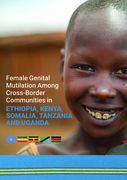
Despite the existence of criminal law, which is an important aspect of anti-FGM policies and programmes, there is not much research on the effects of cross-border practices that invalidate the law as a deterrent. Much remains unknown about the practice of cross-border FGM, specifically about gaps in...
This revised trainer's guide contains a prototype training schedule for four days. Teaching and learning strategies are highly interactive, using participatory and experiential approach. Training outcomes include developing skills in assessment of clients for risk factors; conduct basic screening pr...
The Early Childhood Development Policy and its Strategic Plan seek to provide a framework to ensure such a holistic and integrated approach to the development of young children. International research has demonstrated the high economic returns on ECD investment and its positive impact on health and ...

WHY THIS GUIDE?
Because, in the face of crises and emergencies, it is vital to include a human rights perspective in responses. Vulnerable groups face major obstacles to accessing and benefiting from prevention, mitigation, and health care policies due to structural barriers of inequality. To offer...
The purpose of this Guideline is to provide evidence-based recommendations that promote and sustain the undergraduate nursing student’s application of knowledge to practice in a variety of clinical learning environments. The Guideline explores the relationships among and between students and nursi...
The Sendai Framework for Disaster Risk Reduction 2015-2030 outlines seven clear targets and four priorities for action to prevent new and reduce existing disaster risks: (i) Understanding disaster risk; (ii) Strengthening disaster risk governance to manage disaster risk; (iii) Investing in disaster ...

The report showed commitments made three decades ago to protect the rights of children remain unfulfilled for millions. Violence still affects countless children. Discrimination based on age, gender, disability, sexual orientation and religion harms children worldwide.
Key factors include a lack ...

One of the most important ways we feel we can help to reduce the burden of cancer in Africa is to work with African cancer advocacy organisations to help educate and advocate about cancer in their countries. To this end in 2010 we designed with our partners, 13 posters for use in Africa
giving heal...
