
Filter
2465
Filtered Results: 2465
Text search:
clinical
specimens
Featured
Recommendations
327
New Publications
636
Language
Document type
No document type
1214
Guidelines
522
Studies & Reports
359
Manuals
158
Strategic & Response Plan
87
Fact sheets
57
Training Material
35
Situation Updates
19
Resource Platforms
5
Infographics
5
Brochures
2
Online Courses
1
Videos
1
Countries / Regions
India
149
Global
90
South Africa
71
Kenya
69
Nigeria
55
Sierra Leone
51
Western and Central Europe
51
Liberia
51
Tanzania
46
Uganda
44
Ethiopia
43
Africa
38
Zambia
38
Ghana
35
Rwanda
34
Latin America and the Carribbean
32
Namibia
30
Malawi
28
Nepal
26
Philippines
22
Congo, Democratic Republic of
22
Bangladesh
22
West and Central Africa
20
Eastern Europe
20
Zimbabwe
17
East and Southern Africa
16
Lesotho
15
South–East Asia Region
15
Mozambique
13
Cambodia
13
Russia
13
Indonesia
13
Middle East and North Africa
12
Myanmar / Burma
12
Guinea
11
Eastern Europe and Central Asia
11
Brazil
11
Botswana
11
Eswatini/ Swaziland
11
Germany
10
Ukraine
9
Madagascar
9
Senegal
8
Cameroon
7
Syria
7
South Sudan
7
Burkina Faso
6
Asia
6
Western Pacific Region
6
Tajikistan
5
Colombia
5
USA
5
Venezuela
5
Spain
5
Pakistan
5
Thailand
4
China
4
Haiti
4
Vietnam
4
Angola
4
Afghanistan
3
Peru
3
North America
3
France
3
Côte d’Ivoire / Ivory Coast
3
Sri Lanka
3
Iraq
3
Timor Leste/ East Timor
2
El Salvador
2
Turkey
2
Benin
2
Gambia
2
Iran
2
Laos
2
Burundi
2
Morocco
2
Jordan
2
Saudi Arabia
2
Paraguay
2
Gabon
2
Southern Africa
2
Lebanon
2
Yemen
2
Palestine
2
Georgia
2
Mali
2
Somalia
2
Ecuador
2
North Macedonia
1
Australia
1
Albania
1
Singapore
1
Uzbekistan
1
Qatar
1
Italy
1
Dominican Republic
1
Guinea-Bissau
1
Uruguay
1
Denmark
1
Maldives
1
Tunisia
1
United Kingdom
1
Portugal
1
Belize
1
Costa Rica
1
Panama
1
Argentina
1
Papua New Guinea
1
Nicaragua
1
Moldova
1
Sudan
1
Romania
1
Greece
1
Central African Republic
1
Honduras
1
Chad
1
Libya
1
Guatemala
1
Authors & Publishers
Publication Years
Category
Countries
932
Clinical Guidelines
324
Public Health
99
Pharmacy & Technologies
91
Key Resources
75
Women & Child Health
53
Capacity Building
35
Toolboxes
COVID-19
254
TB
250
NTDs
201
AMR
180
HIV
147
Rapid Response
126
Ebola & Marburg
120
Malaria
72
Planetary Health
56
2.0 Rapid Response
52
Pharmacy
42
Zika
42
Mental Health
41
Caregiver
32
Cholera
25
Natural Hazards
17
NCDs
17
Polio
17
Refugee
16
Conflict
12
Global Health Education
10
Specific Hazards
9
Health Financing Toolbox
8
Disability
5
Social Ethics
1
It is impossible to address the many complex needs of respiratory virus surveillance with a single surveillance system. Multiple systems, investigations and studies must each be fit-for-purpose to specific priority surveillance objectives, and only together can they provide essential information to ...

This document synthesizes key elements of the World Health Organization (WHO) normative guidance on health policy and system support for community health worker (CHW) programmes and their application for HIV programmes. Building on relevant elements of HIV guidelines, tools and evidence identified b...
The goal of this addendum is to help management and staff
minimize the risk of TB transmission at facilities in resource limited settings in which a.) HIV-infected persons receive diagnosis, care, treatment,
and/or support, and b.) there is a high prevalence of HIV infection, both known
and...
Communicable Diseases Control in Emergencies
recommended
A field manual
5th edition.
The intent of these guidelines is to develop a holistic, coordinated, proactive and technology driven strategy for management of biological disasters through a culture of prevention, mitigation and preparedness to generate a prompt and effective response in the event of an emergency. Th...
Suggested language and usage for tuberculosis communications
First edition
Accessed November 2017
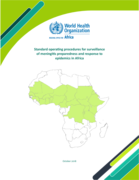
Epidemic meningitis is a major public health challenge in the African 'meningitis belt', an area that extends from Senegal to Ethiopia with an estimated total population of 500 million. Since 2002, the World Health Organization (WHO), in collaboration with its collaborating centres for meningitis, h...

Rreport of a WHO Consultative Meeting Kolkata India 2012
Second Edition
AIDS Medicines and diagnostics services
July 2015
SCOPING QUESTION:Which psychosocial interventions are effective in the treatment of psychostimulant dependence for adults and young people?

There is a broad consensus nowadays that the Earth is warming up as a result of greenhouse gas emissions caused by anthropogenic activities. It is also clear that current trends in the fields of energy, development and population growth will lead to continuous and ever more dramatic climate change. ...
