
Filter
2011
Filtered Results: 2011
Text search:
Ministry
of
Medical
Services
and
Ministry
of
Public
Health
&
Sanitation,
Republic
of
Kenya
Featured
Recommendations
186
New Publications
713
Language
Document type
No document type
1175
Studies & Reports
294
Guidelines
215
Strategic & Response Plan
137
Manuals
108
Situation Updates
38
Training Material
24
Fact sheets
15
Resource Platforms
2
Brochures
1
Infographics
1
Online Courses
1
Countries / Regions
Kenya
130
Sierra Leone
130
India
109
Liberia
77
Global
71
Ethiopia
64
Nepal
63
Myanmar / Burma
61
Uganda
49
Bangladesh
46
Syria
44
Rwanda
43
Nigeria
41
Malawi
41
Zambia
41
Ghana
40
Tanzania
35
Indonesia
35
Namibia
30
Latin America and the Carribbean
28
Congo, Democratic Republic of
27
Guinea
24
Mozambique
23
South Sudan
22
Africa
21
Zimbabwe
20
Haiti
20
Ukraine
18
Lesotho
17
South Africa
16
Senegal
15
Cambodia
15
South–East Asia Region
14
Venezuela
12
Western and Central Europe
12
Yemen
12
Jordan
11
Botswana
10
Pakistan
10
Cameroon
9
Burkina Faso
9
Lebanon
8
Brazil
8
Iraq
8
Colombia
7
Asia
7
Sudan
7
Central African Republic
7
Mali
7
Eswatini/ Swaziland
7
Benin
6
Western Pacific Region
6
Laos
5
Burundi
5
West and Central Africa
5
East and Southern Africa
5
Côte d’Ivoire / Ivory Coast
5
Greece
5
Palestine
5
Somalia
5
Afghanistan
4
Philippines
4
Germany
4
Middle East and North Africa
4
Madagascar
4
Timor Leste/ East Timor
3
Togo
3
China
3
Peru
3
Vietnam
3
Eastern Europe
3
Moldova
3
Tajikistan
2
Mexico
2
Turkey
2
Gambia
2
Iran
2
Albania
2
Fiji
2
Niger
2
Italy
2
Guinea-Bissau
2
Eastern Europe and Central Asia
2
Mauritius
2
Sri Lanka
2
Egypt
2
Chad
2
North Macedonia
1
Thailand
1
El Salvador
1
Chile
1
Singapore
1
Morocco
1
Qatar
1
Mauritania
1
Armenia
1
Dominican Republic
1
Croatia
1
Hungary
1
Saudi Arabia
1
Paraguay
1
Japan
1
Maldives
1
Tunisia
1
Belarus
1
Southern Africa
1
Bolivia
1
Argentina
1
Papua New Guinea
1
Romania
1
Georgia
1
Poland
1
Honduras
1
Libya
1
Bhutan
1
Authors & Publishers
Publication Years
Category
Countries
1104
Key Resources
170
Public Health
98
Clinical Guidelines
72
Women & Child Health
66
Capacity Building
28
Pharmacy & Technologies
5
Annual Report MEDBOX
1
Toolboxes
COVID-19
162
Ebola & Marburg
108
Conflict
94
Disability
79
AMR
76
Planetary Health
62
Rapid Response
55
NTDs
54
Caregiver
53
Natural Hazards
48
HIV
47
Mental Health
43
2.0 Rapid Response
40
Refugee
38
Global Health Education
38
TB
37
Cholera
29
Pharmacy
17
Malaria
16
Health Financing Toolbox
11
NCDs
11
Zika
11
Specific Hazards
8
Polio
4
Typhoon
4
Social Ethics
3
South Sudan
1
The current trend in AMR in Uganda and globally is rising and calls for immediate action. The 71st UN General Assembly (UNGA), the 68th World Health Assembly, and organizations including the World Health Organization (WHO), the Food and Agriculture Organization (FAO), and the World Organization for ...
The arrival of COVID-19 in Afghanistan has brought heartache to millions of people who are now battling a deadly pandemic while simultaneously fighting for their survival amid poverty, disaster and war. Over my three years as Humanitarian Coordinator, I have marvelled at the resilience of the people...
2018 South Sudan Humanitarian Needs Overview
recommended
This document provides the Humanitarian Country Team’s shared understanding of the crisis, including the most pressing
humanitarian needs and the estimated number of people who need assistance. It represents a consolidated evidence base and
helps inform joint strategic response planning.
As ...
The 2018 Humanitarian Response Plan (HRP) aimed to assist 10.5 million people with direct assistance and 11.2 million people with improved access to basic services. In an effort to meet humanitarian needs, humanitarian partners provided various types of humanitarian life-saving and life-sustaining...

This is a report from a National, representative household survey carried out in Botswana in 2012 – 2014. The study was carried out on behalf of the Norwegian Federation of Organisations of Disabled Persons (FFO), Southern Africa Federation of the Disabled (SASFOD) and Botswana Federation of Disab...

Strengthening global health security to protect the world against future epidemics and pandemics requires well-tested and decentralized capacities for the local detection and rapid containment of outbreaks of infectious disease. For such capacities to translate into effective response actions, ind...

This annual report gives an overview of WHO lesotho Country office's undertakings and achievements in the context of an extraordinary health emergency. As we walk another mile this year, may we embrace all lessonst leanred in the previous year, learn from what did not work so well and take on new op...

WHO Ghana 2022 annual report
recommended
“2022 was an eventful year for the WHO Country Office in Ghana,” says Dr Francis Kasolo, WHO Representative to Ghana.
In 2022, WHO Ghana collaborated with partners to deliver interventions in support of the Government of Ghana's health sector agenda to ensure healthy lives for all towards ach...
The Africa Centres for Disease Control and Prevention (Africa CDC) Biosafety and Biosecurity Initiative was launched by the Africa CDC in April 2019 with the aim of strengthening the African Union (AU) Member States’ biosafety and biosecurity systems and enabling them to comply with national and i...
In the Region of the Americas, between epidemiological week (EW) 1 and EW 52 of 2018, a total of 560,586 cases of dengue were reported (incidence rate of 57.3 cases per 100,000 population), including 336 deaths. Of the total cases, 209,192 (37.3%) were laboratoryconfirmed and 3,535 (0.63%) were clas...
The workshop is structured around 13 learning modules. The first module (Introduction) gives an overview of WSPs. The last module (Module 12) introduces participants to the quality assurance tool for WSPs (WHO & IWA, 2012). Modules 1–11 relate explicitly to the WSP manual produced by IWA and WHO (...
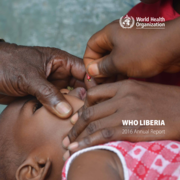
This year marked the beginning of the WHO biennium 2016-2017 action plan; this annual report highlights WHO’s key achievements in 2016
It also documents the extraordinary efforts by a broad coalition of government ministries, municipalities, international agencies, community groups, women’s or...
Emergency response framework, 2nd ed.
recommended
The purpose of this Emergency Response Framework (ERF) is to clarify WHO’s roles and responsibilities in this regard and to provide a common approach for its work in emergencies. Ultimately, the ERF requires WHO to act with urgency and predictability to best serve and be accountable to populations...

This annual report highlights the work of the WHO from January to June 2021 ( December 2021). The activities featured herein are by no means exhausted but implemented with technical and financial support through WHO in Nigeria; facilitated by its presence at all levels of governance (national, state...

Promoting health and preventing disease is a critical component of the effort required to achieve Universal Health Coverage (UHC). to date, efforts to achieve UHC have focused mostly on strengthening health systems and their capacities to provide curative care. However, experience from the COVID-19 ...
A national faecal examination of 27 729 schoolchildren from 395 schools carried out in
2008 indicated that intestinal parasitic worms affected an estimated five million (56.8%)
children in Kenya. Existing evidence shows that worm infections lead to reduced literacy
levels due to impaired growth a...

Patient safety standards are critical for the establishment and assessment of patient safety programmes within hospitals. This third edition of the Patient safety assessment manual provides an updated set of standards and assessment criteria that reflect current best practice and WHO guidance. The m...
DHS Further Analysis Reports No. 88 - This further analysis examines levels, trends, and determinants of neonatal mortality in Rwanda, using data from the 2000, 2005, and 2010 Rwanda Demographic and Health Surveys (RDHS).
This manual summarizes key issues related to the safety of NTD medicines and their administration, with a focus on essential medicines used in mass drug administration (MDA), also called preventive chemotherapy. It can be used as a standalone reference manual, but is intended to be used in conjuncti...
