
Filter
9089
Filtered Results: 9089
Text search:
The
Global
Fund
Featured
Recommendations
661
New Publications
2171
Language
Document type
No document type
4552
Studies & Reports
2045
Guidelines
1036
Manuals
470
Strategic & Response Plan
433
Fact sheets
211
Training Material
138
Situation Updates
96
Infographics
47
Resource Platforms
31
Brochures
16
Online Courses
9
Videos
3
Dashboards/Maps
1
App
1
Countries / Regions
Global
578
Kenya
239
India
212
Latin America and the Carribbean
205
Ethiopia
178
Nigeria
158
Africa
155
Sierra Leone
154
Uganda
153
Myanmar / Burma
149
South Africa
147
Western and Central Europe
137
Liberia
136
Nepal
131
Rwanda
125
Zambia
123
Syria
121
Malawi
118
Bangladesh
116
Tanzania
107
Ghana
99
Brazil
97
Ukraine
96
Congo, Democratic Republic of
89
Namibia
86
Mozambique
82
South Sudan
69
Eastern Europe
65
Lesotho
64
Indonesia
63
Senegal
61
Philippines
59
South–East Asia Region
58
Asia
57
Zimbabwe
55
Venezuela
51
Guinea
49
Cambodia
48
Haiti
46
Colombia
44
East and Southern Africa
44
Yemen
44
Middle East and North Africa
43
West and Central Africa
41
Russia
41
Cameroon
35
Botswana
35
Burkina Faso
34
Afghanistan
32
Central African Republic
31
Pakistan
31
Germany
29
Paraguay
29
Eastern Europe and Central Asia
23
Argentina
23
Angola
23
Chile
22
Sudan
22
Somalia
22
Madagascar
22
Thailand
21
Jordan
21
Western Pacific Region
20
Lebanon
20
Ecuador
20
Mali
19
Eswatini/ Swaziland
19
Vietnam
18
Tajikistan
17
China
17
Peru
17
Moldova
15
Albania
14
Guinea-Bissau
14
Laos
13
Sri Lanka
13
Iraq
13
El Salvador
12
Benin
12
Bolivia
12
Georgia
11
Turkey
10
Portugal
10
Côte d’Ivoire / Ivory Coast
10
North Macedonia
9
North America
9
Mexico
8
Iran
8
Spain
8
Palestine
8
Chad
8
Kyrgyzstan
7
Armenia
7
Southern Africa
7
Papua New Guinea
7
Honduras
7
Togo
6
Kazakhstan
6
Niger
6
Burundi
6
Libya
6
Timor Leste/ East Timor
5
USA
5
Hungary
5
Turkmenistan
5
Jamaica
5
Egypt
5
Romania
5
Guatemala
5
Gambia
4
Malaysia
4
Italy
4
Japan
4
United Kingdom
4
Belarus
4
Poland
4
Bhutan
4
Uzbekistan
3
Morocco
3
Dominican Republic
3
Croatia
3
Saudi Arabia
3
Gabon
3
Uruguay
3
Mauritius
3
Bosnia and Herzegovina
3
Nicaragua
3
Greece
3
North Korea
2
Serbia
2
Canada
2
Fiji
2
Mongolia
2
Bulgaria
2
Mauritania
2
Lithuania
2
France
2
Tunisia
2
Azerbaijan
2
Israel
2
Slovakia
2
Switzerland
1
Singapore
1
Estonia
1
Congo-Brazzaville
1
Vanuatu
1
Qatar
1
Ireland
1
Denmark
1
Belgium
1
Maldives
1
Norway
1
South Korea
1
Belize
1
Costa Rica
1
Panama
1
Djibouti
1
Solomon Islands
1
Cuba
1
Authors & Publishers
Publication Years
Category
Countries
3246
Key Resources
580
Clinical Guidelines
539
Women & Child Health
506
Public Health
498
Capacity Building
134
Pharmacy & Technologies
65
Annual Report MEDBOX
3
Toolboxes
COVID-19
855
HIV
781
Mental Health
555
TB
514
Planetary Health
436
Disability
358
Conflict
283
AMR
268
NTDs
254
Health Financing Toolbox
243
Caregiver
220
Global Health Education
208
Ebola & Marburg
191
NCDs
176
Refugee
169
Rapid Response
146
Malaria
125
Natural Hazards
115
Pharmacy
112
2.0 Rapid Response
89
Social Ethics
61
Polio
60
Cholera
50
Zika
46
Specific Hazards
32
Typhoon
3
South Sudan
1

Water, sanitation and hygiene (WASH) are critical in the prevention and care for all of the 17 neglected tropical diseases (NTDs) scheduled for intensified control or elimination by 2020.
Provision of safe water, sanitation and hygiene is one of the five key interventions within the global NTD ...
Provision of safe water, sanitation and hygiene is one of the five key interventions within the global NTD ...
Asthma is the most common chronic disease in children, imposing a consistent burden on health system. In recent years, prevalence of asthma symptoms became globally increased in children and adolescents, particularly in Low-Middle Income Countries (LMICs). Host (genetics, atopy) and environmental fa...
Throughout the Americas, populations are aging and the Region is undergoing a rapid demographic transition. The aging index, which reflects the size of the older age groups per 100 compared to children under age 15, clearly demonstrates the increase in people aged 60 and older. Compared to global tr...
The United Nations (UN) adopted a new international legal instrument in November 2000, the UN Protocol to Prevent, Suppress and Punish Trafficking in Persons, especially Women and Children, supplementing the UN Convention against Transnational Organized Crime. This contained a new definition of traf...
This note sets out actions to be undertaken throughout the humanitarian programme cycle (HPC) to fulfill commitments on Accountability to Affected Populations (AAP) and to ensure that protection is central to humanitarian response. It sets out the fundamental link between accountability systems and ...
COVID-19 pandemic has taken the entire world by surprise, creating the greatest global catastrophe since WWII, impacting all spheres of our societies, including health, economy, social protection, as well as security, and human rights. The virus affects people and communities indiscriminately in all...
The agenda focuses on six critical changes necessary for more children suffering from SAM to access effective treatment. Building on lessons from the last decade, and the experiences of other successful health initiatives, the agenda addresses issues ranging from the creation of a more enabling envi...
A summary of health effects, resources, and adaptation examples from health departments funded by CDC’s Climate and Health Program
The government of Kazakhstan has committed to ensuring that children with disabilities have access to inclusive education and it has taken the important step of ratifying international human rights treaties enshrining the rights of people with disabilities, including the right of children with disab...
Policy Note #3: Myanmar Health Systems in Transition Policy Notes Series
A network of basic health facilities has been established in each of the 330 townships, covering both rural and urban areas. For the vast majority of Myanmar’s people, particularly the 70% who reside in rural areas, the ...
A network of basic health facilities has been established in each of the 330 townships, covering both rural and urban areas. For the vast majority of Myanmar’s people, particularly the 70% who reside in rural areas, the ...
Right now, we are facing an unpredictable and highly dynamic situation as a global community. However, as we have seen from the solidarity, support and power of communities in the HIV epidemic and already in communities responding to the COVID-19 pandemic, the response must not be fear and stigma. W...

We investigate whether and to what extent Chinese development finance affects infant mortality, combining 92 demographic and health surveys (DHS) for a maximum of 53 countries and almost 55,000 sub-national locations over the 2002-2014 period. We address causality by instrumenting aid with a set of ...
Science . 2020 Sep 11;369(6509):1309-1312. doi: 10.1126/science.abe2803. Epub 2020 Sep 3.
The Fair Priority Model offers a practical way to fulfill pledges to distribute vaccines fairly and equitably
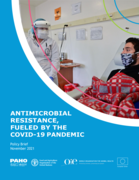
Policy Brief November 2021 Available in English, Spanish and Portuguese
The COVID-19 pandemic has fueled the ongoing antimicrobial resistance (AMR) global crisis due to the increase in the use of antibiotics to treat COVID-19 patients, disruptions to infection prevention and control practices in o...

This brief update on tuberculosis (TB) in the African region covers the state of TB in the WHO African region, strategic priorities and targets and the impact of COVID-19 on essential services. This is followed by key figures for the region, the role of WHO in country support and, recognizing the im...

Available in Arabic, Chinese, English, French, Russian and Spanish. You can download a summary of the main report and background documents!
The report demonstrates that the current system—at both national and international levels— was not adequate to protect people from COVID-19. The time it t...
This regional report on the situation of tuberculosis (TB) in the Americas contains information from 2019, provided by the countries of the Region through the World Health Organization TB data collection system. These data have been consolidated and analyzed at the regional level. In addition to pre...

Malaria remains a significant public health concern in the SADC region, accounting for 20% of childhood deaths, as well as prompting numerous outpatient visits and hospitalisations. Around three-quarters of the population, including 35 million children under the age of five and 8.5 million pregnant ...
This publication presents the Agenda for the Americas on Health, Environment, and Climate Change 2021–2030 (the Agenda). The Agenda is a call to action to the health sector to lead the charge to address environmental determinants of health in the Americas. The Pan American Health Organization (PAH...

Health Statistics in the Western Pacific Region 2023: Monitoring health for the SDGs is the third biennial report providing an overview of the progress of the World Health Organization (WHO) Western Pacific Region towards the health-related Sustainable Development Goal (SDG) targets. Thi...
