
Filter
1761
Filtered Results: 1761
Text search:
WHO
South
East
Asia
Regional
Office
Featured
Recommendations
170
New Publications
450
Language
Document type
No document type
847
Studies & Reports
431
Guidelines
226
Manuals
102
Strategic & Response Plan
72
Fact sheets
22
Training Material
20
Situation Updates
18
Resource Platforms
12
Infographics
7
Brochures
2
Online Courses
2
Countries / Regions
Global
141
Myanmar / Burma
73
South–East Asia Region
71
India
69
Nepal
49
Asia
48
Bangladesh
32
Philippines
29
Western and Central Europe
27
Africa
26
Indonesia
24
Cambodia
21
Ethiopia
19
Uganda
16
Western Pacific Region
15
Thailand
14
Syria
13
Kenya
12
Middle East and North Africa
12
Pakistan
12
Tanzania
11
Latin America and the Carribbean
10
South Africa
10
Liberia
10
Ukraine
9
Afghanistan
9
Eastern Europe
9
Sri Lanka
8
China
7
Nigeria
7
Laos
7
Mozambique
7
West and Central Africa
7
East and Southern Africa
7
Yemen
7
Zambia
7
Rwanda
6
Haiti
6
Congo, Democratic Republic of
6
Vietnam
6
Russia
6
South Sudan
6
Timor Leste/ East Timor
5
Ghana
5
Sierra Leone
5
Malawi
5
Venezuela
5
Eastern Europe and Central Asia
5
Somalia
5
Iran
4
Zimbabwe
4
Moldova
4
Sudan
4
Central African Republic
4
North Macedonia
3
Turkey
3
Albania
3
Senegal
3
Burkina Faso
3
Jordan
3
Lebanon
3
Papua New Guinea
3
Brazil
3
Georgia
3
North Korea
2
Mexico
2
Kazakhstan
2
Malaysia
2
Guinea
2
Italy
2
Belarus
2
Bosnia and Herzegovina
2
Palestine
2
Iraq
2
Madagascar
2
Eswatini/ Swaziland
2
Tajikistan
1
Colombia
1
Lesotho
1
Cameroon
1
Singapore
1
Kyrgyzstan
1
Niger
1
Peru
1
Vanuatu
1
Morocco
1
Mongolia
1
Qatar
1
Armenia
1
USA
1
Croatia
1
Hungary
1
Saudi Arabia
1
Paraguay
1
Gabon
1
Turkmenistan
1
Japan
1
Belgium
1
Maldives
1
Tunisia
1
Argentina
1
Djibouti
1
Namibia
1
Egypt
1
Romania
1
Greece
1
Poland
1
Libya
1
Bhutan
1
Ecuador
1
Solomon Islands
1
Authors & Publishers
Publication Years
Category
Countries
433
Clinical Guidelines
177
Key Resources
131
Public Health
123
Women & Child Health
115
Capacity Building
33
Pharmacy & Technologies
19
Toolboxes
HIV
185
Mental Health
139
COVID-19
120
Planetary Health
116
TB
83
NTDs
76
Global Health Education
59
AMR
59
Disability
56
Rapid Response
48
Refugee
46
Health Financing Toolbox
45
Natural Hazards
39
NCDs
39
Caregiver
36
Malaria
30
Conflict
29
2.0 Rapid Response
28
Pharmacy
21
Zika
18
Ebola & Marburg
14
Cholera
13
Specific Hazards
8
Polio
7
Typhoon
3
Social Ethics
2

The guide is suitable and can be used for the following audiences:
1. nurses and other trained healthcare workers who can use this manual as a self-study tool and then incorporate its guidance into their practice;
2. governmental and non-governmental employers of lay and professional TB treatment ...
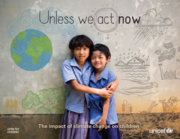
Today’s children, and their children, are the ones who will live with the consequences of climate change.

The World Food Programme (WFP) has taken important steps to progress disability inclusion across its programming and operations. In late 2022, WFP commissioned the Nossal Institute, University of Melbourne in partnership with the Faculty of Psychology, Universitas Gadjah Mada, Indonesia to identify ...
This guidance note is meant to assist humanitarian actors, youth-led organizations, and young people themselves across sectors, working at local, country, regional, and global levels in their response to the novel coronavirus pandemic. It begins diagnostically, exploring the impacts of coronavirus d...
This paper introduces a new dataset of official financing—including foreign aid and other forms of concessional and non-concessional state financing—from China to 138 countries between 2000 and 2014. We use these data to investigate whether and to what extent Chinese aid affects economic growth ...
This paper presents a bibliometric analysis of the literature on private health aid and official health assistance between 2000 and 2022. It provides an overview of the sites and themes in the literature pertaining to development assistance in health, and collates the significant policy recommendati...

Lao People’s Democratic Republic (Lao PDR), also referred to as Laos, or Lao, is exposed to natural disasters such as flooding, typhoons, cyclones, drought, and earthquakes. The country is vulnerable to recurrent, sudden-onset and slow onset natural disasters with flooding, storms and typhoons hav...

The Advancing Climate-Resilient Education Technical Guidance builds on the USAID 2022–2030 Climate Strategy and the 2018 USAID Education Policy to support USAID Missions and partners who seek to integrate climate action and awareness into education programs and are committed to achieving climate-r...

Health, Rights and Drugs
recommended
Harm Reducation, Decriminalization and Zero Discrimination for People who use Drugs
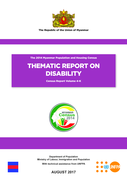
Census Report Volume 4-K
The results of the 2014 Census collected only relates to four of the six types of disability domains recommended by the Washington Group on Disability Statistics, namely: seeing, hearing, walking, and remembering or concentrating.
Out of a total of 50.3 million pe...
The results of the 2014 Census collected only relates to four of the six types of disability domains recommended by the Washington Group on Disability Statistics, namely: seeing, hearing, walking, and remembering or concentrating.
Out of a total of 50.3 million pe...
India has the largest number of
child brides in the world — one
third of the global total.1
Yet, recent data indicates that
in the last decade there has
been a significant decline in the
prevalence of child marriage
from 47 per cent to 27 per cent
of the proportion of women aged
20-24 yea...

OECD Development Policy Tools
Recognising that donor policies and responses constantly evolve, this guidance recommends that donors operating in situations of forced displacement prioritise three broad areas of work, where they can best contribute to existing capacities at the national, regiona...
Recognising that donor policies and responses constantly evolve, this guidance recommends that donors operating in situations of forced displacement prioritise three broad areas of work, where they can best contribute to existing capacities at the national, regiona...
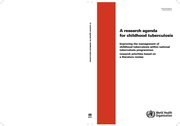
Improving the management of childhood tuberculosis within national tuberculosis programmes: research priorities based on a literature review
WHO/HTM/TB/2007.381, 07.02
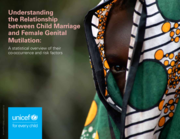
Child marriage and female genital mutilation (FGM) threaten the well-being of millions of girls around the world. Both have existed for generations, as manifestations of gender inequality, and have been propagated by discriminatory norms that devalue girls. In many countries where both child marriag...
2nd edition - Published in 2003, the first WHO/HAI medicine prices manual Medicine Prices – A
New Approach to Measurement Draft for field-testing provides a draft methodology and tools to conduct national medicine prices and availability surveys. This second edition of the survey manual has been...

This document serves to provide interim guidance/ recommendations to carry out mpox surveillance activities mainly case investigation, contact tracing and isolation. For the development of this document WHO, UKHSA and CDC guidelines were referred to and adopted within the country context.

2018 monitoring report: current status and strategic priorities
The report sets out the status of women’s, children’s and adolescents’ health, and on health systems and social and environmental determinants. Regional dashboards on 16 key indicators highlight where progress is being made o...
The report sets out the status of women’s, children’s and adolescents’ health, and on health systems and social and environmental determinants. Regional dashboards on 16 key indicators highlight where progress is being made o...
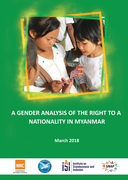
According to 2014 Census data, almost a third of the population in Myanmar do not have adequate identity and civil documentation. Of these, 54 percent are women.
Women who live in remote or conflict affected areas, who are displaced or belong to stateless ethnic and religious minorities face the...
Women who live in remote or conflict affected areas, who are displaced or belong to stateless ethnic and religious minorities face the...
