
Filter
12548
Filtered Results: 12548
Text search:
counties
Featured
Recommendations
995
New Publications
2824
Language
Document type
No document type
6263
Studies & Reports
2605
Guidelines
1469
Manuals
599
Fact sheets
473
Strategic & Response Plan
447
Training Material
223
Situation Updates
149
Resource Platforms
124
Infographics
91
Online Courses
34
Brochures
32
Videos
26
Dashboards/Maps
10
App
3
Countries / Regions
Global
718
India
359
Kenya
340
Ethiopia
245
Western and Central Europe
238
Latin America and the Carribbean
227
Liberia
224
Africa
219
Nigeria
218
Sierra Leone
215
South Africa
199
Uganda
191
Nepal
187
Myanmar / Burma
168
Rwanda
156
Syria
152
Bangladesh
148
Ukraine
146
Malawi
146
Tanzania
145
Zambia
134
Ghana
128
Congo, Democratic Republic of
125
Namibia
108
South Sudan
101
Eastern Europe
96
Senegal
94
Guinea
92
Haiti
86
Philippines
84
West and Central Africa
84
South–East Asia Region
84
East and Southern Africa
84
Asia
80
Russia
75
Lesotho
74
Zimbabwe
73
Indonesia
73
Burkina Faso
72
Germany
72
Middle East and North Africa
72
Brazil
71
Mozambique
70
Venezuela
69
Cambodia
67
Yemen
62
Colombia
60
Cameroon
57
Afghanistan
48
Mali
47
Eastern Europe and Central Asia
46
Benin
43
Botswana
43
Pakistan
43
Central African Republic
37
Sudan
35
Vietnam
33
Côte d’Ivoire / Ivory Coast
30
Somalia
30
Madagascar
30
Lebanon
29
Eswatini/ Swaziland
29
Thailand
28
China
27
Western Pacific Region
26
Jordan
23
Tajikistan
22
Niger
20
Peru
20
Moldova
20
Togo
19
North America
19
Turkey
18
Sri Lanka
18
Angola
18
Laos
17
Paraguay
17
Argentina
17
Iraq
17
Chile
16
Albania
16
Chad
16
USA
15
Iran
14
Guinea-Bissau
14
Egypt
13
Palestine
13
Ecuador
13
Mexico
12
Burundi
12
Greece
12
Kyrgyzstan
11
Georgia
11
Libya
11
North Macedonia
10
Southern Africa
10
Bolivia
10
Papua New Guinea
10
El Salvador
9
Italy
9
Gambia
8
Malaysia
8
Armenia
8
Honduras
8
Guatemala
8
Kazakhstan
7
Saudi Arabia
7
France
7
Spain
7
Djibouti
7
Romania
7
Poland
7
Timor Leste/ East Timor
6
Serbia
6
Congo-Brazzaville
6
Morocco
6
Hungary
6
Jamaica
6
Portugal
6
Canada
5
Uzbekistan
5
Turkmenistan
5
United Kingdom
5
Belarus
5
Nicaragua
5
North Korea
4
Switzerland
4
Estonia
4
Dominican Republic
4
Croatia
4
Japan
4
Belgium
4
Tunisia
4
Singapore
3
Mauritania
3
Gabon
3
Uruguay
3
Mauritius
3
Bosnia and Herzegovina
3
Mongolia
2
Qatar
2
Bulgaria
2
Lithuania
2
Ireland
2
Luxembourg
2
Denmark
2
Maldives
2
South Korea
2
Azerbaijan
2
Israel
2
Slovakia
2
Bhutan
2
Solomon Islands
2
Australia
1
Fiji
1
Vanuatu
1
Cape Verde
1
Norway
1
Morocco
1
French Guyana
1
Latvia
1
Slovenia
1
Belize
1
Costa Rica
1
Eritrea
1
Panama
1
Cuba
1
Authors & Publishers
Publication Years
Category
Countries
4159
Clinical Guidelines
816
Public Health
693
Key Resources
688
Women & Child Health
627
Capacity Building
218
Pharmacy & Technologies
113
Annual Report MEDBOX
3
Toolboxes
COVID-19
1264
HIV
939
Mental Health
923
TB
638
Disability
506
Planetary Health
504
NTDs
472
Ebola & Marburg
401
Conflict
361
AMR
339
NCDs
337
Caregiver
304
Refugee
287
Health Financing Toolbox
267
Rapid Response
247
Global Health Education
240
Pharmacy
192
Malaria
179
Natural Hazards
161
2.0 Rapid Response
128
Zika
107
Cholera
83
Polio
83
Social Ethics
63
Specific Hazards
52
Typhoon
5
South Sudan
3
The COVID-19 HEalth caRe wOrkErs Study (HEROES): Regional Report from the Americas is a multicenter prospective cohort study to assess the impact of the COVID-19 pandemic on the mental health of health care workers in 26 countries on four continents and how it is affected by several factors at diffe...

Report of the WHO/Bill & Melinda Gates Foundation Consultation. The Consultation was organized back-to-back with the first annual meeting of the International Coordinating Group of the BMGF-funded project for human and dog rabies elimination in developing countries, held at WHO headquarters, Geneva,...
Chikungunya was first identified in Tanzania in 1952. Since 2004, there has been a rapid spread of the chikungunya virus, which has been detected in over 60 countries.
This report seeks to uncover the extent to which global goals crowd in international financing, inform domestic policy priorities, and navigate progress toward development outcomes in low- and middle-income countries (LICs and MICs). Our report:
Provides a historical perspective on how ODA financin...
Little is known about foreign aid provided by private donors. This paper contributes to closing this research gap by comparing the allocation of private humanitarian aid to that of official humanitarian aid awarded to 140 recipient countries over the 2000-2016 period. We construct a new database tha...
The article from the African Journal of Thoracic and Critical Care Medicine provides updated guidelines on endoscopic lung volume reduction (ELVR) for treating advanced emphysema, a severe form of chronic obstructive pulmonary disease (COPD), which is prevalent in South Africa and other low- and mid...
Asthma is the most common chronic respiratory disease among school-going adolescents worldwide. However, the burden of severe asthma is highest in Sub-Saharan Africa. This study aimed to explore teachers’ perceptions of asthma care across six African countries. We conducted focus group discussions...

Addressing comorbidities and risk factors for tuberculosis (TB) is a crucial component of the World Health Organization (WHO)’s End TB Strategy. This WHO operational handbook on tuberculosis. Module 6: tuberculosis and comorbidities aims to support countries in scaling up people-centred care, base...
Mycetoma is a chronic infectious disease of the subcutaneous tissue with a high morbidity. This disease has been reported from countries between 30°N and 15°S since 1840 but the exact burden of disease is not known. It is currently unknown what the incidence, prevalence and the number of reported ...

Frontline health workers (FHWs) provide services directly to communities where they are most needed, especially in remote and rural areas. Many are community health workers and midwives, though they can also include local emergency responders/paramedics, pharmacists, nurses, and doctors who serve in...
The COVID-19 pandemic has impacted regular cardiovascular healthcare access and delivery. Service utilisation has declined, and excess cardiovascular mortality has been reported in several countries. We aim to estimate excess cardiovascular deaths in Chile during 2020.
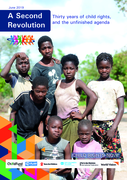
The report showed commitments made three decades ago to protect the rights of children remain unfulfilled for millions. Violence still affects countless children. Discrimination based on age, gender, disability, sexual orientation and religion harms children worldwide.
Key factors include a lack ...
Cholera is an acute diarrhoeal disease caused by the ingestion of food or water contaminated with the bacterium V.
cholerae. It has a short incubation period of a few hours to 5 days. It is endemic in some countries, frequently
showing seasonal variations in the number of reported cases. Cholera a...
The systematic surveillance of antibiotic use and antibiotic re-sistance prevalence in humans and animals is imperative for managingbacterial infectious disease (JPIAMR, 2019;WHO, 2015). Many low-income countries currently face substantial challenges in building national surveillance systems due to ...

The Community-based Health System Model Series briefs identify and discuss critical health system inputs and processes that have contributed to the implementation and expansion of community-based service delivery in different countries.
Countries were selected for their geographic diversity, type o...
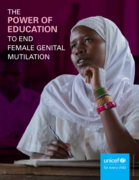
The practice of female genital mutilation (FGM) has proved remarkably tenacious, despite attempts spanning nearly a century to eliminate it. Nevertheless, a number of countries have seen some declines in the practice – at least up until the COVID-19 pandemic, the impact of which is yet to be fully...
Schistosomiasis is a tropical disease caused by a group of parasitic worms. It has an interesting life-cycle involving freshwater snails and can cause short term and long term disease. Schistosomiasis is classified as a neglected tropical disease and affects some of the poorest countries in the worl...
WHO’s Dr Philippa Easterbrook gives a situation update on the recent hepatitis outbreak affecting children including possible causes and steps parents, caregivers and countries should take.
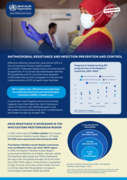
Effective infection prevention and control (IPC) is the cornerstone of every health system. As of 2023, 17 Member States have a functioning IPC programme; 19 countries have developed national IPC guidelines; and 13 countries have adopted multimodel intervention strategies to improve th

Mental health problems represent the greatest global burden of disease among children and adolescents. There is, however, lack of policy development and implementation for child and adolescent mental health (CAMH), particularly in low- and middle-income countries (LMICs) where children and adolescen...
