
Filter
1761
Filtered Results: 1761
Text search:
WHO
South
East
Asia
Regional
Office
Featured
Recommendations
170
New Publications
450
Language
Document type
No document type
847
Studies & Reports
431
Guidelines
226
Manuals
102
Strategic & Response Plan
72
Fact sheets
22
Training Material
20
Situation Updates
18
Resource Platforms
12
Infographics
7
Brochures
2
Online Courses
2
Countries / Regions
Global
141
Myanmar / Burma
73
South–East Asia Region
71
India
69
Nepal
49
Asia
48
Bangladesh
32
Philippines
29
Western and Central Europe
27
Africa
26
Indonesia
24
Cambodia
21
Ethiopia
19
Uganda
16
Western Pacific Region
15
Thailand
14
Syria
13
Kenya
12
Middle East and North Africa
12
Pakistan
12
Tanzania
11
Latin America and the Carribbean
10
South Africa
10
Liberia
10
Ukraine
9
Afghanistan
9
Eastern Europe
9
Sri Lanka
8
China
7
Nigeria
7
Laos
7
Mozambique
7
West and Central Africa
7
East and Southern Africa
7
Yemen
7
Zambia
7
Rwanda
6
Haiti
6
Congo, Democratic Republic of
6
Vietnam
6
Russia
6
South Sudan
6
Timor Leste/ East Timor
5
Ghana
5
Sierra Leone
5
Malawi
5
Venezuela
5
Eastern Europe and Central Asia
5
Somalia
5
Iran
4
Zimbabwe
4
Moldova
4
Sudan
4
Central African Republic
4
North Macedonia
3
Turkey
3
Albania
3
Senegal
3
Burkina Faso
3
Jordan
3
Lebanon
3
Papua New Guinea
3
Brazil
3
Georgia
3
North Korea
2
Mexico
2
Kazakhstan
2
Malaysia
2
Guinea
2
Italy
2
Belarus
2
Bosnia and Herzegovina
2
Palestine
2
Iraq
2
Madagascar
2
Eswatini/ Swaziland
2
Tajikistan
1
Colombia
1
Lesotho
1
Cameroon
1
Singapore
1
Kyrgyzstan
1
Niger
1
Peru
1
Vanuatu
1
Morocco
1
Mongolia
1
Qatar
1
Armenia
1
USA
1
Croatia
1
Hungary
1
Saudi Arabia
1
Paraguay
1
Gabon
1
Turkmenistan
1
Japan
1
Belgium
1
Maldives
1
Tunisia
1
Argentina
1
Djibouti
1
Namibia
1
Egypt
1
Romania
1
Greece
1
Poland
1
Libya
1
Bhutan
1
Ecuador
1
Solomon Islands
1
Authors & Publishers
Publication Years
Category
Countries
433
Clinical Guidelines
177
Key Resources
131
Public Health
123
Women & Child Health
115
Capacity Building
33
Pharmacy & Technologies
19
Toolboxes
HIV
185
Mental Health
139
COVID-19
120
Planetary Health
116
TB
83
NTDs
76
Global Health Education
59
AMR
59
Disability
56
Rapid Response
48
Refugee
46
Health Financing Toolbox
45
Natural Hazards
39
NCDs
39
Caregiver
36
Malaria
30
Conflict
29
2.0 Rapid Response
28
Pharmacy
21
Zika
18
Ebola & Marburg
14
Cholera
13
Specific Hazards
8
Polio
7
Typhoon
3
Social Ethics
2

The framework recommends expanded coverage of malaria diagnostic and treatment services, intensified vector control to drive down transmission, strengthened malaria surveillance, and increased transborder collaboration, especially in terms of efforts to control the sale and use of artemisinin monoth...

Skin-related neglected tropical diseases, or “skin NTDs”, are historically neglected because active case detection, individual case management, significant resources and intensive effort are required to control, eliminate and eradicate them. Integrated control and management of skin NTDs offers ...
Since 1996, trachoma has been targeted for elimination as a public health problem worldwide. The active trachoma criterion for national elimination as a public health problem is a TF1–9 < 5%, sustained for at least two years in the absence of antibiotic mass drug administration (MDA), in each form...

These policy guidelines provide a strategic approach and new recommendations for integrated TB and HIV services for patients suffering from substance-abuse addiction. The key recommendations fall under three main categories: joint planning, key interventions, and overcoming barriers.
This manual summarizes key issues related to the safety of NTD medicines and their administration, with a focus on essential medicines used in mass drug administration (MDA), also called preventive chemotherapy. It can be used as a standalone reference manual, but is intended to be used in conjuncti...

This companion document to Ending the neglect to attain the Sustainable Development Goals: a road map for neglected tropical diseases 2021-2030 ("the road map") aims to support a range of stakeholders - including countries in which neglected tropical diseases (NTDs) are endemic, international organi...
Reduce Risk, Protect Health Facilities, Save Lives
The report offers an analysis of the broader challenges to securing humanitarian action and recommends areas for improvement. This study will contribute to improving the way humanitarians ‘do business’ in complex
security environments. Document also available in French, Arabic and Spanish.
Lymphatic filariasis: managing morbidity and preventing disability: an aide-mémoire for national programme managers, second edition: web annex A: protocol for evaluating minimum package of care of morbidity management and disability prevention for lymphoedema management in designated health facilit...
This manual provides a framework for morbidity management and disability prevention of patients affected by NIDs and gives specific guidance for the proper care of patients suffering from chronic conditions caused by lymphatic filariasis, leprosy, trachoma, and Chagas disease. It is intended to be u...

The aim of these Guidelines is to provide a framework for the conservation and sustainable use of plants in medicine. To do this, the Guidelines describe the various tasks that should be carried out to ensure that where medicinal plants are taken from the wild, they are taken on a basis that is sust...
The threat posed by antimicrobial resistance (AMR) to public health as well as global health security has been reiterated in umerous World Health Assembly (WHA) resolutions. AMR is also prioritized under the Global Health Security Agenda (GHSA), and India is one of the contributing countries. The Mi...

To survive and thrive, children and adolescents need good health, adequate nutrition, security, safety and a supportive clean environment, opportunities for early learning and education, responsive relationships and connectedness, and opportunities for personal autonomy and self-realization. To prom...
ATLAS on substance use (2010) — Resources for the prevention and treatment of substance use disorders
Accessed: 14.03.2019
Policy Brief. More languages available here https://apps.who.int/iris/handle/10665/179517
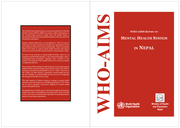
WHO-AIMS REPORT ON MENTAL HEALTH SYSTEM IN NEPAL
A report of the assessment of the mental health system in Nepal using the World Health Organization - Assessment Instrument for
Mental Health Systems (WHO-AIMS).
Kathmandu, Nepal
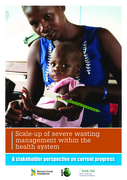
A wide range of potential enablers and barriers were identified for influencing progress for the scale-up of severe wasting services within national health systems. Findings were categorised according to the six pillars of WHO’s health system strengthening framework.
