Filter
7528
Filtered Results: 7528
Text search:
WHO
Africa
Featured
Recommendations
685
New Publications
1659
Language
Document type
No document type
3839
Studies & Reports
1607
Guidelines
863
Manuals
371
Strategic & Response Plan
262
Fact sheets
234
Training Material
129
Situation Updates
83
Infographics
45
Brochures
29
Resource Platforms
29
Online Courses
24
Videos
9
App
4
Countries / Regions
Global
385
South Africa
319
Africa
254
Kenya
243
Sierra Leone
204
Nigeria
190
Ethiopia
182
Liberia
179
Uganda
159
Zambia
133
Malawi
131
Middle East and North Africa
121
West and Central Africa
120
Tanzania
118
Rwanda
112
Congo, Democratic Republic of
108
East and Southern Africa
100
Ghana
97
India
97
Syria
91
Namibia
91
Mozambique
87
Guinea
81
South Sudan
81
Western and Central Europe
72
Zimbabwe
71
Senegal
69
Lesotho
68
Yemen
68
Latin America and the Carribbean
55
Nepal
51
Burkina Faso
51
Central African Republic
48
Bangladesh
42
Cameroon
41
Ukraine
39
Germany
39
Asia
36
Russia
33
Botswana
32
Myanmar / Burma
32
Sudan
30
Mali
30
South–East Asia Region
29
Angola
29
Benin
28
Indonesia
28
Eswatini/ Swaziland
27
China
24
Eastern Europe
24
Somalia
24
Brazil
23
Madagascar
20
Colombia
19
Haiti
19
Côte d’Ivoire / Ivory Coast
19
Afghanistan
18
Philippines
18
Cambodia
18
Guinea-Bissau
17
Chad
17
Eastern Europe and Central Asia
15
Pakistan
15
Thailand
13
Vietnam
13
Niger
12
Lebanon
12
Iraq
12
Burundi
10
Southern Africa
10
Togo
9
Venezuela
9
Jordan
9
Libya
9
Saudi Arabia
8
Sri Lanka
8
Egypt
8
Gambia
7
Iran
7
Tunisia
7
Western Pacific Region
6
Portugal
6
Laos
5
Morocco
5
North America
5
Japan
5
Palestine
5
Mexico
4
Turkey
4
Chile
4
Albania
4
Peru
4
Malaysia
4
Mauritania
4
Italy
4
USA
4
France
4
Papua New Guinea
4
Greece
4
North Macedonia
3
Tajikistan
3
Serbia
3
Kazakhstan
3
Kyrgyzstan
3
Gabon
3
Jamaica
3
Mauritius
3
Spain
3
Bosnia and Herzegovina
3
Moldova
3
Georgia
3
Ecuador
3
Canada
2
Qatar
2
Armenia
2
Paraguay
2
Turkmenistan
2
United Kingdom
2
Belarus
2
Israel
2
Argentina
2
Djibouti
2
North Korea
1
Switzerland
1
Timor Leste/ East Timor
1
Estonia
1
Congo-Brazzaville
1
Vanuatu
1
Mongolia
1
Bulgaria
1
Dominican Republic
1
Cape Verde
1
Croatia
1
Hungary
1
Denmark
1
Belgium
1
Norway
1
South Korea
1
Algeria
1
Morocco
1
Azerbaijan
1
Eritrea
1
Romania
1
Poland
1
Honduras
1
Solomon Islands
1
Authors & Publishers
Publication Years
Category
Countries
2597
Clinical Guidelines
552
Women & Child Health
401
Public Health
389
Key Resources
378
Capacity Building
148
Pharmacy & Technologies
75
Annual Report MEDBOX
2
Toolboxes
HIV
757
COVID-19
701
Mental Health
446
Ebola & Marburg
396
TB
394
Planetary Health
294
Disability
290
NTDs
287
Global Health Education
174
AMR
172
Rapid Response
169
Caregiver
169
NCDs
155
Refugee
149
Conflict
148
Health Financing Toolbox
141
Malaria
125
Pharmacy
103
2.0 Rapid Response
81
Natural Hazards
68
Zika
54
Cholera
47
Polio
47
Social Ethics
39
Specific Hazards
20
Typhoon
3
South Sudan
2

The National Asthma Education Programme (NAEP) is a registered non-profit organisation whose mission is to provide asthma education to healthcare professionals, patients and the lay public. It was founded in 1994 by Dr Mike Greenblatt and Profs Dave Luyt and Robin Green. This year NAEP celebrates it...
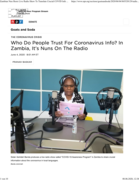
A recent article published by NPR reporting how trusted faith leaders, in this case nuns, have a workable system to transmit health messages in local languages in Zambia. They have broadcast information on maternal & child health and COVID-19 on a Catholic radio station
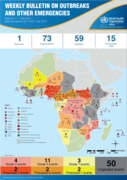
Circulating vaccine-derived poliovirus type 2 in Angola
Ebola virus disease in Democratic Republic of the Congo
Dengue fever in Côte d’Ivoire
Humanitarian crisis in north-east Nigeria.
Module 5
Monitoring and Evaluation
October 2018
Module 5: Monitoring and evaluation. This module is for people responsible for monitoring PrEP programmes at the national and site levels. It provides information on how to monitor PrEP for safety and effectiveness, suggesting core and additiona...
HRH SA 2030 | Draft HR Strategy for the Health Sector: 2012/13 – 2016/17 Consultation Document
The primary audience for this guideline includes health-care professionals who are responsible for developing national and local health-care protocols and policies, as well as managers of maternal and child health programmes and policy-makers in all settings. The guideline will also be useful to tho...
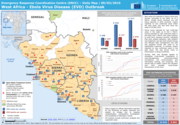
The revised guidelines contain recommendations for specific administrative, environmental controls and respiratory protection, following the assessment made by an external group of experts convened as members of the Guideline Development Group. Moreover, these guidelines focus on interventions speci...
The new WHO recommendations for the treatment of isoniazid-resistant, rifampicin-susceptible TB are based upon a review of evidence from patients treated with such regimens by a Guideline Development Group in conformity with WHO requirements for evidence-based policies.

PQDx 0197-045-00 WHO
PQDx PR
March /2016, version 2.0
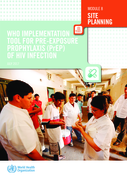
Module 8
Site Planning
July 2017
Module 8: Site planning. This module is for people involved in organizing PrEP services at specific sites. It outlines the steps to be taken in planning a PrEP service and gives suggestions for personnel, infrastructure and commodities that could be considered...
The strategy recommends that AU Member States should enhance, where feasible, existing COVID-19 surveillance to include:
Community-based surveillance to detect symptomatic cases early for treatment and to avert viral transmission;
Sentinel surveillance in high-risk populations to detect ...
The WHO Cholera Vaccine Position Paper (August 2017) highlights the importance of oral cholera vaccines (OCVs) as a key tool in outbreak response and prevention, alongside water, sanitation, and hygiene (WASH) measures. It recommends OCVs for high-risk populations, endemic areas, and humanitarian cr...