
Filter
14482
Filtered Results: 14482
Text search:
WHO
(World
Health
Organisation)
Featured
Recommendations
1325
New Publications
3246
Language
Document type
No document type
6999
Studies & Reports
2472
Guidelines
1892
Manuals
711
Fact sheets
633
Strategic & Response Plan
516
Training Material
307
Situation Updates
254
Resource Platforms
193
Infographics
171
Online Courses
122
Videos
95
Brochures
67
Dashboards/Maps
36
App
14
Countries / Regions
Global
784
India
469
Kenya
319
Sierra Leone
283
Nigeria
253
Uganda
250
Liberia
244
South Africa
239
Western and Central Europe
237
Ethiopia
236
Latin America and the Carribbean
210
Nepal
209
Africa
198
Syria
190
Myanmar / Burma
189
Russia
171
Bangladesh
168
Zambia
167
Ukraine
166
Rwanda
166
Tanzania
161
Malawi
153
Congo, Democratic Republic of
152
Ghana
143
Namibia
123
Mozambique
113
Eastern Europe
110
South Sudan
108
Philippines
106
Indonesia
104
Brazil
103
Middle East and North Africa
98
South–East Asia Region
88
Lesotho
87
Yemen
87
Guinea
85
West and Central Africa
83
Senegal
82
Cambodia
81
Zimbabwe
79
Haiti
78
Asia
73
Germany
70
East and Southern Africa
70
Venezuela
61
Burkina Faso
59
Colombia
55
Cameroon
54
Eastern Europe and Central Asia
52
Botswana
51
Angola
42
Pakistan
40
Eswatini/ Swaziland
39
Mali
38
Madagascar
38
Afghanistan
37
Sudan
36
Paraguay
35
Benin
33
China
33
Central African Republic
33
Somalia
31
Lebanon
30
Western Pacific Region
28
Vietnam
28
Thailand
26
Jordan
26
Guinea-Bissau
25
Côte d’Ivoire / Ivory Coast
25
Tajikistan
23
Niger
23
Peru
22
Iraq
21
Turkey
20
Argentina
20
Chad
20
Moldova
19
Sri Lanka
19
Laos
18
North America
18
Chile
16
Georgia
15
Albania
14
Kazakhstan
13
Ecuador
13
Mexico
12
Togo
12
Iran
12
Kyrgyzstan
12
Burundi
12
Spain
12
Libya
12
Armenia
11
Bolivia
11
Egypt
11
Palestine
11
North Macedonia
10
Saudi Arabia
10
Portugal
10
Belarus
10
USA
9
Papua New Guinea
9
Greece
9
Timor Leste/ East Timor
8
El Salvador
8
Romania
8
Gambia
7
Malaysia
7
Tunisia
7
Southern Africa
7
Poland
7
Honduras
7
Bhutan
7
Guatemala
7
Serbia
6
Jamaica
6
Japan
6
Estonia
5
Uzbekistan
5
Morocco
5
Hungary
5
Turkmenistan
5
France
5
Azerbaijan
5
Switzerland
4
Fiji
4
Congo-Brazzaville
4
Mauritania
4
Italy
4
United Kingdom
4
Nicaragua
4
Djibouti
4
Canada
3
Singapore
3
Mongolia
3
Qatar
3
Dominican Republic
3
Croatia
3
Gabon
3
Uruguay
3
Mauritius
3
Israel
3
Bosnia and Herzegovina
3
North Korea
2
Bulgaria
2
Lithuania
2
Ireland
2
Denmark
2
Algeria
2
Slovakia
2
Cuba
2
Australia
1
Vanuatu
1
Cape Verde
1
Belgium
1
Maldives
1
Norway
1
South Korea
1
Morocco
1
Latvia
1
Barbados
1
Belize
1
Costa Rica
1
Eritrea
1
Guyana
1
Panama
1
Solomon Islands
1
Authors & Publishers
Publication Years
Category
Countries
4876
Clinical Guidelines
987
Public Health
803
Key Resources
793
Women & Child Health
707
Capacity Building
334
Pharmacy & Technologies
151
Annual Report MEDBOX
3
Toolboxes
COVID-19
1645
Mental Health
1044
HIV
995
TB
751
NTDs
601
Disability
583
Planetary Health
501
Ebola & Marburg
488
AMR
406
Caregiver
399
Conflict
385
NCDs
377
Rapid Response
321
Refugee
261
Global Health Education
259
Malaria
225
Pharmacy
220
Health Financing Toolbox
180
Natural Hazards
172
2.0 Rapid Response
170
Zika
158
Cholera
126
Polio
82
Specific Hazards
77
Social Ethics
55
Typhoon
6
South Sudan
2

Communication Risk in Public Health Emergencies
recommended
A WHO Guideline for Emergency Risk Communication (ERC) policy and practice.
Recent public health emergencies, such as the Ebola virus disease outbreak in West Africa (2014–2015), the emergence of the Zika virus syndrome in 2015–2016 and multi-country yellow fever outbreaks in Africa in 2016, h...
Nurses play a key role in the provision of primary health care (PHC) and the coordination and organization of medical care overall. Nurses are often the first point of contact with the health system and have an important role to play in leaving no one behind.
Large-scale reform of PHC in Uk...
The WHO Effective Communications Participant Handbook was created to support WHO staff around the world in enhancing their communications skills as part of the global communications capacity-building efforts of the WHO Department of Communications (DCO)
Access to controlled medicines. 3rd edition
The WHO COVID-19 Essential Supplies Forecasting Tool (COVID-19-ESFT) is meant to help countries forecast essential supplies for their COVID-19 response including personal protective equipment (e.g., masks and gloves), biomedical equipment for case management (e.g., ventilators and oxygen concentrato...
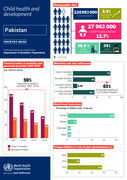
country brief, Pakistan

Community-based health care, including outreach and campaigns,in the context of the COVID-19 pandemic
recommended
The COVID-19 pandemic is challenging health systems across the world. Rapidly increasing demand for care of people with COVID-19 is compounded by fear, misinformation and limitations on the movement of people and supplies that disrupt the delivery of frontline health care for all people...
This g...
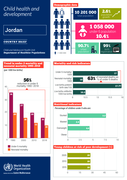
country brief, Jordan
The Interagency Emergency Health Kit 2017
recommended
Interagency Guidelines; Medicines and medical devices for 10 000 people for approximately three month.
Improving Maternal Mental Health
recommended
The mental health of women not only adversely affects them, but its impact on their
developing infant is also severe. If the ability of women to take care of their baby is
compromised, the survival and development of the infant is jeopardized. Maternal
depression in resource-constrained settings ...

This document synthesizes key elements of the World Health Organization (WHO) normative guidance on health policy and system support for community health worker (CHW) programmes and their application for HIV programmes. Building on relevant elements of HIV guidelines, tools and evidence identified b...
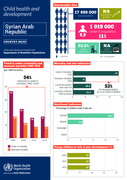
country brief, Syrian Arab Republic
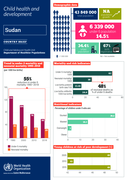
country brief, Sudan
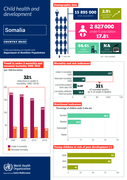
country brief, Somalia
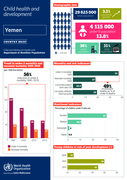
country brief, Yemen

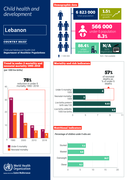
country brief, Jordan
The WHO susceptibility test kit has been extensively used for monitoring of insecticide resistance in disease vectors for many years. Over the years, users have reported issues with these kits and potential improvements to WHO in an ad-hoc manner. To systematically determine whether the reported iss...
