
Filter
10721
Filtered Results: 10721
Text search:
health
capacity
Featured
Recommendations
926
New Publications
2805
Language
Document type
No document type
5547
Studies & Reports
1893
Guidelines
1347
Manuals
616
Strategic & Response Plan
508
Training Material
246
Fact sheets
236
Situation Updates
127
Resource Platforms
67
Online Courses
60
Infographics
37
Brochures
23
Videos
12
Dashboards/Maps
1
App
1
Countries / Regions
Global
497
India
438
Kenya
284
Sierra Leone
218
Ethiopia
216
Latin America and the Carribbean
206
Nepal
196
South Africa
196
Uganda
196
Liberia
189
Nigeria
182
Africa
170
Myanmar / Burma
162
Western and Central Europe
158
Congo, Democratic Republic of
149
Syria
148
Tanzania
145
Rwanda
142
Bangladesh
138
Senegal
135
Malawi
133
Zambia
133
Ukraine
109
Namibia
109
Ghana
107
Haiti
91
Guinea
88
South Sudan
83
Philippines
82
Burkina Faso
80
West and Central Africa
76
Mozambique
66
South–East Asia Region
66
East and Southern Africa
65
Indonesia
65
Lesotho
62
Cambodia
60
Middle East and North Africa
60
Zimbabwe
59
Benin
58
Asia
56
Paraguay
56
Eastern Europe
56
Venezuela
55
Yemen
55
Cameroon
53
Colombia
51
Botswana
43
Russia
42
Brazil
41
Germany
40
Central African Republic
38
Afghanistan
37
Madagascar
37
Eastern Europe and Central Asia
35
Eswatini/ Swaziland
35
Pakistan
35
Peru
33
Mali
32
Argentina
30
Lebanon
26
Jordan
25
Côte d’Ivoire / Ivory Coast
25
Bolivia
24
Western Pacific Region
23
Somalia
23
Ecuador
23
Chile
20
Sudan
20
Iraq
20
Thailand
19
Vietnam
19
China
18
Niger
18
Turkey
17
Chad
17
Laos
15
Moldova
15
USA
14
Tajikistan
13
Togo
13
Albania
12
Sri Lanka
12
North America
11
Palestine
11
Angola
11
Iran
10
El Salvador
9
Burundi
9
Guinea-Bissau
9
Georgia
9
Mexico
8
Greece
8
Timor Leste/ East Timor
7
Italy
7
United Kingdom
7
Spain
7
Southern Africa
7
Libya
7
North Macedonia
6
Gambia
6
Papua New Guinea
6
Egypt
6
Honduras
6
Guatemala
6
Kazakhstan
5
Kyrgyzstan
5
France
5
Romania
5
Poland
5
Bhutan
5
Singapore
4
Mauritania
4
Dominican Republic
4
Saudi Arabia
4
Turkmenistan
4
Jamaica
4
Belarus
4
Nicaragua
4
Switzerland
3
Fiji
3
Congo-Brazzaville
3
Uzbekistan
3
Croatia
3
Hungary
3
Japan
3
Mauritius
3
Portugal
3
North Korea
2
Serbia
2
Canada
2
Estonia
2
Malaysia
2
Vanuatu
2
Morocco
2
Mongolia
2
Qatar
2
Bulgaria
2
Armenia
2
Lithuania
2
Ireland
2
Uruguay
2
Tunisia
2
Guyana
2
Djibouti
2
Australia
1
Cape Verde
1
Gabon
1
Maldives
1
Azerbaijan
1
Israel
1
Bosnia and Herzegovina
1
Latvia
1
Barbados
1
Belize
1
Costa Rica
1
Panama
1
Slovakia
1
Solomon Islands
1
Cuba
1
Authors & Publishers
Publication Years
Category
Countries
4273
Key Resources
683
Clinical Guidelines
615
Public Health
583
Women & Child Health
513
Capacity Building
278
Pharmacy & Technologies
118
Annual Report MEDBOX
2
Toolboxes
COVID-19
1048
Mental Health
739
HIV
639
TB
473
Disability
438
Planetary Health
428
Ebola & Marburg
358
Conflict
329
Caregiver
309
NTDs
281
AMR
278
Rapid Response
243
Malaria
190
Global Health Education
187
Refugee
185
NCDs
176
Natural Hazards
173
Pharmacy
150
2.0 Rapid Response
149
Health Financing Toolbox
140
Cholera
84
Zika
77
Polio
53
Specific Hazards
44
Social Ethics
37
Typhoon
8
South Sudan
2
Towards Attaining the Highest Standard of Mental Health
The 2021 Global monitoring report on financial protection in health shows that before the COVID-19 pandemic, the world was off-track to reduce financial hardship due to health expenditures because trends in catastrophic health spending were going in the wrong direction and the number of people incur...

In 2019, the Task Force on Fiscal Policy for Health concluded that taxes on tobacco, alcohol, and sugar-sweetened beverages were a highly effective but greatly underused policy tool to reduce consumption, save lives, and raise domestic resources. The Task Force estimated that if all countries increa...
The project was developed by the International Federation of Medical Students’ Associations (IFMSA), in line with the Federation’s statement “a world in which students are equipped with knowledge, skills and value to take on health leadership roles locally and globally so to...
ndependent of the current conflict, the health sector in Ukraine faces several critical shortcomings. In particular, the country has an oversupply of hospitals and an undersupply of primary care and diagnostic facilities. Addressing these limitations will require substantial amounts of capital inves...
Services, Identified needs and recommendations following the April and May 2015 Earthquakes in Nepal

Alcohol consumption is deeply embedded in the social landscape of many societies. Several major factors have an impact on levels and patterns of alcohol consumption in populations – such as historical trends in alcohol consumption, the availability of alcohol, culture, economic status and trends i...
Mental health is critical to personal well-being, interpersonal relationships, and successful contributions to society. Mental health conditions consequently impose a high burden not only on individuals, families and society, but also on economies. In Jamaica, mental health conditions are highly pre...

The Health Sector Policy gives general orientations for the sector which are further developed in the various sub-sector policies guiding key health programs and departments. All health sub-sector policies will be updated in line with this new policy. The Health Sector Policy is the basis of nationa...
Africa is off track to reach the Sustainable Development Goals by 2030 and lags behind in building resilient health systems
and health security, against a backdrop of limited resources. The world envisaged a significant role for governments
in funding the Sustainable Development Agenda, but inadeq...
This guide has been written to provide information and practical advice on developing and delivering local plans an strategies to commission the most effective and efficient older people’s mental health services.Based upon clinical best practice guidance and drawing upon the range of available evi...
Nearly 260 000 people died in parts of Somalia between October 2010 and April 2012, including
133 000 children under five during the famine and food crisis in Somalia making it the worst famine in history.
A study commissioned and funded by the Food and Agriculture Organization of the United Natio...
Evaluating the Return on Investment of Scaling Up Treatment for Depression, Anxiety, and Psychosis
The report “Dementia: a public health priority” has been jointly developed by WHO and Alzheimer's Disease International. The purpose of this report is to raise awareness of dementia as a public health priority, to articulate a public health approach and to advocate for action at international a...
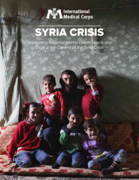
The report reveals weak national mental health services overburdened by the demands placed on them by the Syria crisis. Health facilities which previously provided integrated mental health services in Syria have themselves become casualties of war, with most either destroyed, damaged or not function...
