
Filter
3540
Filtered Results: 3540
Text search:
adult
and
maternal
mortality
Featured
Recommendations
355
New Publications
1025
Language
Document type
No document type
2063
Studies & Reports
599
Guidelines
476
Manuals
161
Strategic & Response Plan
110
Training Material
52
Fact sheets
43
Situation Updates
20
Infographics
7
Resource Platforms
6
Online Courses
2
Brochures
1
Countries / Regions
India
182
Global
163
Kenya
103
Ethiopia
91
South Africa
85
Latin America and the Carribbean
70
Nigeria
69
Sierra Leone
68
Malawi
66
Tanzania
64
Nepal
62
Zambia
62
Uganda
61
Rwanda
60
Western and Central Europe
60
Liberia
56
Namibia
51
Bangladesh
50
Myanmar / Burma
50
Africa
47
Ghana
44
Lesotho
40
Philippines
36
Zimbabwe
32
Syria
27
Haiti
27
Cambodia
27
Ukraine
26
South–East Asia Region
26
Mozambique
23
Congo, Democratic Republic of
23
Asia
22
Eastern Europe
22
Brazil
22
Senegal
20
Botswana
20
Indonesia
18
South Sudan
17
Venezuela
13
Russia
13
Eswatini/ Swaziland
13
Cameroon
12
Sudan
12
Yemen
12
East and Southern Africa
11
Lebanon
10
Pakistan
10
Colombia
9
Germany
9
Middle East and North Africa
9
Eastern Europe and Central Asia
9
Benin
8
Burkina Faso
8
Jordan
8
Thailand
7
Chile
7
Afghanistan
7
Guinea
7
USA
7
Paraguay
7
Argentina
7
Iraq
7
Albania
6
Peru
6
West and Central Africa
6
Somalia
6
Tajikistan
5
China
5
North America
5
Moldova
5
Timor Leste/ East Timor
4
Iran
4
Kyrgyzstan
4
Saudi Arabia
4
Western Pacific Region
4
Bolivia
4
Papua New Guinea
4
Sri Lanka
4
Egypt
4
Mali
4
Angola
4
Madagascar
4
North Macedonia
3
Mexico
3
Turkey
3
Kazakhstan
3
Laos
3
United Kingdom
3
Southern Africa
3
Vietnam
3
Georgia
3
Central African Republic
3
Ecuador
3
Guinea-Bissau
2
Jamaica
2
Portugal
2
Greece
2
Palestine
2
Bhutan
2
North Korea
1
Serbia
1
Togo
1
Estonia
1
Uzbekistan
1
Morocco
1
Qatar
1
Italy
1
Armenia
1
Lithuania
1
Turkmenistan
1
Mauritius
1
Tunisia
1
Spain
1
Azerbaijan
1
Belarus
1
Israel
1
Bosnia and Herzegovina
1
Djibouti
1
Honduras
1
Libya
1
Authors & Publishers
Publication Years
Category
Countries
1592
Clinical Guidelines
363
Public Health
248
Women & Child Health
220
Key Resources
136
Capacity Building
60
Pharmacy & Technologies
21
Annual Report MEDBOX
1
Toolboxes
HIV
318
Mental Health
226
TB
216
COVID-19
215
NCDs
101
Planetary Health
94
NTDs
93
Disability
90
Caregiver
83
Global Health Education
59
Conflict
57
AMR
55
Malaria
54
Ebola & Marburg
53
Rapid Response
48
Refugee
44
Pharmacy
31
2.0 Rapid Response
21
Cholera
20
Natural Hazards
19
Zika
18
Health Financing Toolbox
16
Social Ethics
11
Polio
11
Specific Hazards
5
The harmonized training package for Point-of-use-fortification using micronutrient powders has been developed to guide in training frontline health workers. The micronutrient powders will be distributed at the health facilities where instructions on use will be provided by Health Care Providers. Com...
Findings, interpretations and conclusions
expressed in this document are based on infor-
mation gathered by GIZ and its consultants,
partners and contributors from reliable sources.

There is a broad consensus nowadays that the Earth is warming up as a result of greenhouse gas emissions caused by anthropogenic activities. It is also clear that current trends in the fields of energy, development and population growth will lead to continuous and ever more dramatic climate change. ...
This ten year global plan for measles and rubella outlines the strategy that needs to be fully implemented to achieve the measles and rubella goals endorsed by the World Health Assembly. The plan sets out the: vision, goals and targets for the 2011-2020 period, recommended strategies, guiding princi...
The report examines financing in the battle against malaria, focusing on the role of foreign aid. It analyzes whether or not a disease such as malaria can be controlled or eliminated in Africa without health aid. It also presents a theoretical model of the economics of malaria and shows how health a...
Namibia is no exception to the growingglobal concern on the increasing burden of NCDs. Namibia is an upper middle income country with fast economic growth since independence in 1990. The country is bearing the double burden of communicable and noncommunicable diseases and rapid urbanizat...
The leishmaniases are a group of diseases caused by Leishmania spp., which occur in cutaneous, mucocutaneous and visceral forms. They are neglected tropical diseases (NTDs), which disproportionately affect marginalized populations who have limited access to health care. HIV co-infected patients with...
Following the publication of Guidelines on certification of elimination of human onchocerciasis in 2001 by the World Health Organization (WHO), these are the first evidence-based guidelines developed by NTD Department according to the international standards. They provide a set of recommendations th...
Standard Treatment Guideline
Accessed: 20.11.2019

Tsetse traps and targets (insecticide-impregnated screens) function by attracting the flies to a device that collects and/or kills them. Traps can be used for entomological surveillance, and also for control. Targets are simpler than traps, but are not used for surveillance. They are impregnated wit...
The Member States of the Pan American Health Organization/World Health Organization (PAHO/WHO)
that appear in the tables below have used the assessment instrument for mental health systems (WHOAIMS)
(1), as have Anguilla, the British Virgin Islands, Montserrat, and Turks and Caicos, all British
O...
Evaluation report
September 2014
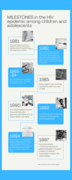
Milestones in the treatment, care and support, Dec 2021
This document offers public health guidance for the prevention and control of COVID-19 in reception centres, and other temporary accommodation facilities, in the context of the mass influx of Ukrainian people into the European Union (EU), the European Economic Area (EEA) and the Republic of Moldova.
The World Health Organization Disability Assessment Schedule (WHODAS 2.0) is a generic assessment instrument developed by WHO to provide a standardized method for measuring health and disability across cultures. It was developed from a comprehensive set of International Classification of Functioning...
This manual summarizes the methodology used to develop WHODAS 2.0 and the findings obtained when the schedule was applied to certain areas of general health, including mental and neurological disorders.
The manual will be useful to any researcher or clinician wishing to use WHODAS 2.0 in their prac...
TB remains one of the world’s deadliest infectious diseases, second only to COVID-19, and drug-resistant TB strains are still a major concern. In the fight against TB, urgent investment is critical, especially in the context of the ongoing pandemic.
