
Filter
1832
Filtered Results: 1832
Text search:
Ministry
of
Health
&
Population
Department
of
Health
Services
National
Tuberculosis
Center
Featured
Recommendations
160
New Publications
645
Language
Document type
No document type
1238
Studies & Reports
249
Guidelines
175
Manuals
70
Strategic & Response Plan
59
Training Material
19
Situation Updates
12
Fact sheets
4
Resource Platforms
3
Infographics
2
App
1
Countries / Regions
India
110
Kenya
78
Nigeria
60
Nepal
59
Malawi
55
Uganda
52
Global
51
Zambia
51
Tanzania
49
Western and Central Europe
47
Myanmar / Burma
47
Liberia
45
Rwanda
42
Ethiopia
41
Ghana
37
Bangladesh
32
Sierra Leone
31
Cambodia
27
Namibia
26
Eastern Europe
25
Lesotho
23
Ukraine
19
Zimbabwe
19
Asia
19
Africa
18
Latin America and the Carribbean
18
Botswana
17
Mozambique
16
South–East Asia Region
16
Indonesia
13
Senegal
12
Haiti
12
South Sudan
10
Albania
9
South Africa
9
Colombia
8
Pakistan
8
Tajikistan
7
Syria
7
East and Southern Africa
7
Russia
7
Vietnam
6
Georgia
6
Eswatini/ Swaziland
6
Cameroon
5
Burkina Faso
5
Afghanistan
5
Philippines
5
Congo, Democratic Republic of
5
Timor Leste/ East Timor
4
Benin
4
Laos
4
Germany
4
Eastern Europe and Central Asia
4
North America
4
Thailand
3
China
3
Peru
3
Armenia
3
Venezuela
3
West and Central Africa
3
Moldova
3
Sri Lanka
3
Sudan
3
Somalia
3
El Salvador
2
Gambia
2
Iran
2
Guinea
2
Jordan
2
Middle East and North Africa
2
Western Pacific Region
2
Paraguay
2
Turkmenistan
2
Bolivia
2
Argentina
2
Lebanon
2
Papua New Guinea
2
Brazil
2
Yemen
2
Poland
2
Mali
2
North Macedonia
1
Mexico
1
Serbia
1
Chile
1
Estonia
1
Uzbekistan
1
Burundi
1
Morocco
1
Mongolia
1
Dominican Republic
1
Hungary
1
Saudi Arabia
1
Gabon
1
Japan
1
Denmark
1
Maldives
1
Tunisia
1
Southern Africa
1
Belize
1
Costa Rica
1
Panama
1
Nicaragua
1
Romania
1
Greece
1
Palestine
1
Central African Republic
1
Honduras
1
Chad
1
Bhutan
1
Iraq
1
Guatemala
1
Authors & Publishers
Publication Years
Category
Countries
963
Clinical Guidelines
101
Public Health
88
Key Resources
61
Women & Child Health
52
Capacity Building
20
Pharmacy & Technologies
13
Annual Report MEDBOX
1
Toolboxes
HIV
237
TB
233
AMR
61
COVID-19
58
Mental Health
40
Pharmacy
34
Rapid Response
32
Caregiver
30
Health Financing Toolbox
29
NTDs
28
Global Health Education
26
Planetary Health
24
Disability
21
Malaria
21
Conflict
21
Ebola & Marburg
19
Refugee
18
2.0 Rapid Response
18
NCDs
14
Polio
11
Natural Hazards
9
Cholera
3
Specific Hazards
2
Zika
1

While there has been real progress in addressing the burden of disease in the WHO African region, the COVID-19 pandemic has highlighted the link between health, economics and security, as the region saw decades of progress threatened, including positive trends in decreasing inequality. In the Africa...
Trustworthy, evidence-based health guidelines form the basis of national policies affecting both patients and health-care workers. Emphasizing the link between robust evidence and people’s trust in their health systems, Dr Hans Henri P. Kluge, WHO Regional Director for Europe said at the launch ev...
national programmes for occupational health and safety for health workers: lessons learned from countries: summary report of the WHO online workshop, 15 July 2020

Antimicrobial resistance (AMR) is a major public health challenge, which is recognized as high priority area by the Government of India. The increasing consumption of antibiotics is one of the key drivers of antimicrobial resistance seen in bugs of public health importance. Irrational prescription o...

Regional Eastern European and Central Asian project (TB-REP) Copenhagen, Denmark, 26–28 April 2016

The objectives of this guideline are the same as those of the 2011 edition, namely to provide evidence-based normative guidance on interventions to improve adolescent morbidity and mortality by reducing the chances of early pregnancy and its resulting poor health outcomes. The specific objectives of...

mhGAP is based on evidence-based technical guidelines (4) and provides a set of tools and
training packages to extend service provision. The mhGAP Intervention Guide (mhGAP-IG)
for MNS disorders in non-specialized health settings (8) is a clinical decision-making tool
for assessing and managing p...
Fact Book on WHO Level I and Level II monitoring indicators - To monitor the progress of efforts to improve the global medicines situation, WHO has developed a system of indicators that measure important aspects of a country’s pharmaceutical situation. Level 1 indicators measure the existence and ...

This global status report on prevention and control of NCDs (2014), is framed around the nine voluntary global targets. The report provides data on the current situation, identifying bottlenecks as well as opportunities and priority actions for attaining the targets. The 2010 baseline estimates on N...

The meningitis road map has been designated as a flagship global strategy of the WHO’s Thirteenth General Programme of Work, 2019–2023 and is an essential component in achieving universal health coverage.
The road map will reinforce and combine with wider initiatives, such as those aimed at s...

This toolkit for integrated vector management (IVM) is designed to help national and regional programme managers coordinate across sectors to design and run large IVM programmes.
The toolkit provides the technical detail required to plan, implement, monitor and evaluate an IVM approach. IVM can...
The toolkit provides the technical detail required to plan, implement, monitor and evaluate an IVM approach. IVM can...

A lot has happened this year. While we continued to tackle the COVID-19 pandemic, we were hit by disease outbreaks and
humanitarian crises. Yet, despite these challenges, we marched on, resolute in resolving critical health systems issues to increase
access to quality healthcare services. To furth...
A survey was conducted in countries in all six WHO regions and focused on the building blocks that are considered prerequisites to combat antimicrobial resistance: a comprehensive national plan, laboratory capacity to undertake surveillance for resistant microorganisms, access to safe, effective ant...

The Regional Action Framework for Noncommunicable Disease Prevention and Control provides a unified vision of objectives and recommended actions to combat the noncommunicable disease (NCD) epidemic in the Western Pacific Region. Implementation should be supported by cross-sectoral coordination...
WHO Recommended Surveillance Standards
recommended
Second editon. This document serves only as a guide to good practice and may help to harmonize surveillance activities. The purpose of this manual is to be a handy reference for key elements and contact information for all communicable diseases / syndromes associated with current WHO control program...
During the first year of the Covid-19 pandemic, the world’s economy slowed. Yet, the global annual average particulate pollution (PM2.5) was largely unchanged from 2019 levels. At the same time, growing evidence shows air pollution—even when experienced at very low levels—hurts human health. T...
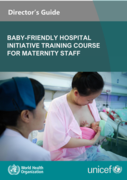
1.1 Why this course is needed
The first few hours and days of a newborn baby’s life are a critical window for establishing breastfeeding and for providing mothers with the support they need to breastfeed successfully. Since 1991, the Baby-friendly Hospital Initiative (BFHI) has helped to motivate...

Antimicrobial resistance (AMR) is a serious public health concern with economic, social and political implications that are global in scope, and cross all environmental and ethnic boundaries. As a global threat, AMR risks the achievements of modern medicine, and has the po...
