
Filter
10749
Filtered Results: 10749
Text search:
quality
health
care
Featured
Recommendations
956
New Publications
2690
Language
Document type
No document type
5824
Studies & Reports
1933
Guidelines
1367
Manuals
595
Strategic & Response Plan
409
Fact sheets
224
Training Material
192
Situation Updates
88
Infographics
38
Resource Platforms
30
Brochures
27
Online Courses
15
Videos
6
App
1
Countries / Regions
Global
492
India
454
Kenya
320
South Africa
236
Ethiopia
226
Sierra Leone
202
Uganda
199
Nepal
198
Nigeria
180
Western and Central Europe
176
Liberia
162
Africa
161
Myanmar / Burma
153
Malawi
151
Zambia
151
Latin America and the Carribbean
149
Rwanda
147
Bangladesh
146
Tanzania
145
Ghana
125
Syria
123
Congo, Democratic Republic of
117
Namibia
116
Ukraine
94
Senegal
86
Philippines
72
Cambodia
71
Burkina Faso
67
Lesotho
66
Eastern Europe
64
Indonesia
64
Haiti
63
South Sudan
62
Zimbabwe
59
Guinea
59
South–East Asia Region
59
Asia
56
Germany
56
West and Central Africa
56
Mozambique
55
Botswana
53
East and Southern Africa
50
Cameroon
48
Russia
46
Brazil
44
Benin
43
Middle East and North Africa
39
Yemen
38
Eastern Europe and Central Asia
33
Afghanistan
31
Pakistan
31
Venezuela
30
Eswatini/ Swaziland
30
Lebanon
27
Mali
27
Madagascar
27
Colombia
24
Jordan
24
Vietnam
22
USA
19
Central African Republic
19
Somalia
19
Thailand
18
Sudan
18
Côte d’Ivoire / Ivory Coast
17
Tajikistan
16
Iraq
16
China
15
Peru
15
Western Pacific Region
14
Turkey
13
Albania
13
Laos
13
Moldova
13
Georgia
13
North America
12
Sri Lanka
12
Togo
11
Niger
11
Paraguay
11
North Macedonia
10
Chile
10
Chad
10
Burundi
9
Argentina
9
Palestine
8
Kazakhstan
7
United Kingdom
7
Southern Africa
7
Ecuador
7
El Salvador
6
Gambia
6
Iran
6
Kyrgyzstan
6
Armenia
6
Poland
6
Angola
6
Libya
6
Switzerland
5
Timor Leste/ East Timor
5
Mexico
5
Hungary
5
Bolivia
5
Papua New Guinea
5
Egypt
5
Romania
5
Greece
5
Guatemala
5
Serbia
4
Jamaica
4
Japan
4
Portugal
4
Spain
4
Honduras
4
Bhutan
4
Canada
3
Singapore
3
Estonia
3
Congo-Brazzaville
3
Malaysia
3
Italy
3
Guinea-Bissau
3
Saudi Arabia
3
Turkmenistan
3
France
3
Mauritius
3
Belarus
3
Fiji
2
Uzbekistan
2
Morocco
2
Mongolia
2
Qatar
2
Bulgaria
2
Dominican Republic
2
Croatia
2
Lithuania
2
Gabon
2
Belgium
2
Tunisia
2
Azerbaijan
2
Bosnia and Herzegovina
2
Nicaragua
2
Slovakia
2
Australia
1
Ireland
1
Denmark
1
Maldives
1
Norway
1
Israel
1
Latvia
1
Belize
1
Costa Rica
1
Guyana
1
Panama
1
Djibouti
1
Authors & Publishers
Publication Years
Category
Countries
4033
Clinical Guidelines
741
Key Resources
647
Women & Child Health
615
Public Health
581
Capacity Building
239
Pharmacy & Technologies
120
Annual Report MEDBOX
3
Toolboxes
Mental Health
841
HIV
820
COVID-19
793
TB
505
Disability
443
Caregiver
398
Planetary Health
359
AMR
323
NTDs
278
Conflict
271
Ebola & Marburg
252
NCDs
231
Refugee
217
Pharmacy
208
Global Health Education
187
Rapid Response
180
Malaria
143
Health Financing Toolbox
133
Natural Hazards
132
2.0 Rapid Response
105
Cholera
63
Social Ethics
59
Polio
47
Zika
43
Specific Hazards
31
Typhoon
5
South Sudan
2
The United Nations Population Fund (UNFPA) is the lead UN agency working to further gender equality and women’s empowerment in Sri Lanka. We are pleased to be a part of the joint effort with the Ministry of Health to develop the first ‘Standard Operating Procedures on sexual and gender-based vio...
Quick reference guide
This policy brief explores the impact of air pollution on health and address the air quality issue in the response to noncommunicable diseases (NCDs). It also provides key actions that policy makers, NGOs and health professionals can take to ensure that every one can breathe clean air.
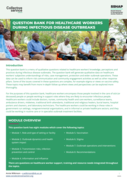
This question bank is a menu of qualitative questions related to healthcare workers’ knowledge, perceptions and practices during infectious disease outbreaks. The question bank will generate qualitative data on healthcare workers’ subjective understandings of risks, case management, protection a...
Pocket size
March 2017
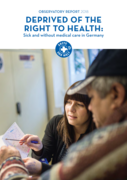
Observatory report by Médecins du Monde/Doctors of the World Germany:“Deprived of the right to health. Sick and without medical care in Germany” gives a rare insight into the situation of those who have no or only limited access to the German health system.
This manual presents a compelling case for action on carbapenem-resistant organisms (CROs) and describes the linkages between the prevention and control of CROs and the Global Action Plan on Antimicrobial Resistance (AMR). It describes how the eight recommendations contained within the World Health ...

1-13 December 2018 | Geneva, Switzerland UNAIDS Programme Coordinating Board Issue date: 23 November 2018
UNAIDS/PCB (43)/18.32
The PHC STGs and EML should be used by healthcare workers providing care at clinics, community health centres, and gateway clinics at hospitals.
Pharmaceutical and Therapeutics Committees (PTCs) are responsible for ensuring the availability of medicines listed in the PHC EML at those facilities, as...

The purpose of this article is to consider the relationshipbetween religion and healthcarein order to suggest how physicians and other health care providers shouldrespond when the faith-based preference of apatient clashes with the medically indicatedtreatment modalities.
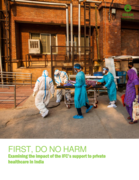
This report examines the support to private healthcare provision in India by the World Bank’s private sector arm, the International Finance Corporation (IFC). Despite supporting private healthcare in the country since 1997, no healthcare results for lending and investments have been disclosed sinc...
Regional Network for Equity in Health in east and southern Africa (EQUINET): Disussion Paper 112
The Essential Health Benefit (EHB) is known as Essential Health Care Package (EHCP) in Swaziland. This desk review provides evidence on the experience of EHCPs in Swaziland and includes available po...
The Essential Health Benefit (EHB) is known as Essential Health Care Package (EHCP) in Swaziland. This desk review provides evidence on the experience of EHCPs in Swaziland and includes available po...
Int J Environ Res Public Health. 2018 Jun; 15(6): 1279.
Published online 2018 Jun 16. doi: 10.3390/ijerph15061279
This report contains the results of an in-depth Training Needs Assessment (TNA) of Health Workers in the 4 project counties of the republic of Kenya – Nakuru, Kisumu, Nairobi and Bungoma. The assessment, facilitated by the UPOPs Project in close collaboration with the Ministry of Health and Minist...
Migrants in an irregular situation: access to healthcare in 10 European Union Member States
recommended
This report explores the access to healthcare granted to irregular migrants in 10 EU Member States. It focuses on migrants who are present in an irregular situation, namely those who do not fulfil conditions for entry, stay or residence. Through interviews with a range of different sources including...
