
Filter
14232
Filtered Results: 14232
Text search:
health
services
Featured
Recommendations
1174
New Publications
3459
Language
Document type
No document type
7668
Studies & Reports
2443
Guidelines
1745
Manuals
767
Strategic & Response Plan
524
Fact sheets
387
Training Material
266
Situation Updates
178
Infographics
85
Resource Platforms
69
Brochures
54
Online Courses
29
Videos
13
App
3
Dashboards/Maps
1
Countries / Regions
Global
614
India
546
Kenya
370
Ethiopia
280
South Africa
277
Nepal
274
Sierra Leone
254
Uganda
239
Nigeria
237
Liberia
224
Western and Central Europe
212
Myanmar / Burma
212
Latin America and the Carribbean
204
Bangladesh
196
Senegal
193
Africa
191
Congo, Democratic Republic of
190
Rwanda
189
Zambia
185
Syria
184
Malawi
178
Tanzania
174
Ukraine
166
Ghana
149
Namibia
147
Burkina Faso
115
Indonesia
113
Philippines
111
Haiti
108
South Sudan
101
Guinea
96
Eastern Europe
91
West and Central Africa
90
Russia
90
Mozambique
88
Germany
87
Zimbabwe
86
Cambodia
84
Lesotho
82
Benin
82
Brazil
78
Yemen
78
South–East Asia Region
75
Asia
73
Cameroon
69
Venezuela
67
East and Southern Africa
67
Middle East and North Africa
65
Botswana
61
Mali
52
Central African Republic
51
Colombia
48
Madagascar
48
Eastern Europe and Central Asia
45
Afghanistan
44
Eswatini/ Swaziland
44
Pakistan
44
Jordan
33
Côte d’Ivoire / Ivory Coast
33
Somalia
33
Lebanon
32
Sudan
32
Vietnam
27
Thailand
26
Niger
26
Iraq
24
USA
23
Western Pacific Region
23
Togo
22
Tajikistan
21
China
20
Peru
20
Angola
20
Moldova
18
Sri Lanka
18
Chad
18
Laos
17
Turkey
16
North America
16
Albania
15
Paraguay
15
Palestine
15
Argentina
14
Georgia
14
Chile
12
Burundi
12
Guinea-Bissau
12
Libya
12
Ecuador
12
Mexico
10
Iran
10
Greece
10
North Macedonia
9
Papua New Guinea
9
Timor Leste/ East Timor
8
Gambia
8
Kazakhstan
8
Kyrgyzstan
8
United Kingdom
8
Portugal
8
Bolivia
8
El Salvador
7
Armenia
7
Jamaica
7
Southern Africa
7
Egypt
7
Romania
7
Poland
7
Italy
6
Hungary
6
Spain
6
Bhutan
6
Switzerland
5
Estonia
5
Malaysia
5
Ireland
5
Turkmenistan
5
Japan
5
France
5
Honduras
5
Guatemala
5
Serbia
4
Canada
4
Singapore
4
Congo-Brazzaville
4
Uzbekistan
4
Morocco
4
Saudi Arabia
4
Tunisia
4
Fiji
3
Mongolia
3
Mauritania
3
Dominican Republic
3
Croatia
3
Gabon
3
Mauritius
3
Belarus
3
Bosnia and Herzegovina
3
Guyana
3
Nicaragua
3
Djibouti
3
North Korea
2
Australia
2
Vanuatu
2
Qatar
2
Bulgaria
2
Lithuania
2
Azerbaijan
2
Israel
2
Slovakia
2
Solomon Islands
2
Austria
1
Denmark
1
Belgium
1
Maldives
1
Norway
1
South Korea
1
Algeria
1
French Guyana
1
Latvia
1
Belize
1
Costa Rica
1
Panama
1
Authors & Publishers
Publication Years
Category
Countries
5504
Clinical Guidelines
850
Key Resources
804
Women & Child Health
746
Public Health
671
Capacity Building
318
Pharmacy & Technologies
127
Annual Report MEDBOX
3
Toolboxes
COVID-19
1363
Mental Health
1145
HIV
1040
TB
637
Disability
594
Planetary Health
472
Conflict
443
Caregiver
431
Ebola & Marburg
423
Refugee
338
NTDs
328
AMR
299
Rapid Response
239
NCDs
229
Global Health Education
217
Pharmacy
206
Natural Hazards
202
Health Financing Toolbox
191
Malaria
178
2.0 Rapid Response
132
Cholera
111
Zika
93
Specific Hazards
74
Social Ethics
65
Polio
57
Typhoon
8
South Sudan
2
To survive and thrive, children and adolescents need good health, adequate nutrition, security, safety and a supportive clean environment, opportunities for early learning and education, responsive relationships and connectedness, and opportunities for personal autonomy and self-realization. To prom...
WAHA International’s mHealth programme addresses several barriers to maternal and neonatal care, including: a lack of information at the community level about locally available services; a large distance from services and a lack of affordable transport for patients; and ineffective communication b...
Community health workers (CHWs) play a vital role in facilitating social connectedness, building trust, decrease stigma, and link communities to essential healthcare and social support services. More studies are needed to understand the factors facilitating these interactions among CHWs, clients, an...
Background and aims: Current coverage of mental health care in low- and middle-income countries is limited, not only in terms of access to services but also in terms of financial protection of persons in need of care and treatment. This is especially pertinent considering the established relationshi...
The purpose of this guideline is to explain to healthcare professionals and administrative employees what their records management obligations are in terms of the National Archives and Records Service of South Africa
The course aims to cover the types of NCDs and risk factors, the challenges of delivering NCD services in primary health care, elements of WHO technical packages (PEN and HEARTS) for NCDs and how to adapt these packages in primary health care.
SEARO NCD PEN-HEARTS is a series of four courses with...
This brief guidance note seeks to provide advice on protecting and supporting the mental health and psychosocial wellbeing of refugees, asylum-seekers and migrants in Europe. It describes key principles and appropriate interventions to guide all those who are designing and organizing emergency servi...
Interdisciplinary teamwork is an important model for delivering health care to patients.
Teamwork in health is defined as two or more people who interact interdependently with a common purpose, working toward measurable goals that benefit from leadership that maintains stability while encouraging...
Background: Primary health care (PHC) is a driving force for advancing towards universal health coverage (UHC). PHC-oriented health systems bring enormous benefits but require substantial financial investments. Here, we aim to present measures for PHC investments and project the associated resource ...
The purpose of these guidelines is to streamline the process for managing healthcare equipment donations to improve healthcare services provided to the population of Rwanda. These guidelines are intended to be used by both the donor and recipient of the healthcare equipment donation. Further, these...
This resource kit is a collection of tools and guidance for countries to develop and implement health sector programmes on FGM according to their needs – so that every girl or woman at risk of FGM, or who has already undergone this harmful practice, gets the care and services she needs.
WASH Ex-Post Evaluation Series - Water Communications and Knowledge Management (CKM) Project
This evaluation examines the sustainability of selected components of the USAID/Indonesia Environmental Services Program (ESP), which was implemented from 2004–2010. Among other objectives, this activ...
This evaluation examines the sustainability of selected components of the USAID/Indonesia Environmental Services Program (ESP), which was implemented from 2004–2010. Among other objectives, this activ...
With the health and demographic trends that characterise the 21st century, health systems face new challenges; people are living longer and with higher levels of disability. Strengthening health systems to provide rehabilitation services helps ensure people not only live longer but live well.
The Movement for Global Mental Health (MGMH) is a virtual network of individuals and organisations that aim to improve services for people living with mental health problems and psychosocial disabilities worldwide, especially in low- and middle-income countries (LMIC) where effective services are of...
In 1989, the Republic of Benin was facing a great social and
economical crisis. Civil servants of all the sectors in public
administration were on strike. People did not know where to
go for their health care. Salaries were not paid for more than
six months and life for the general population wa...
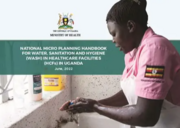
The Sustainable Development Goals (SDG) 3 and SDG 6 reinforce the need to ensure adequate WASH services, which will result in a reduction in maternal mortality, ending preventable newborn deaths, and providing quality universal health coverage. The rationale of the WASH guidelines is to document pro...
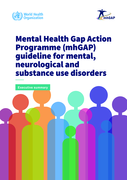
This guideline includes 48 updated and new evidence-based recommendations related to MNS conditions. The guideline is targeted towards non-specialized health workers at primary- or secondary-level healthcare facilities, or those working at the district level including basic inpatient and outpatient ...
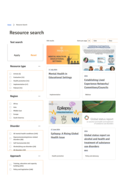
MIHN is a community of mental health innovators - researchers, practitioners, policy-makers, service user advocates, and donors from around the world - sharing innovative resources and ideas to promote mental health and improve the lives of people with mental, neurological and substance use disorder...

Every year, nearly 250 million people move across borders temporarily or permanently for a job opportunity, studying, to flee a crisis back home, or for other reasons. Another 750 million move for similar reasons within the borders of their countries. With the understanding that human mobility affec...
A broad range of UNHCR’s key priorities overlap with MHPSS issues – for example, child protection and sexual and gender-based violence [SGBV] prevention and response.
Despite all these existent synergies, UNHCR’s current policies and guidelines do not sufficiently link with MHPSS principles....
