Filter
1010
Filtered Results: 1010
Text search:
World
Health
Organization
(WHO),
Country
Office
for
Nepal
Featured
Recommendations
99
New Publications
284
Language
Document type
No document type
573
Studies & Reports
195
Guidelines
97
Manuals
76
Strategic & Response Plan
32
Fact sheets
11
Training Material
10
Situation Updates
10
Infographics
4
Resource Platforms
1
Online Courses
1
Countries / Regions
Nepal
140
Global
71
South–East Asia Region
41
India
37
Asia
32
Bangladesh
23
Africa
13
Myanmar / Burma
12
Indonesia
11
Uganda
10
Thailand
9
Philippines
9
West and Central Africa
9
Zambia
9
Kenya
8
Tanzania
8
Ghana
7
Sierra Leone
7
Malawi
7
Latin America and the Carribbean
7
Middle East and North Africa
7
East and Southern Africa
7
Ethiopia
7
Liberia
7
Pakistan
7
Syria
6
Nigeria
6
Haiti
6
Cambodia
6
Vietnam
6
South Africa
5
Sri Lanka
5
Laos
4
Afghanistan
4
Zimbabwe
4
Mozambique
4
Western Pacific Region
4
Western and Central Europe
4
Lebanon
4
North Macedonia
3
Rwanda
3
Jordan
3
Congo, Democratic Republic of
3
Eastern Europe and Central Asia
3
Brazil
3
Russia
3
Colombia
2
Ukraine
2
China
2
Kyrgyzstan
2
Malaysia
2
Germany
2
Portugal
2
Spain
2
Bosnia and Herzegovina
2
Namibia
2
Yemen
2
Georgia
2
Bhutan
2
South Sudan
2
Eswatini/ Swaziland
2
Tajikistan
1
North Korea
1
Timor Leste/ East Timor
1
Mexico
1
Serbia
1
Kazakhstan
1
Cameroon
1
Senegal
1
Niger
1
Peru
1
Morocco
1
Mongolia
1
Guinea
1
Armenia
1
Venezuela
1
Hungary
1
Gabon
1
Turkmenistan
1
Jamaica
1
Japan
1
Belgium
1
United Kingdom
1
Norway
1
Belarus
1
Israel
1
Argentina
1
Eastern Europe
1
Moldova
1
Sudan
1
Romania
1
Central African Republic
1
Somalia
1
Ecuador
1
Authors & Publishers
Publication Years
Category
Countries
299
Key Resources
111
Women & Child Health
83
Clinical Guidelines
73
Public Health
56
Capacity Building
16
Pharmacy & Technologies
7
Toolboxes
HIV
95
Disability
84
Mental Health
71
COVID-19
57
Planetary Health
52
NTDs
39
TB
34
Global Health Education
28
Natural Hazards
26
AMR
25
Caregiver
21
Conflict
21
NCDs
17
2.0 Rapid Response
16
Pharmacy
15
Refugee
14
Rapid Response
13
Health Financing Toolbox
11
Malaria
6
Polio
6
Specific Hazards
5
Ebola & Marburg
5
Cholera
4
Typhoon
2
Social Ethics
1
Zika
1

Measuring progress towards universal health coverage.
This sixth edition of Health at a Glance Asia/Pacific presents a set of key indicators of health status, the determinants of health, health care resources and utilisation, health care expenditure and financing and quality of care across 27 Asia-...

The domestic regulation of public health emergencies (PHEs) is inextricably linked to the regulation of other types of disaster. PHEs are usually governed at least partly by general disaster and emergency laws. Moreover, there is significant overlap in the legal mechanisms used to respond to PHEs an...
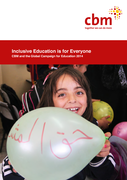
CBM and the Global Campaign for Education 2014

Rising levels of inflation, debt and macrofiscal tightening are putting expenditures on the social sectors including health under immense scrutiny. Already, there are worrying signs of reductions in social sector investments. However, even before the pandemic, evidence showed the significant returns...
Shortages of healthcare workers is detrimental to the health of communities, especially children. This paper describes the process of capacity building Community Health Volunteers (CHVs) to deliver integrated preventive and curative package of care of services to manage common childhood illness in h...
Promoting People's Health to Enhance Social-economic Development
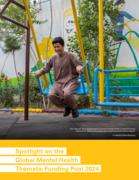
Promoting and protecting the mental health and psychosocial wellbeing of children, adolescents, and their caregivers remains undamental to achieving the Sustainable Development Goals (SDGs), with a direct contribution to SDG 3 (Good Health and Well- eing). In 2024, UNICEF accelerated the scale-up o...