
Filter
1902
Filtered Results: 1902
Text search:
medicine
prices
Featured
Recommendations
172
New Publications
500
Language
Document type
No document type
957
Studies & Reports
474
Guidelines
214
Strategic & Response Plan
96
Manuals
87
Fact sheets
26
Situation Updates
19
Training Material
17
Resource Platforms
6
Brochures
3
Infographics
3
Countries / Regions
Global
113
India
58
Kenya
48
Uganda
41
South Africa
40
Nepal
39
Ukraine
39
Syria
37
Africa
35
Ethiopia
35
Liberia
32
Nigeria
31
Sierra Leone
30
Western and Central Europe
29
Latin America and the Carribbean
26
Zambia
26
Malawi
25
Myanmar / Burma
24
Bangladesh
23
Ghana
20
Tanzania
20
Congo, Democratic Republic of
20
Rwanda
17
Namibia
17
Zimbabwe
16
Philippines
16
Mozambique
16
Venezuela
14
Eastern Europe
14
South–East Asia Region
13
South Sudan
13
Cameroon
12
Haiti
12
Guinea
11
Cambodia
11
Senegal
10
Asia
10
Burkina Faso
9
Sudan
9
Yemen
9
Indonesia
9
Germany
8
Brazil
8
Russia
8
Pakistan
8
Benin
7
West and Central Africa
7
Middle East and North Africa
7
East and Southern Africa
7
Moldova
7
Botswana
7
Tajikistan
6
Lesotho
6
Lebanon
6
Central African Republic
6
Thailand
5
North America
5
Albania
4
Kyrgyzstan
4
Afghanistan
4
Peru
4
Eastern Europe and Central Asia
4
Paraguay
4
Eswatini/ Swaziland
4
Colombia
3
Kazakhstan
3
Chile
3
USA
3
Jordan
3
Vietnam
3
Georgia
3
Mali
3
Somalia
3
North Macedonia
2
Turkey
2
China
2
Laos
2
Turkmenistan
2
Jamaica
2
France
2
Portugal
2
Spain
2
Bosnia and Herzegovina
2
Southern Africa
2
Argentina
2
Papua New Guinea
2
Egypt
2
Romania
2
Palestine
2
Poland
2
Angola
2
Chad
2
Switzerland
1
Timor Leste/ East Timor
1
El Salvador
1
Serbia
1
Iran
1
Fiji
1
Estonia
1
Niger
1
Mongolia
1
Bulgaria
1
Lithuania
1
Western Pacific Region
1
Gabon
1
Japan
1
Denmark
1
Mauritius
1
United Kingdom
1
Côte d’Ivoire / Ivory Coast
1
Bolivia
1
Sri Lanka
1
Libya
1
Bhutan
1
Ecuador
1
Madagascar
1
Guatemala
1
Authors & Publishers
Publication Years
Category
Countries
709
Clinical Guidelines
156
Public Health
123
Key Resources
80
Women & Child Health
71
Pharmacy & Technologies
35
Capacity Building
9
Toolboxes
HIV
189
COVID-19
157
Mental Health
135
Pharmacy
102
TB
84
AMR
82
Conflict
74
Planetary Health
64
NCDs
57
Health Financing Toolbox
49
Global Health Education
43
NTDs
34
Disability
32
Ebola & Marburg
27
Natural Hazards
26
Refugee
25
Caregiver
24
Malaria
23
Rapid Response
18
2.0 Rapid Response
7
Cholera
4
Specific Hazards
3
Social Ethics
3
Zika
1
Polio
1
Int J Health Policy Manag 2017, 6(10), 587–600
Low-income countries face many contextual challenges to manage healthcare technologies effectively, as the majority are imported and resources are constrained to a greater extent. Previous healthcare technology management (HTM) policies in Benin ha...
The new WHO recommendations for the treatment of isoniazid-resistant, rifampicin-susceptible TB are based upon a review of evidence from patients treated with such regimens by a Guideline Development Group in conformity with WHO requirements for evidence-based policies.
Promoting and protecting health is essential to human welfare and sustained economic and social development. This was recognized more than 30 years ago by the Alma-Ata Declaration signatories, who noted that Health for All would contribute
both to a better quality of life and also to global peace a...
The document provides detailed guidelines for the production, formulation, and implementation of oral rehydration salts (ORS) to combat dehydration caused by diarrhoea, particularly in children. It focuses on the composition, quality standards, and packaging requirements of ORS, aiming to support na...
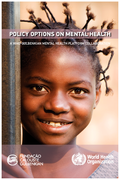
"This is the final report of the six-year collaboration between the WHO Department of Mental Health and Substance Abuse and the Gulbenkian Global Mental Health Platform, an initiative of the Calouste Gulbenkian Foundation aimed at reducing the global burden of mental health through the development a...
Of the 50 antibiotics in the pipeline, 32 target WHO priority pathogens but the majority have only limited benefits when compared to existing antibiotics. Two of these are active against the multi-drug resistant Gram-negative bacteria, which are spreading rapidly and require urgent solutions.
Gr...
Over the 20 years that followed, this unique partnership has invested more than US$53 billion, saving 44 million lives and reducing the combined death rate from the three diseases by more than half in the countries in which the Global Fund invests.


Antimicrobial resistance (AMR) is a global public health crisis that resulted in 1.14 million deaths in 2021. According to the Institute for Health Metrics and Evaluation estimates, 96 416 of these deaths occurred in the World Health Organization (WHO) Eastern Mediterranean Region. All 22 countr...
IHME’s Financing Global Health report provides an overview of health spending around the world, with a special focus on investments in health in low- and middle-income countries. The report examines how this funding for health is changing each year and forecasts how it may change in the future. Fi...

For this report, the Task Force commissioned
additional background papers on health taxes to
update the evidence, assess short-term revenue
potential, and understand the role of health taxes
in the current era of multiple crises. We find that
health taxes continue to be underutilized despite th...

Building true health security in a global age. Findings and recommendations of the Global Council. In landmark findings based on two years of research and convenings around the world, the new report shows that high levels of inequality are linked to outbreaks becoming pandemics and that inequality i...
This 10th edition of the Institute for Health Metrics and Evaluation’s annual Financing Global Health report provides the most up-to-date estimates of development assistance for health, domestic spending on health, health spending on two key infectious diseases – malaria and HIV/AIDS – and fut...
