
Filter
1010
Filtered Results: 1010
Text search:
World
Health
Organization
(WHO),
Country
Office
for
Nepal
Featured
Recommendations
99
New Publications
284
Language
Document type
No document type
573
Studies & Reports
195
Guidelines
97
Manuals
76
Strategic & Response Plan
32
Fact sheets
11
Training Material
10
Situation Updates
10
Infographics
4
Resource Platforms
1
Online Courses
1
Countries / Regions
Nepal
140
Global
71
South–East Asia Region
41
India
37
Asia
32
Bangladesh
23
Africa
13
Myanmar / Burma
12
Indonesia
11
Uganda
10
Thailand
9
Philippines
9
West and Central Africa
9
Zambia
9
Kenya
8
Tanzania
8
Ghana
7
Sierra Leone
7
Malawi
7
Latin America and the Carribbean
7
Middle East and North Africa
7
East and Southern Africa
7
Ethiopia
7
Liberia
7
Pakistan
7
Syria
6
Nigeria
6
Haiti
6
Cambodia
6
Vietnam
6
South Africa
5
Sri Lanka
5
Laos
4
Afghanistan
4
Zimbabwe
4
Mozambique
4
Western Pacific Region
4
Western and Central Europe
4
Lebanon
4
North Macedonia
3
Rwanda
3
Jordan
3
Congo, Democratic Republic of
3
Eastern Europe and Central Asia
3
Brazil
3
Russia
3
Colombia
2
Ukraine
2
China
2
Kyrgyzstan
2
Malaysia
2
Germany
2
Portugal
2
Spain
2
Bosnia and Herzegovina
2
Namibia
2
Yemen
2
Georgia
2
Bhutan
2
South Sudan
2
Eswatini/ Swaziland
2
Tajikistan
1
North Korea
1
Timor Leste/ East Timor
1
Mexico
1
Serbia
1
Kazakhstan
1
Cameroon
1
Senegal
1
Niger
1
Peru
1
Morocco
1
Mongolia
1
Guinea
1
Armenia
1
Venezuela
1
Hungary
1
Gabon
1
Turkmenistan
1
Jamaica
1
Japan
1
Belgium
1
United Kingdom
1
Norway
1
Belarus
1
Israel
1
Argentina
1
Eastern Europe
1
Moldova
1
Sudan
1
Romania
1
Central African Republic
1
Somalia
1
Ecuador
1
Authors & Publishers
Publication Years
Category
Countries
299
Key Resources
111
Women & Child Health
83
Clinical Guidelines
73
Public Health
56
Capacity Building
16
Pharmacy & Technologies
7
Toolboxes
HIV
95
Disability
84
Mental Health
71
COVID-19
57
Planetary Health
52
NTDs
39
TB
34
Global Health Education
28
Natural Hazards
26
AMR
25
Caregiver
21
Conflict
21
NCDs
17
2.0 Rapid Response
16
Pharmacy
15
Refugee
14
Rapid Response
13
Health Financing Toolbox
11
Malaria
6
Polio
6
Specific Hazards
5
Ebola & Marburg
5
Cholera
4
Typhoon
2
Social Ethics
1
Zika
1

The Global Burden of Disease Study (GBD) began 30 years ago with the goal of providing timely, valid and relevant assessments of critical health outcomes. Over this period, the GBD has become progressively more granular. The latest iteration provides assessments of thousands of outcomes for diseases...
Background paper for the Oslo Summit on Education for Development.
This paper covers the four topics of the Oslo Summit: investment in education, quality of learning, education in emergencies and girls’ education. Disability continues to be one of the primary causes of educational disadvantage a...
This handbook aims to give practical guidance to support development organisations to mainstream disability into their work. It is primarily intended for VSO programmes, but could be useful to other development actors interested in mainstreaming disability, such as NGOs, gover...
A resource for improving menstraul hygiene around the world.
Comprehensive guidance with examples of good practice, information for colleagues and pupils in class and tips on how to break the taboo

Integrated Outbreak Analytics (IOA) applies a multidisciplinary approach to understanding outbreak dynamics and to inform outbreak response. It aims to drive comprehensive, accountable, and effective public health and clinical strategies by enabling communities, and national and subnational health a...
The objectives of this guidance document are to:
1. Strengthen the capacity of country teams to effectively scale up and manage programmes to address severe acute malnutrition
2. Extend the geographic reach of quality treatment for SAM to all vulnerable communities in need
3. Maximize...
1. Strengthen the capacity of country teams to effectively scale up and manage programmes to address severe acute malnutrition
2. Extend the geographic reach of quality treatment for SAM to all vulnerable communities in need
3. Maximize...
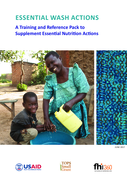
The Essential WASH Actions toolkit expands the connection between WASH and nutrition. This resource offers a comprehensive set of essential WASH actions, references training materials for health workers, nutrition managers and community workers to build capacity, and outlines accompanying behaviors ...
Conceived as part of the CWS-A/P project on regional security and risk management, this book presents a
collection of testimonies from aid workers in some of the most insecure and volatile environments in the world.
The participants recount a broad array of security incidents, such as kidnappings,...
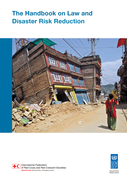
The Handbook on Law and Disaster Risk Reduction (the Handbook) has been developed to provide guidance on how to use the Checklist and conduct related legislative reviews and reform processes. While the methodology for using the Checklist needs to be tailored to each country’s context and respectiv...
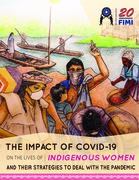
The International Forum of Indigenous Women (IIWF) has prepared this report in order to have a
document for analysis and systematization of the impacts of the COVID-19 pandemic on the lives
of Indigenous Women, and to identify the strategies promoted by them. This document is expected
to serve as...
Today there are Community-based Rehabilitation (CBR) programmes in a large number of countries. In many countries, the CBR approach is a part of the national rehabilitation services. However, there is a lack of reliable data about persons with disabilities who benefit from CBR and the kind of benefi...
In the region, it is estimated that there are over 650 million persons with disabilities. However, without accurate, timely and disaggregated data, countries are unable to develop effective policies and programmes, monitor the wellbeing of persons with disabilities and evaluate the equity and impact...
An attempt has been made to map the incidence of uni-dimensional and multi-dimensional poverty simultaneously arguably for the first time in Pakistan. While multi-dimensional poverty map is calculated using PSLM 2010-11; small area estimation technique is utilized to map uni-dimensional poverty usin...
Tuberculosis (TB) remains a significant global health challenge, with an estimated annual death rate of approximately one per 100,000 people in countries with low TB prevalence. Rapid reductions in TB cases and deaths worldwide depend on research breakthroughs, including the development of new vac...
A comprehensive compilation is provided of the medicinal plants of the Southeast Asian country of Myanmar (formerly Burma). This contribution, containing 123 families, 367 genera, and 472 species, was compiled from earlier treatments, monographs, books, and pamphlets, with some medicinal uses and pr...
In the Indian state of Bihar, visceral leishmaniasis (VL) is a major public health issue that has been aggravated by the rising incidence of new Human immunodeficiency virus (HIV) infections. In endemic areas, the risk of VL infections in patients living with HIV (PLHIV) is higher. It is important t...
The Internews Humanitarian Information Services Learning Collection communicates key lessons, best practices, and programmatic methodologies used by Internews’ humanitarian teams around the world.
Each module within the Learning Collection includes three parts: Context, Case Studies, and a How-To...
Disabled people in developing countries are the poorest of the poor: if we are serious about tackling extreme poverty, our development work has to target them. The post-2015 development framework offers hope that disabled people will finally get the prominence they deserve on the global development ...
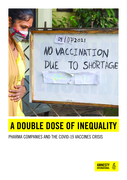
22 Sept. 2021
The rapid development of effective Covid-19 vaccines in 2020 gave hope to the world in the darkest days of the deadly pandemic. However, the vaccine roll-out has been massively skewed towards wealthy nations. While rich states have hoarded vaccines, companies have also played a decisi...
